
Dinamo Football Formation
 January 27, 2025


Starting Lineup
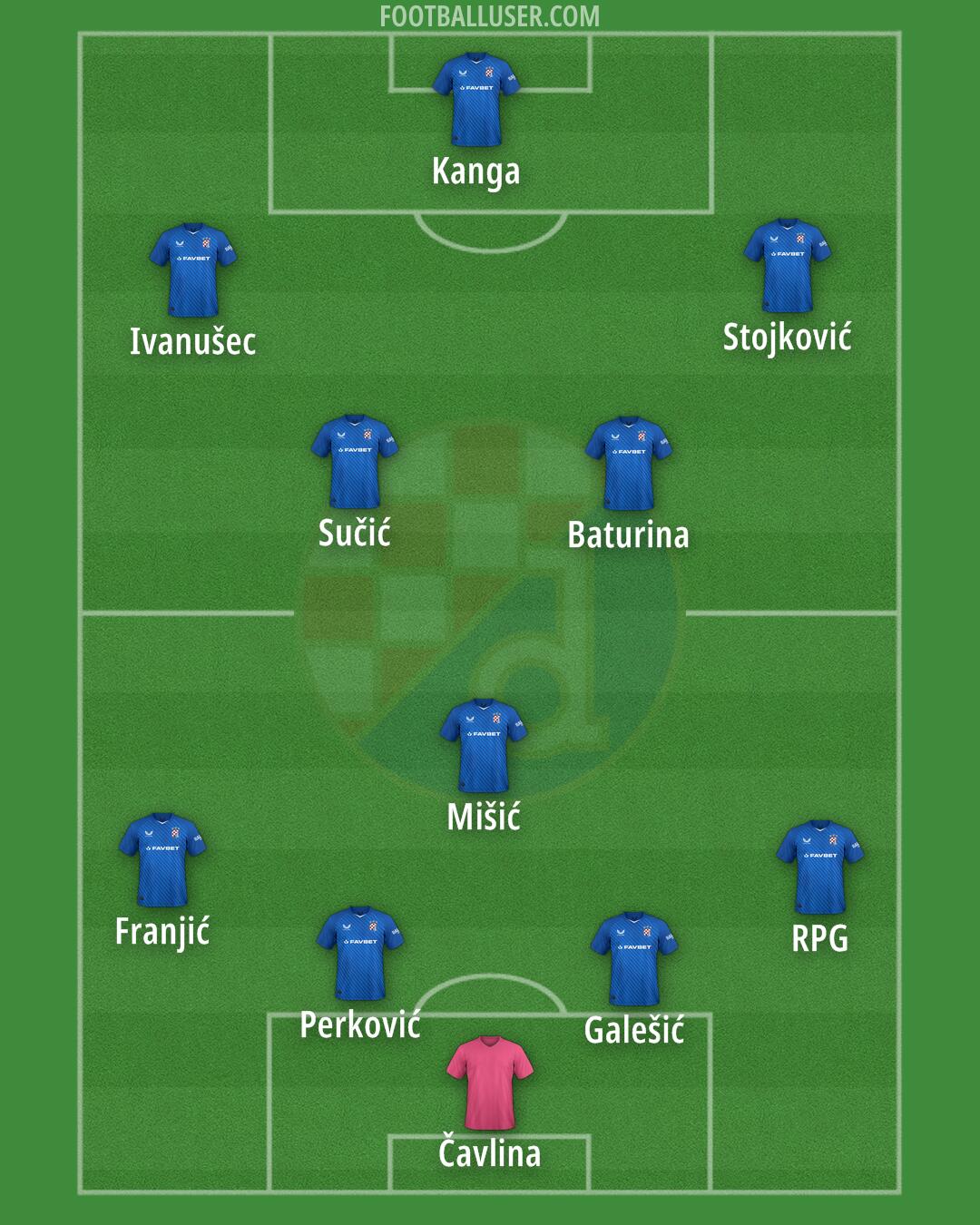
Čavlina · RPG · Franjić · Perković · Galešić · Mišić · Sučić · Baturina · Ivanušec · Stojković · KangaDinamo focus on a vertical style of play that aims to hit opponents on the break, utilizing a 5-2-3 formation. This lineup is built to sit in a compact mid-block and then transition quickly once the ball is won. The intention is to use the width provided by the wing backs to stretch the opposition while keeping the central areas crowded to prevent passing lanes from opening up.
In goal, Čavlina maintains the defensive line and organizes the unit. The defensive unit operates with a back five that provides massive coverage across the width of the pitch. Mišić sits as the central defender to command the area and win the second ball, while Galešić and Perković act as the wide centre-backs to cover the space left behind the wing backs. RPG and Franjić act as attacking wing backs, pushing high to provide width and crossing into the box, while also tracking back to form a defensive line of five when the team is without the ball.
The midfield relies on a double pivot to manage the center of the pitch. Baturina and Sučić operate as the two central midfielders tasked with controlling the tempo and connecting the defense to the attack. Baturina drives forward with the ball to break the lines, while Sučić works to shield the defense and intercept passes. They must be ready to press aggressively to win the ball high up the pitch or drop deep to help the back line if the opposition builds play through the middle.
Dinamo utilizes three attackers to stretch the opposition back line. Kanga operates as a pressing centre-forward, holding up the ball and looking to link up with others. On the flanks, Ivanušec and Stojković act as inverted wingers who cut inside to create chances or shoot, rather than hugging the touchline. This movement creates space for RPG and Franjić to overlap the winger and deliver crosses. The front three work in combinations to exploit gaps behind the opposition defenders through quick one-two passes.
One major tactical strength for Dinamo is the ability to create wide overloads when the wing backs join the attack. Another advantage is the compactness of the defensive block, which makes it very difficult for opponents to play through the center. The speed of transition allows the team to move from a defensive block to an attacking phase in seconds, catching the opposition out of position.
This 5-2-3 formation offers a resilient defensive base while maintaining a threat on the counter. It is best suited for matches against teams that dominate possession and leave space behind their high defensive line.