Man City Football Formation
 January 31, 2025


Starting Lineup
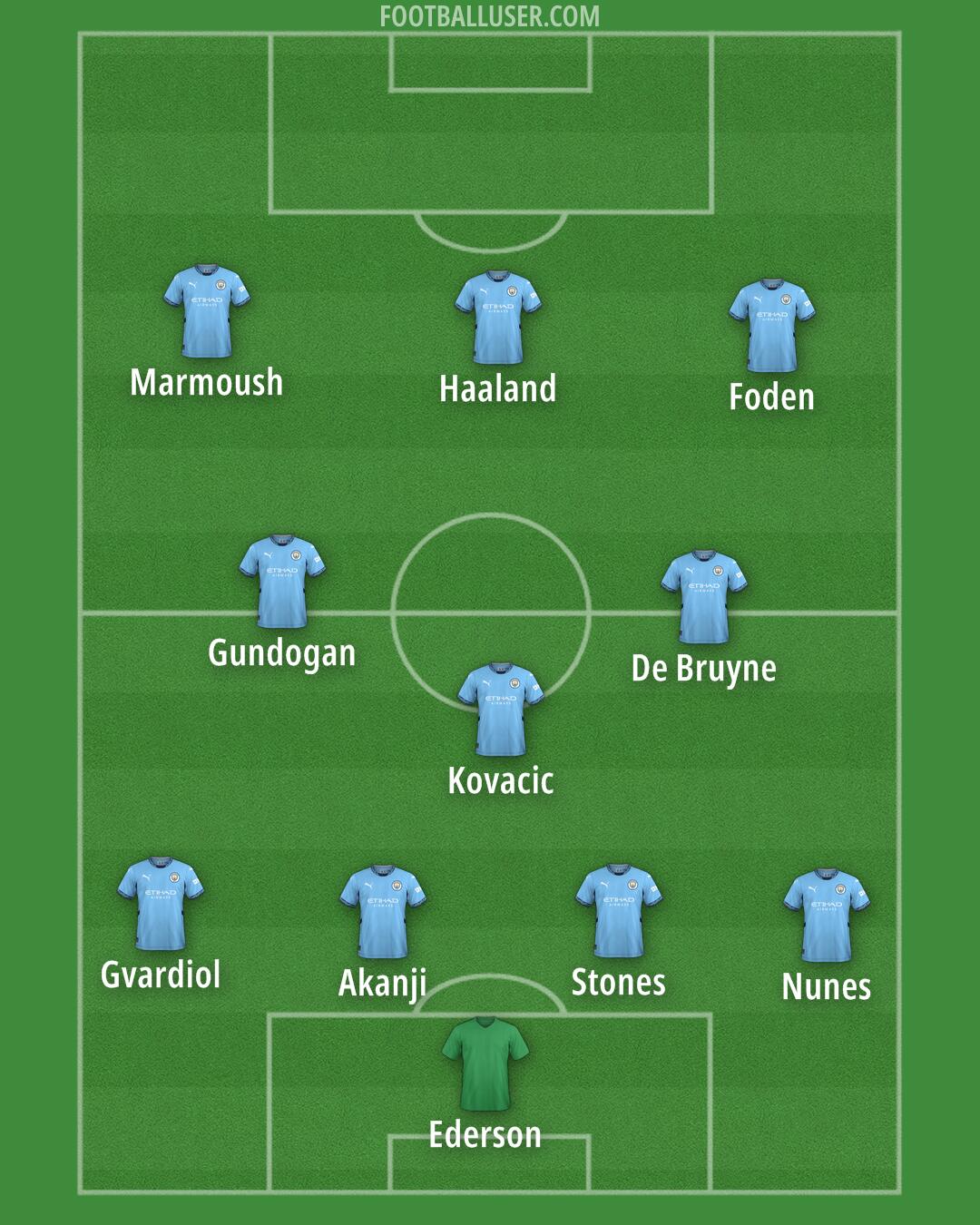
Ederson · Gvardiol · Stones · Akanji · Nunes · Kovacic · De Bruyne · Foden · Gundogan · Haaland · MarmoushManchester City focus on high possession and a heavy press within a 4-3-3. This formation is built to control the ball and dominate territory through sustained pressure. The lineup aims to squeeze the pitch and keep the opposition pinned in their own half by using short passing and constant movement.
Ederson plays from the back to start every attack. A flat back four forms the defensive line with Stones acting as a ball playing centre back to help build play. Akanji provides cover and works to intercept passes, while Gvardiol plays as a left back who can push high to support the attack. On the right, Nunes covers the flank and stays ready to track back when the ball is lost. This unit works together to maintain a high line and squeeze the space between the lines.
The midfield functions with a single pivot and two advanced midfielders. Kovacic sits in front of the defence to shield the back four and recycle possession. Gundogan works as an inverted eight, finding spaces between the lines to link the defence and the attack. De Bruyne operates in the half spaces, using his passing range to split the defence with through balls. This midfield group is tasked to win the ball back high up the pitch and immediately progress through the thirds.
Manchester City use three attackers to stretch the opposition. Haaland acts as a pressing centre forward and a target man to pin the last defender. Foden plays as an inverted winger on the right, cutting inside to create chances or arrive late into the box. Marmoush stays wide on the left to provide width and stretch the defence. This front line moves in combinations to create runs in behind, often using the width provided by the full backs to create cutbacks from the byline.
The tactical advantages of this 4-3-3 include numerical superiority in the central areas and the ability to press high in coordinated waves. By having De Bruyne and Gundogan move into advanced positions, Manchester City can create overloads in the final third. The team also benefits from the speed of transition, as they can quickly switch play to the wide areas to isolate players in one on one situations.
This formation is designed for total control and constant offensive pressure. It is most effective against teams that sit deep and struggle to deal with rapid ball movement and central overloads.