
Real Betis Football Formation
 February 2, 2025


Starting Lineup
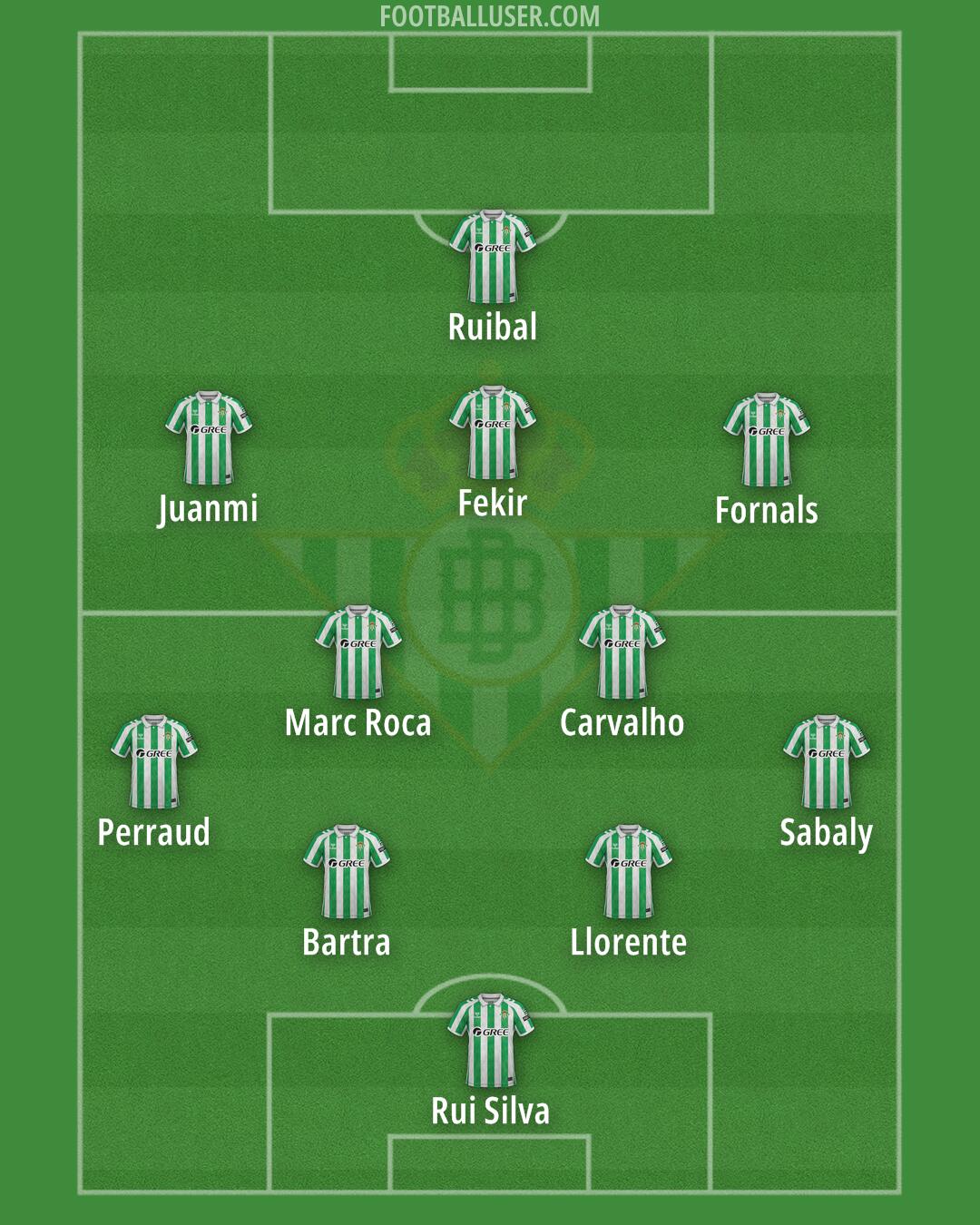
Rui Silva · Llorente · Bartra · Perraud · Sabaly · Marc Roca · Carvalho · Fekir · Ruibal · Juanmi · FornalsReal Betis operates with a high intensity and verticality through a 4-2-4 formation. This lineup is built to overwhelm the opposition by pushing numbers forward and searching for goals quickly in transition. The team looks to dominate the attacking third and use high pressure to disrupt the rhythm of the opponent.
Rui Silva sits between the posts to command the area and start attacks. The defense operates with a flat back four that maintains a high line to squeeze the space. Sabaly acts as a right back to hold the flank while Perraud provides width from the left. In the middle, Llorente and Bartra form the central pairing. Bartra is known for his passing range and ability to play out from the back, while Llorente provides cover to sweep behind the line. The unit works to stay compact and force the opposition into long balls.
The midfield utilizes a double pivot to control the center of the pitch. Marc Roca acts as the deep lying playmaker, looking to recycle possession and find teammates through the lines. Beside him, Carvalho provides the energy to drive forward with the ball and protect the defense. This pair must work hard to intercept passes and cover the gaps left by the advancing attackers. They connect the defensive unit to the front four by winning the second ball and quickly spreading the play to the wings.
Real Betis employs four attackers to pin the opposition defense. Juanmi and Fornals operate as wide wingers, with Fornals looking to cut inside and Juanmi finding space to arrive late into the box. In the center, Fekir operates as a second striker in the hole, using his dribbling style to create chances for his partners. Ruibal acts as the pressing centre forward to lead the hunt from the front. This attacking group creates many runs in behind and seeks to isolate defenders in one on one situations.
This formation offers significant numerical superiority in the final third. By committing four players to the attack, the club can create wide overloads and force the opposition into deep blocks. The speed of transition is a major advantage, as the team can move from a mid block to an attacking phase in seconds. The coordinated waves of pressure from the front four also help to win it back high up the pitch.
The 4-2-4 lineup relies on aggressive attacking pressure and rapid verticality. It is best suited for matches where the team needs to break down a stubborn low block or exploit a disorganized defense through sheer volume of forwards.