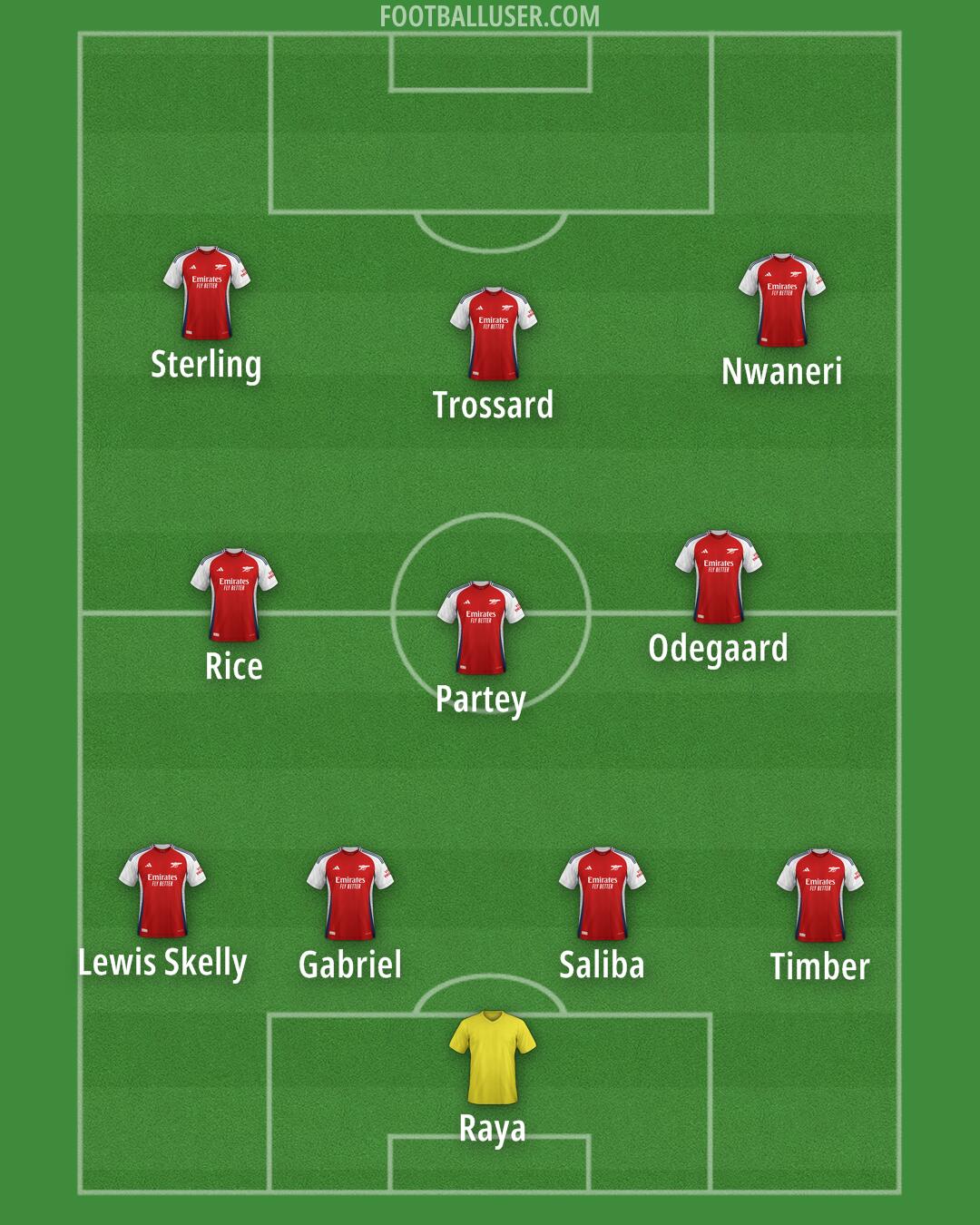
Arsenal Football Formation
 February 13, 2025


Starting Lineup
Raya · Timber · Saliba · Gabriel · Lewis Skelly · Odegaard · Partey · Rice · Trossard · Sterling · NwaneriArsenal favors a high press and heavy possession based identity through a 4-3-3 formation. This lineup aims to control the tempo of the match and dominate territory by pinning the opponent back. The Gunners look to use short passing and constant movement to break down deep defensive lines.
Raya acts as the goalkeeper, playing short from the back to start attacks. The defense operates as a flat back four with Saliba and Gabriel forming a central pairing. Saliba is a dominant defender with great recovery speed, while Gabriel provides aerial strength and physical presence. Timber plays as the right back and can push high to provide width, whereas Lewis Skelly occupies the left back position. This defensive unit works to squeeze the space and maintain a high line to catch attackers offside.
The midfield consists of a three-man midfield with a carrier and creative engines. Partey sits as the single pivot to shield the defense and recycle possession when under pressure. Beside him, Rice operates as a box to box midfielder who uses his immense physical presence to win the second ball and drive forward. Odegaard plays as the creative hub from the right side of the midfield, looking to play through the lines and find the forwards. This trio connects the defense to the attack by moving the ball quickly across the pitch.
Arsenal utilizes three attackers across the front to stretch the opposition. Trossard leads the line as a pressing centre-forward who works hard to disrupt the buildup. On the flanks, Sterling acts as an inverted winger on the left to cut inside and create shooting opportunities. Nwaneri plays on the right wing and looks to combine in tight spaces to pull defenders out of position. The front three focus on quick combinations and making runs in behind to exploit gaps in the defensive line.
One major advantage of this Arsenal lineup is the numerical superiority in midfield, which allows them to control the center of the pitch. The ability to press high in coordinated waves also forces opponents into mistakes. Additionally, the team can create wide overloads when Timber pushes forward to support the attackers.
This 4-3-3 formation is built for teams that want to dominate the ball and dictate the game. It is best suited for matches against opponents that sit in a low block and struggle to deal with intense pressure.