Arsenal Football Formation
 February 14, 2025


Starting Lineup
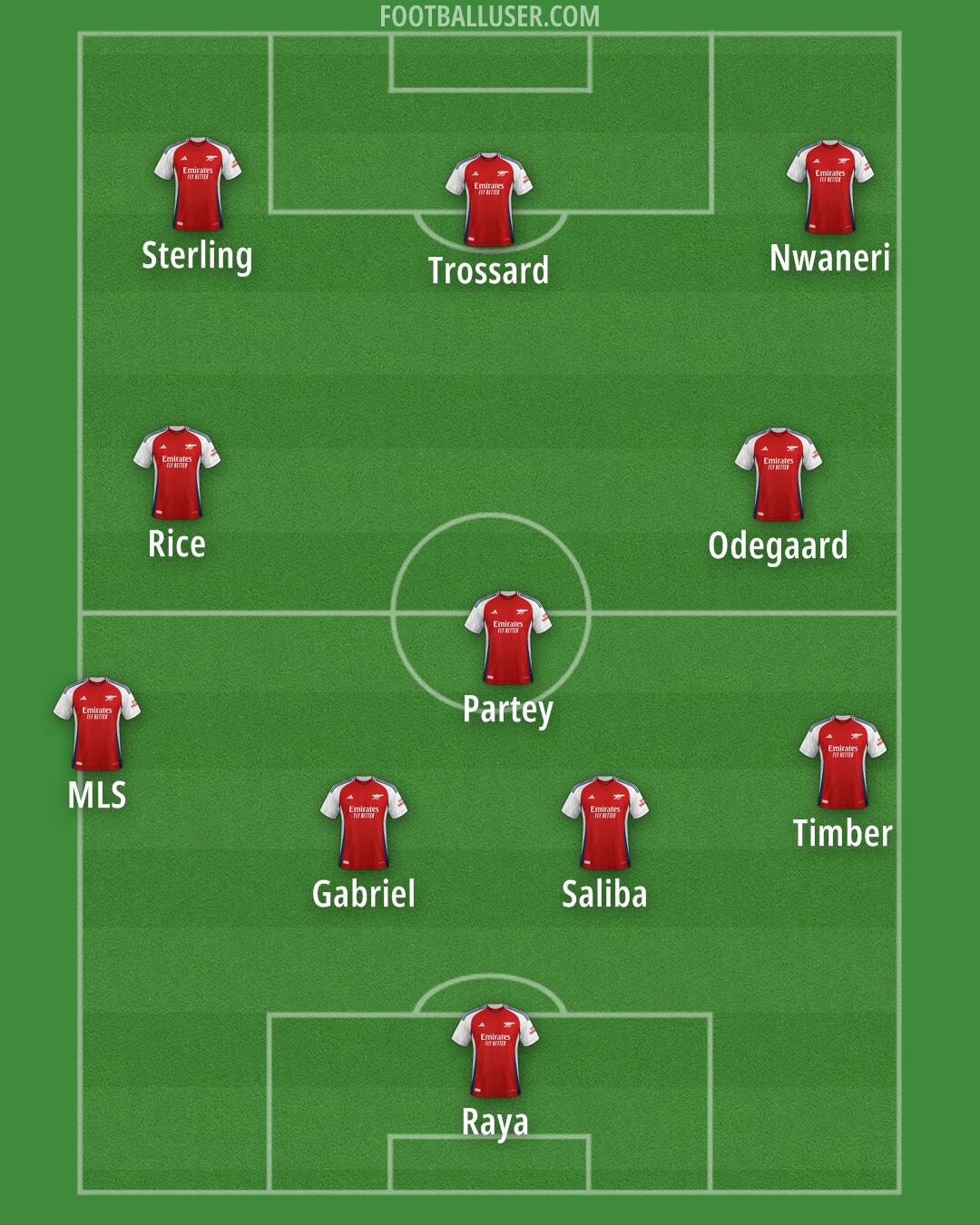
Sterling · Trossard · Nwaneri · Rice · Partey · Odegaard · MLS · Gabriel · Saliba · Timber · RayaArsenal focuses on controlling space and playing out from the back within a 5-2-3 formation. This lineup aims to dominate the ball in the middle of the pitch while remaining extremely difficult to break down. The team uses this formation to build attacks through short passes and to win the ball back high up the pitch.
Raya operates between the posts to start the build up from the back. The defensive unit employs a back five that can shift as the ball moves. Saliba and Gabriel form the central core, with Saliba providing recovery speed and Gabriel being dominant in the air. Partey acts as a central defender to provide extra cover, while Timber plays as a right wing back to push high. MLS operates as the left wing back to provide width on the opposite side. This group works to keep a compact shape and deny the turn to opposition attackers.
The midfield functions with a double pivot to control the center. Rice works to shield the defense and press aggressively to win the ball back, while Odegaard acts as the primary creator who receives the ball on the half-turn. Rice has the ability to carry the ball forward and connect the defensive and attacking lines. Odegaard looks to play through the lines to find the attackers in space. They work together to squeeze the space between the lines and prevent the opposition from playing through the middle.
Arsenal utilizes three attackers to stretch the opposition defense. Trossard plays as a pressing centre-forward who works to link up play with the midfield. On the flanks, Sterling and Nwaneri act as wide attackers who want to cut inside to create central overloads. Sterling looks to isolate his defender one on one, while Nwaneri searches for pockets of space between the lines. This attacking unit is designed to create runs in behind and allow the wing backs to overlap the winger.
One major advantage for Arsenal is the ability to create wide overloads by using the wing backs alongside the wide attackers. The team also benefits from numerical superiority in the defensive block, making them very hard to penetrate. The speed of transition allows them to move from a defensive stance to an attacking one very quickly.
This formation provides Arsenal with a platform for both controlled possession and high intensity pressing. It is best suited for matches against teams that try to play through the middle of the pitch.