
Puebla Football Formation
 February 15, 2025


Starting Lineup
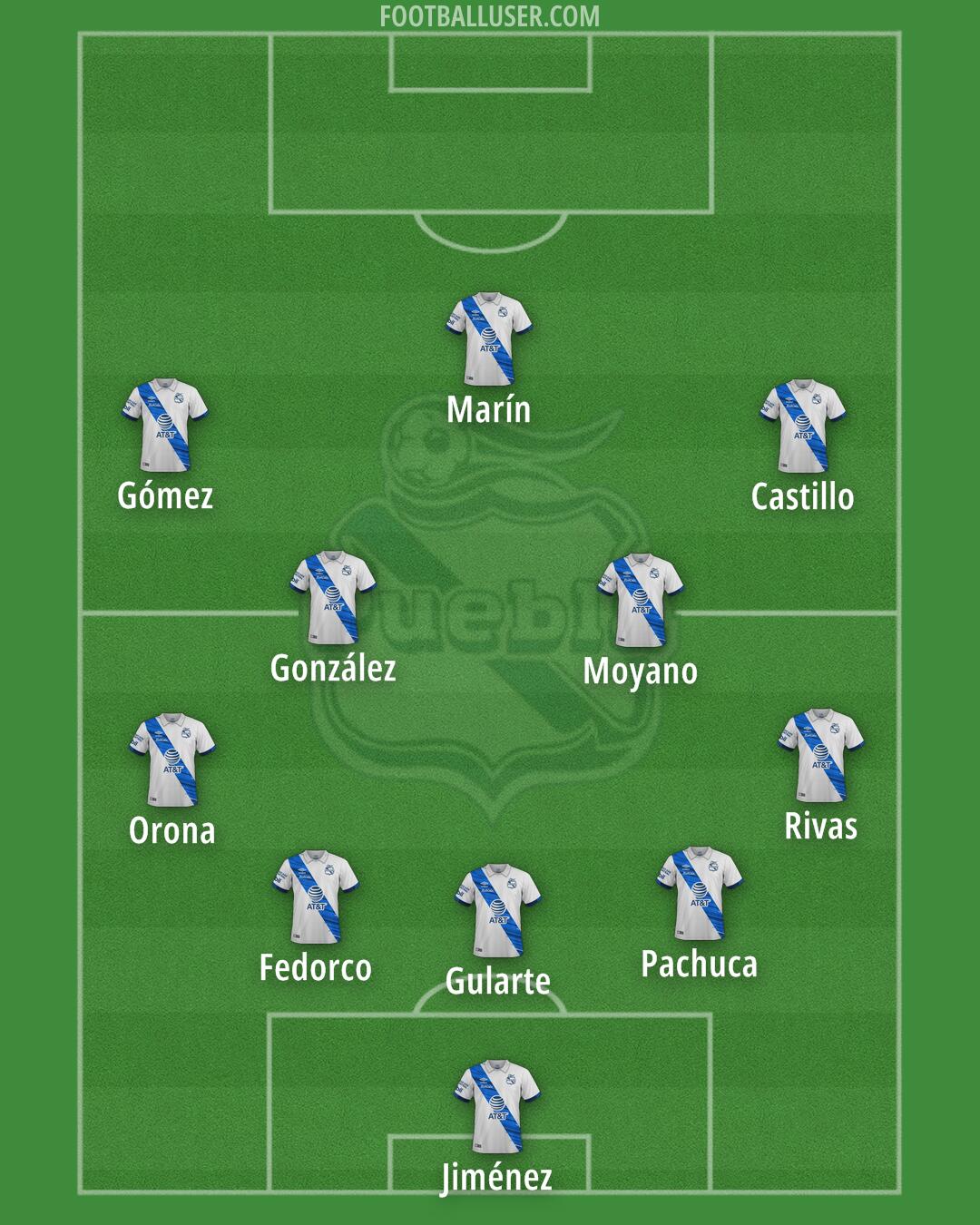
Jiménez · Gularte · Pachuca · Fedorco · Rivas · Orona · González · Moyano · Castillo · Gómez · MarínPuebla relies on a heavy defensive foundation and quick transitions in a 5-2-3. This formation is built to sit deep and wait for the opposition to commit numbers forward before striking on the break. By using a back five, the team seeks to stay compact and hard to break down, making them a difficult side to play against in low block situations.
Jiménez guards the goal while the defensive unit holds a narrow defensive block. Gularte, Fedorco, and Pachuca form the central trio, where they focus on winning the second ball and clearing the lines. Fedorco and Gularte provide the central strength to defend the box, while Pachuca stays close to the right side to cover space. Orona and Rivas act as attacking wing backs, pushing high to provide width, but they must track back quickly to maintain the back five when possession is lost.
The midfield operates as a double pivot to control the central area. Moyano and González are tasked with protecting the back line and recycling possession to keep the game moving. González often works to connect the defensive and attacking lines by receiving the ball from the center backs, while Moyano looks to drive forward with the ball to support the transition. This pair must press in a mid-block to deny the opposition time on the ball and stop them from playing through the lines.
In the final third, Puebla uses three attackers to stretch the defence. Marín acts as a lone striker, tasked to hold up the ball and find the feet of his teammates. Gómez and Castillo operate as wide wingers, with Castillo looking to cut inside to create space for Rivas to overlap. Gómez seeks to get to the byline to deliver crosses, while both wingers press the opposition back line to force a long ball. The movement of the front three creates runs in behind during quick breaks.
One major advantage for Puebla is the ability to provide wide overloads from overlapping full backs when they transition into attack. The narrowness of the back three provides compactness when defending, making it very hard for opponents to find gaps in the middle. Furthermore, the speed of transition allows the team to move from a low block to an attacking state very quickly.
This 5-2-3 formation provides a robust defensive identity that prioritizes stability. It is best suited for matches against dominant teams that control possession, allowing Puebla to exploit the space left behind.