
Ajax Football Formation
 February 16, 2025


Starting Lineup
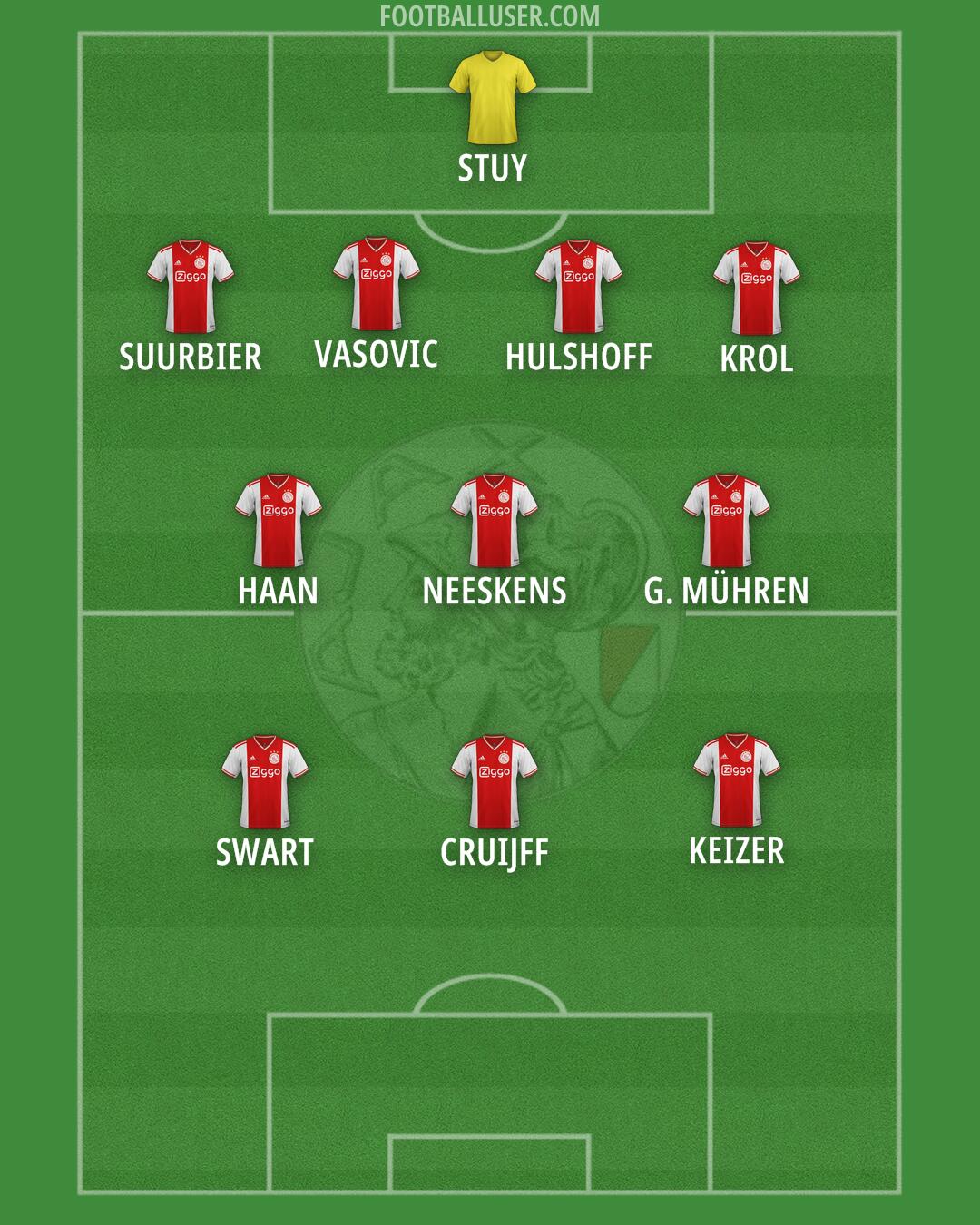
STUY · SUURBIER · VASOVIC · HULSHOFF · KROL · HAAN · NEESKENS · G. MÜHREN · CRUIJFF · KEIZER · SWARTAjax seeks to dominate through high pressing and constant ball movement, utilizing a 4-3-3 formation. This lineup is built to play a vertical style of football that aims to win the ball high up the pitch and move through the lines with speed. The goal is to maintain control of the game by stretching the defence and creating constant attacking opportunities.
STUY operates between the posts to command the area and start play. The back line sits in a high line, with KROL and SUURBIER acting as full backs who provide width. VASOVIC and HULSHOFF play as central defenders, with VASOVIC focusing on covering space while HULSHOFF works to win the second ball. This defensive unit stays compact to squeeze the space and force the opposition into mistakes.
The midfield functions as a three-man midfield with a carrier to connect the lines. NEESKENS acts as the central anchor, working to shield the defence and recycle possession. G. MÜHREN and HAAN operate in the half-spaces, with G. MÜHREN looking to drive forward with the ball while HAAN works to intercept passes and win it back high up the pitch. This trio works together to compress the midfield and prevent the opponent from playing through the center.
Ajax uses three attackers across the front to pin the last defender. CRUIJFF plays as a pressing centre-forward who often drops into midfield to create links, while KEIZER and SWART act as inverted wingers who cut inside to threaten the goal. The wingers pull wide to stretch the defence before moving into central areas to combine in tight spaces. This front line is designed to create runs in behind and allow for quick transitions.
One major advantage of this Ajax lineup is the ability to press high in coordinated waves to win the ball in dangerous areas. The formation also offers numerical superiority in midfield when the full backs push high, creating wide overloads. This allows the team to control the tempo and force a long ball from the opposition.
This 4-3-3 formation is built for aggressive, proactive football that demands high intensity. It is best suited for matches against teams that sit deep and struggle to deal with rapid transitions and high pressing.