Chicago Soccer Formation
 March 3, 2025


Starting Lineup
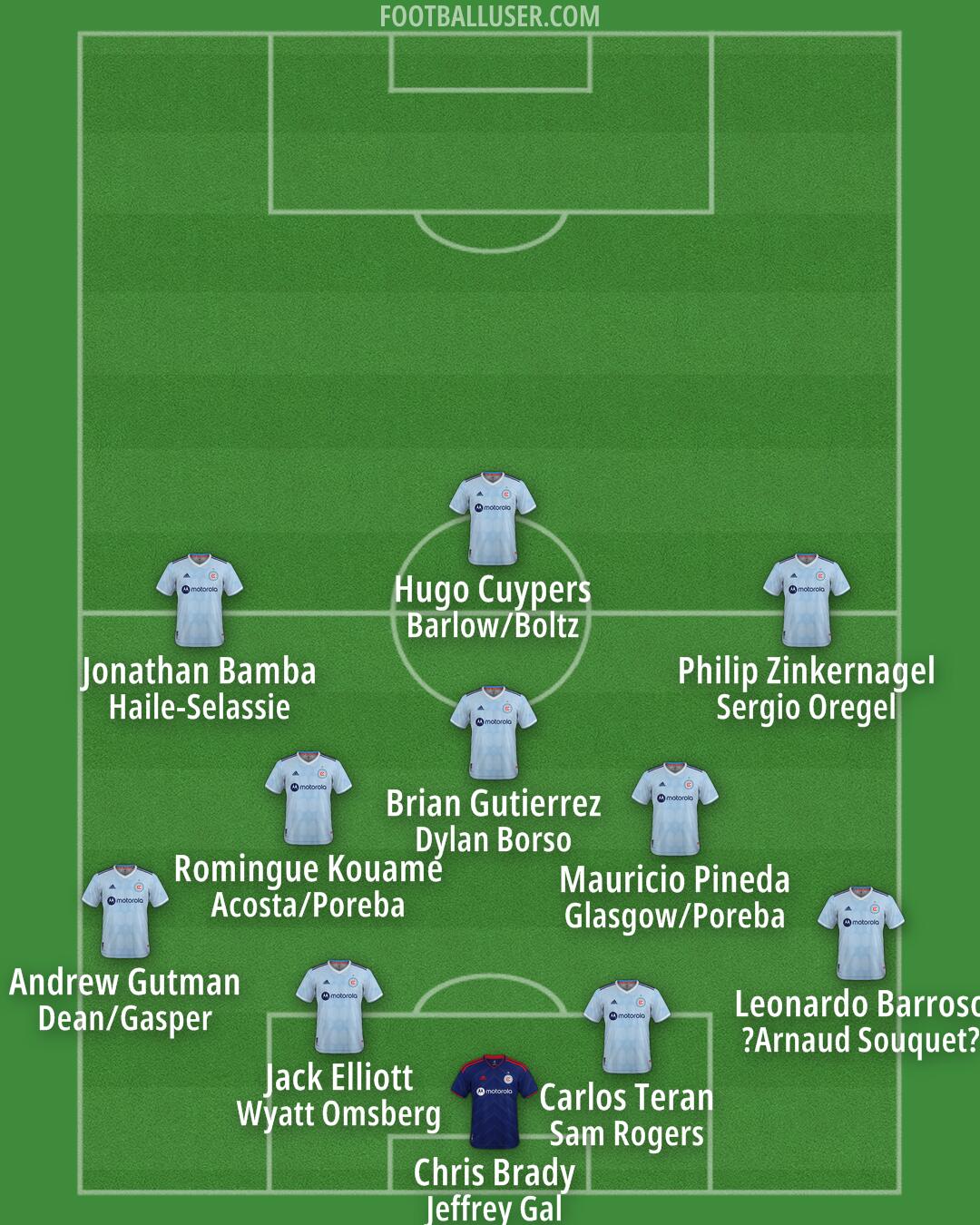
Hugo Cuypers (Barlow/Boltz) · Jonathan Bamba (Haile-Selassie) · Philip Zinkernagel (Sergio Oregel) · Brian Gutierrez (Dylan Borso) · Romingue Kouame (Acosta/Poreba) · Mauricio Pineda (Glasgow/Poreba) · Chris Brady (Jeffrey Gal) · Andrew Gutman (Dean/Gasper) · Leonardo Barroso (?Arnaud Souquet?) · Jack Elliott (Wyatt Omsberg) · Carlos Teran (Sam Rogers)High pressing and rapid transitions define the way Chicago plays in their 4-3-3. The team looks to win the ball back high up the pitch and move the ball forward with pace to catch the opposition off balance. This formation is built to play a vertical game that uses the full width of the pitch to stretch the defense.
Chris Brady operates between the posts to organize a back four. Carlos Teran and Jack Elliott form the central defensive pairing, where Teran stays on the right and Elliott covers the left. Leonardo Barroso plays as an attacking full back on the right to provide width, while Andrew Gutman holds the left side to maintain the defensive line. The unit works together to defend zonally and move as a single block to deny the turn to attackers.
The midfield for Chicago features a three-man unit that seeks to control the center of the park. Brian Gutierrez sits in the middle to connect the defensive and attacking lines, often dropping to receive play from the center-backs. Romingue Kouame and Mauricio Pineda play as the two advanced midfielders who carry the ball forward and press aggressively in a mid-block. They work to intercept passes and win the second ball to keep the momentum high.
Up front, the team uses three attackers to create constant pressure. Hugo Cuypers acts as a pressing centre-forward who works to pin the last defender and make runs in behind. Jonathan Bamba and Philip Zinkernagel operate as inverted wingers who cut inside to occupy the half spaces. This movement allows the wingers to create overloads in the middle and allows the team to attack in combinations through the center or use the width to deliver crosses.
One major advantage of this formation is the ability to press high in coordinated waves to win the ball back quickly. The midfield trio allows for numerical superiority in the center, making it easier to recycle possession and control the tempo. Additionally, the movement of the wingers and the overlapping runs from the full backs create wide overloads that can isolate wide players in one on one situations.
The 4-3-3 lineup relies on high intensity and rapid forward passing to break down opponents. This formation is best suited for facing teams that play a high line and struggle to defend against quick transitions.