
Atlas Football Formation
 March 7, 2025


Starting Lineup
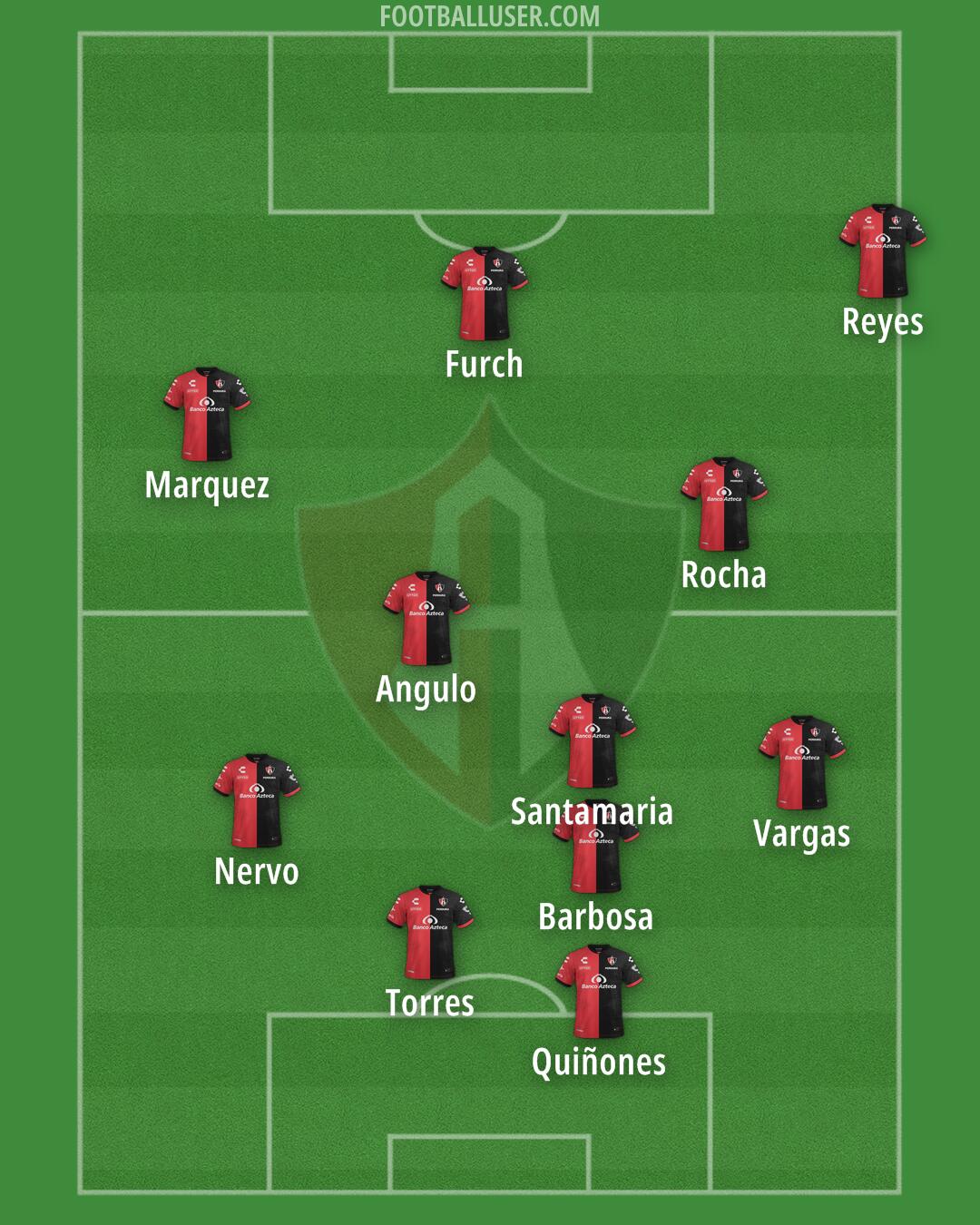
Furch · Quiñones · Nervo · Rocha · Angulo · Vargas · Reyes · Barbosa · Marquez · Santamaria · TorresAtlas prioritizes defensive solidity and quick transitions with a 5-3-2 formation. This lineup is built to sit deep and absorb pressure before hitting opponents on the break. The team relies on a compact unit that makes it difficult for the opposition to find space between the lines.
Quiñones stays between the posts to organize the defense. The back five consists of Santamaria, Torres, and Barbosa, who form a central trio. Santamaria acts as the central anchor, while Torres and Barbosa provide cover and are dominant in the air. The wing backs, Nervo and Vargas, are responsible for providing width. Nervo plays as the left wing back to push up the flank, while Vargas operates on the right to track back and defend against wide runners. The unit tends to hold a low block to deny space behind the defenders.
In front of the defense, a three-man midfield works to control the central area. Angulo acts as the single pivot to shield the back line and recycle possession. Rocha operates as a central midfielder to connect the defensive and attacking lines, while Marquez plays as an attacking midfielder to drive the team forward. Marquez works to find pockets of space to play through the lines, while Angulo and Rocha focus on winning the second ball and pressing in a mid-block to disrupt the opponent.
The attacking duo of Furch and Reyes works as two forwards in a partnership. Furch often acts as a target man to hold up the ball, allowing the team to move up the pitch. Reyes works alongside him to make runs in behind the defense. They press from the front to force a long ball from the opposition. When Atlas wins the ball, the wing backs Nervo and Vargas push high to provide width, creating combinations with the two strikers to exploit transitions.
This formation offers significant tactical advantages through its compactness when defending. By crowding the central areas, Atlas makes it hard for opponents to play through the middle. The team also benefits from the speed of transition when the wing backs move forward to create wide overloads. This allows Atlas to switch play quickly and catch the opposition out of position.
Atlas utilizes a heavy defensive presence to frustrate more expansive sides. This 5-3-2 formation is best suited for games against teams that dominate possession.