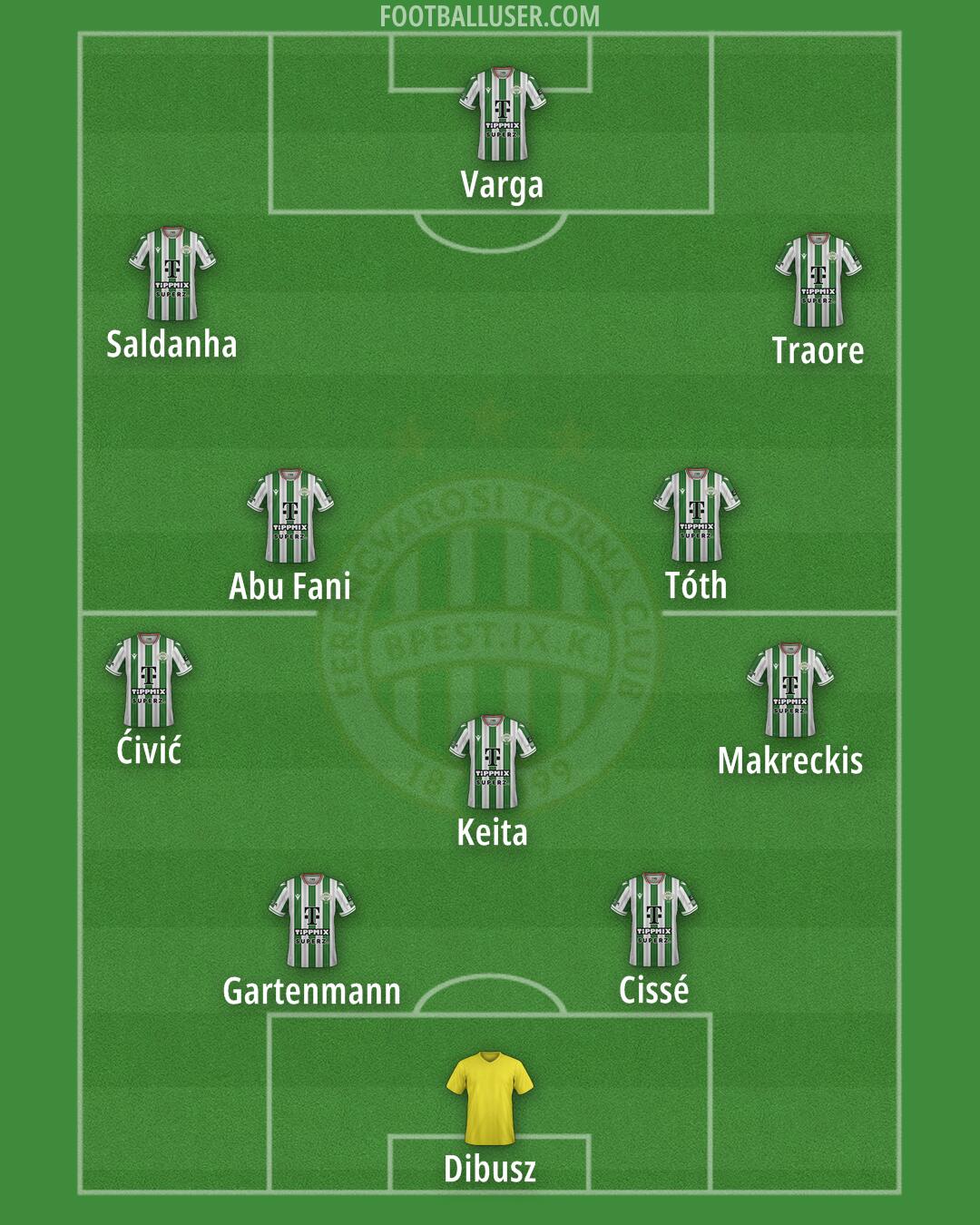

Ferencváros Football Formation
 March 9, 2025


Starting Lineup
Dibusz · Makreckis · Cissé · Gartenmann · Ćivić · Tóth · Abu Fani · Varga · Traore · Keita · SaldanhaFerencváros relies on a direct and transition heavy identity using a 5-2-3 formation. This lineup is built to sit in a mid-block and strike quickly when the opposition loses the ball. Players seek to exploit the space behind the defense through rapid movement in the final third.
Dibusz operates between the posts to command the penalty area and use his reflexes to clear the lines. The defensive unit functions as a back five with Keita acting as the central anchor to sweep behind the line. Gartenmann and Cissé play as the wide centre backs to cover the channels and pick up runners. Makreckis and Ćivić act as attacking wing backs to provide width and stretch the opposition. This formation allows the team to maintain a compact block when defending deep.
A double pivot consisting of Abu Fani and Tóth controls the center of the pitch. Abu Fani works to shield the defense and win the second ball in the middle third. Tóth connects the defensive and attacking lines by carrying the ball forward to progress through the thirds. They work together to compress the midfield and deny the pivot of the opposition. This pairing is vital to recycle possession and switch play to the flanks.
Three attackers lead the charge in the final third. Varga acts as the central striker to hold up the ball and find the feet of his teammates. Traore and Saldanha operate as wide attackers who look to cut inside or get to the byline. The attack relies on the wing backs, Makreckis and Ćivić, to overlap the wide players and create crossing opportunities. These movements allow the team to hit in behind on the transition and attack the far post.
One major advantage for Ferencváros is the ability to create wide overloads from the wing backs. The defensive lineup provides great compactness when defending in a mid-block. Another strength is the speed of transition when the team wins the ball high up the pitch. This allows the front three to isolate defenders in one on one situations.
This formation provides a strong foundation for a side that plays with a direct intent. It is best suited for matches against opponents that push a high line and leave space to exploit.