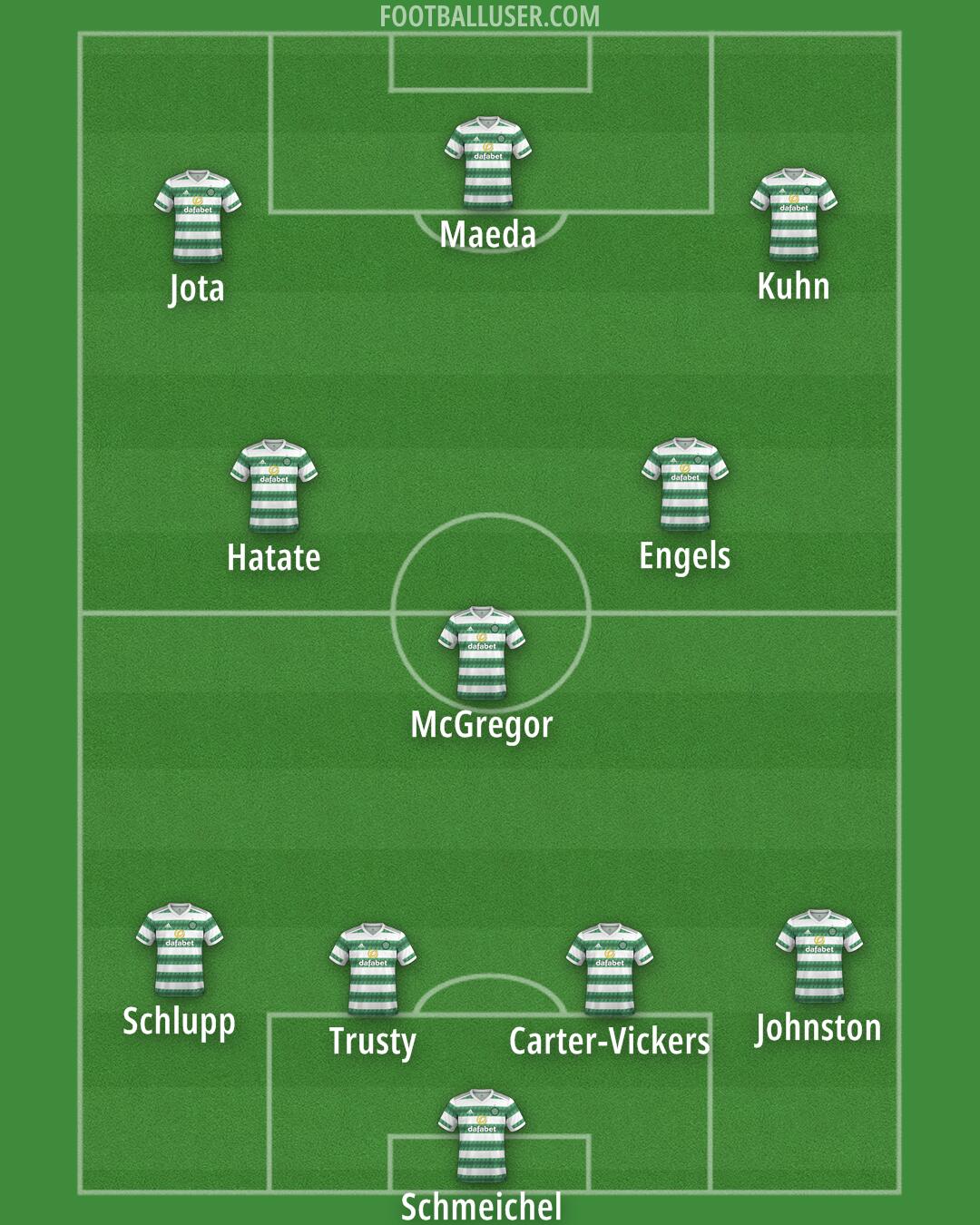
Celtic Football Formation
 March 15, 2025


Starting Lineup
Schmeichel · Johnston · Carter-Vickers · Trusty · Schlupp · McGregor · Hatate · Engels · Maeda · Jota · KuhnCeltic aims to dominate through a high press and aggressive ball recovery. This intent is visible in their 4-3-3 formation which is built to control games through high energy and constant pressure. The lineup seeks to pin opponents back and use quick vertical movements to exploit gaps in the defensive line.
Kasper Schmeichel plays behind a flat back four that can shift between a high line and a mid-block. Carter-Vickers acts as a ball playing defender to start attacks, while Trusty provides cover and remains dominant in the air. On the flanks, Johnston acts as an attacking full back to provide width, while Schlupp supports the left side and tracks back to maintain the defensive block. The unit works together to squeeze the space and force long balls.
The midfield is a three-man midfield with a carrier at the base. Callum McGregor sits in the single pivot role to shield the defence and recycle possession. Beside him, Hatate and Engels operate as inverted eights who connect the defensive and attacking lines. Hatate is known for his ball carrying and ability to move the ball forward, while Engels looks to arrive late into the box. This group works to win the second ball and progress through the thirds.
Celtic uses three attackers across the front to stretch the defence. Maeda plays as a pressing centre-forward to force the opposition back line into mistakes. On the wings, Jota acts as an inverted winger who cuts inside to create chances, while Kuhn stays wide to provide width and whip it in from the flanks. The front line is designed to create runs in behind and use link-up play between the lines to break the opposition.
This formation offers several tactical advantages for Celtic. The team can create wide overloads from the overlapping full backs combined with the movement of the wingers. They also benefit from the ability to press high in coordinated waves, making it difficult for opponents to build from the back. The presence of a strong midfield trio ensures they can control the tempo and win the second ball frequently.
The 4-3-3 formation provides a high intensity identity that relies on pressing and quick transitions. It is best suited for matches where the team needs to dominate possession and pin a deep defending opponent.