
Inter Football Formation
 April 2, 2025


Starting Lineup
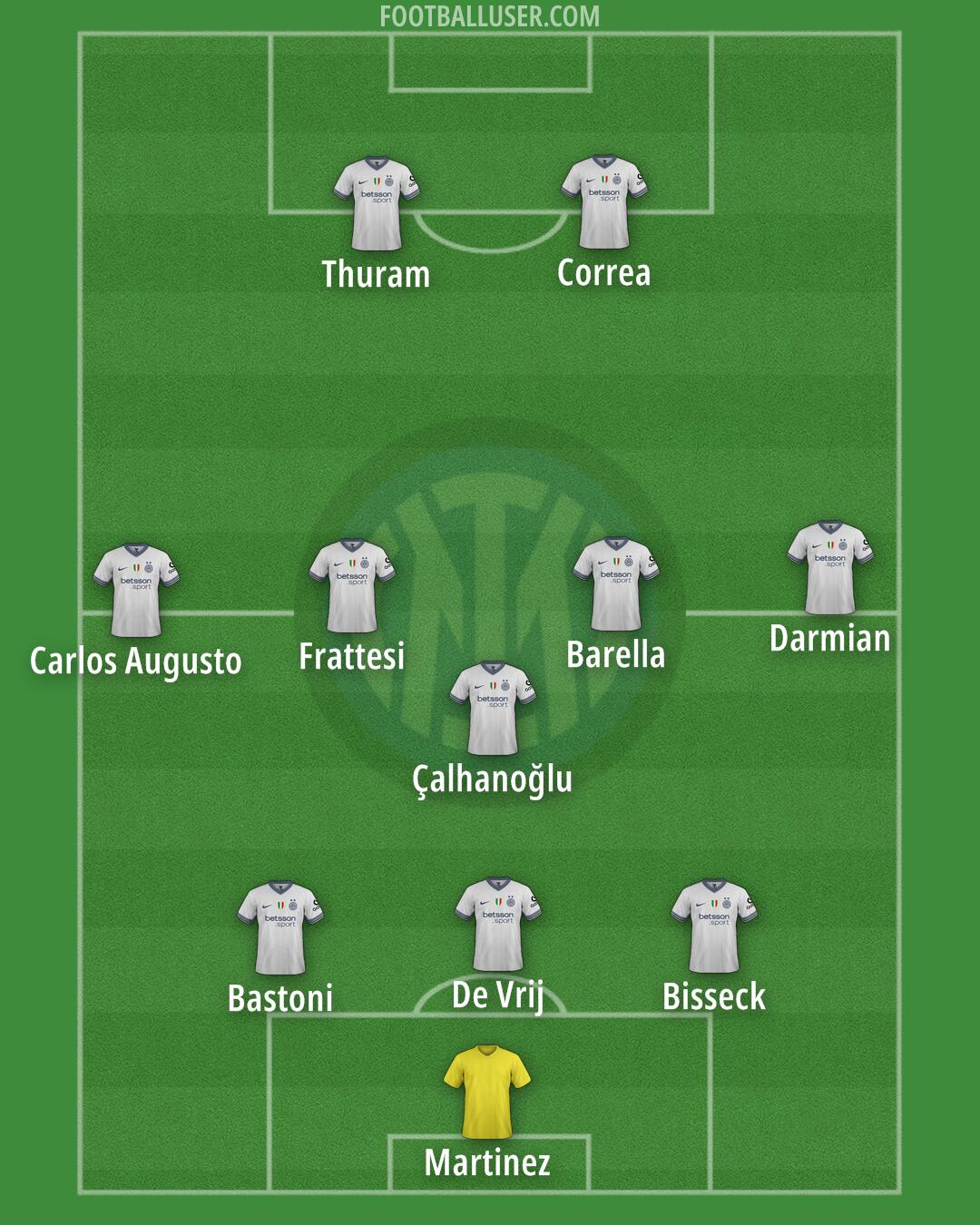
Martinez · Bisseck · De Vrij · Bastoni · Darmian · Frattesi · Çalhanoğlu · Barella · Carlos Augusto · Thuram · CorreaInter aims to control games through a high press and rapid verticality, utilizing a 3-5-2 formation. This lineup is built to dominate the central areas while using the width of the pitch to stretch the opposition. By maintaining a high line, Inter creates space to win the ball back high up the pitch and immediately transition into attack.
Martinez starts the build up from the back, acting as a reliable presence behind a back three. De Vrij sits in the middle to direct the line, providing aerial strength and positional intelligence. Bastoni plays as the left centre back with his ability to carry the ball forward into the midfield, while Bisseck operates on the right to cover wide spaces. The unit works to squeeze the space between the lines and ensure they are ready to spring the offside trap.
The midfield acts as the engine of this formation, using a three man midfield with a carrier to bridge the lines. Çalhanoğlu sits deep as the single pivot to protect the defence and recycle possession. Beside him, Barella and Frattesi operate in the half spaces, with Barella using his high pressing intensity to hunt the ball. They connect the defensive unit to the attack, with players like Frattesi looking to arrive late into the box to support the forwards.
In the attacking third, Inter uses two forwards in a partnership to pin the last defender. Thuram and Correa work in close combinations to create chaos, with Thuram often using his strength to hold up the ball and lay it off. Carlos Augusto and Darmian act as attacking wing backs, stretching the defence by hugging the touchline. This movement allows the strikers to find space between the lines or run in behind when the wing backs deliver a cross.
One major advantage is the numerical superiority in midfield, which allows Inter to control the tempo of the match. The ability to press high in coordinated waves makes it difficult for opponents to play out from the back. Furthermore, the wing backs provide wide overloads, which can isolate wide players in one on one situations when they reach the final third.
This formation is designed for a team that wants to dictate play through central dominance and aggressive pressing. It is best suited for matches against opponents who struggle to manage high intensity transitions.