Arsenal Football Formation
 April 8, 2025


Starting Lineup
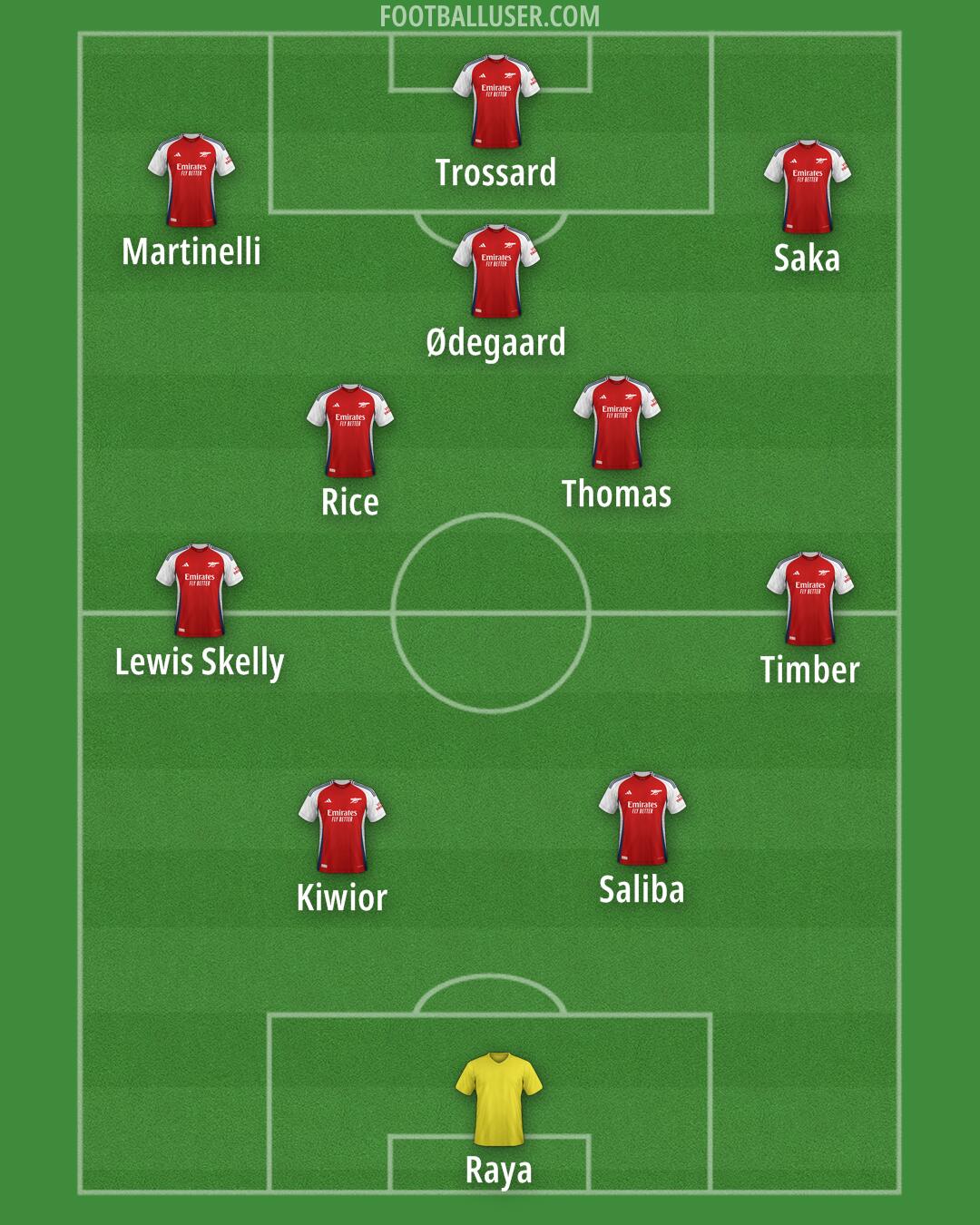
Lewis Skelly · Kiwior · Timber · Saliba · Trossard · Martinelli · Ødegaard · Rice · Thomas · Saka · RayaArsenal aims to control games through high pressing and heavy ball possession with a 2-5-3 formation. This lineup is built to dominate the middle of the pitch and pin the opposition back into their own half. The Gunners use this setup to create constant pressure and force turnovers high up the pitch.
Raya acts as the goalkeeper, playing a vital role in building from the back. Ahead of him, the defensive unit consists of a back two with Saliba and Kiwior. Saliba is a ball playing defender who can step up to intercept passes, while Kiwior provides cover to maintain the line. This narrow defensive duo relies on the five midfielders ahead of them to prevent runners from getting behind.
The midfield is the engine of this Arsenal lineup, operating in a five man block. Timber and Lewis Skelly act as the deep pivot, with Timber shielding the defense while Lewis Skelly helps to recycle possession. Rice plays as a central midfielder who can drive forward with the ball and win the second ball, while Thomas operates in the half spaces to connect the lines. Ødegaard plays as the attacking ten, operating in the pockets to find the feet of the striker and play through the lines.
The attacking front line uses three attackers to stretch the defense. Martinelli and Saka act as wide wingers who hug the touchline to provide width, with Saka often looking to cut inside to create chances. Trossard plays as a lone striker, working to hold up the ball and link up play between the lines. The team attacks in combinations, using the wingers to pull wide and create space for late runs into the box from the midfield.
This formation offers significant tactical advantages, particularly numerical superiority in midfield. By crowding the center, Arsenal can control the tempo and squeeze the space available to the opponent. The team also benefits from the ability to press high in coordinated waves, using the front three and the attacking midfielders to trigger a press the moment the ball is lost.
Arsenal utilizes this high risk, high reward formation to dominate territory through central control. It is best suited for matches against teams that sit deep and rely on counter attacks, as the midfield density can stifle their progression.