
Brazil National Football Team Formation
 April 19, 2025


Starting Lineup
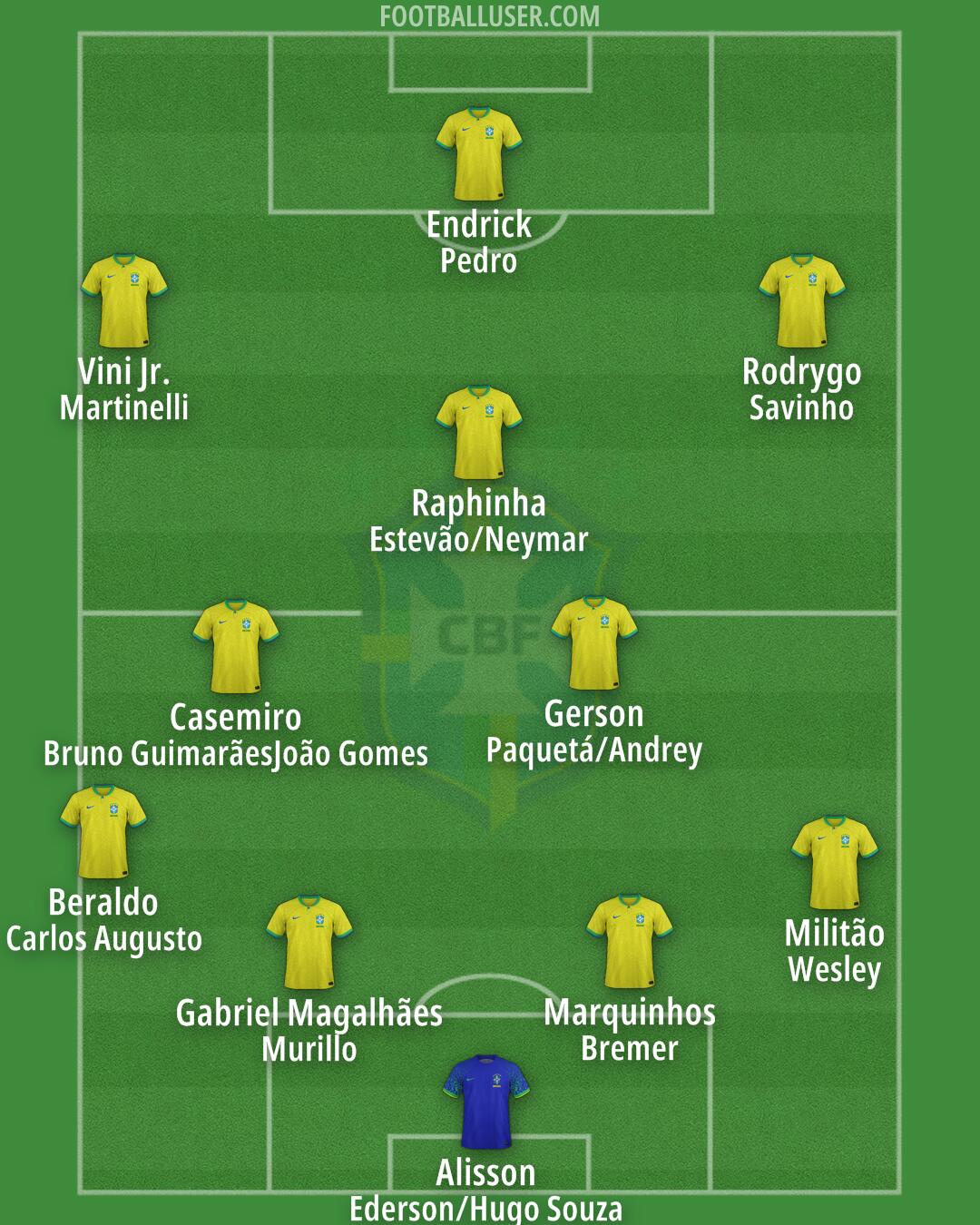
Alisson (Ederson/Hugo Souza) · Gabriel Magalhães (Murillo) · Beraldo (Carlos Augusto) · Militão (Wesley) · Marquinhos (Bremer) · Vini Jr. (Martinelli) · Rodrygo (Savinho) · Endrick (Pedro) · Raphinha (Estevão/Neymar) · Casemiro (Bruno GuimarãesJoão Gomes) · Gerson (Paquetá/Andrey)Brazil looks to dominate through high pressing and quick transitions in a 4-3-3. This lineup focuses on winning the ball high up the pitch to catch opponents out of position. The goal is to use the speed of the forward line to break quickly once possession is regained.
Alisson stays between the posts to organize the defensive unit. Brazil uses a flat back four that can step up to squeeze the space. Marquinhos acts as a ball playing defender with great composure, while Gabriel Magalhães uses his aerial strength to defend crosses. Militão plays as a right back who can carry the ball forward, and Beraldo works on the left to provide cover. The unit functions to keep a high line and set the offside trap to prevent long balls.
A three man midfield provides the engine for the Selecao. Casemiro sits in a single pivot role to shield the defence and intercept passes. Gerson operates as a carrier to drive forward with the ball and connects the defensive and attacking lines. Raphinha plays as an attacking ten behind the striker to press aggressively and win it back high up the pitch. This midfield works to recycle possession and ensure the team remains compact when the ball is lost.
The attacking structure relies on three attackers across the front to stretch the defence. Vini Jr. plays as an inverted winger on the left to cut inside and take on defenders, using his explosive dribbling style. Rodrygo occupies the right wing to provide width and looks to get to the byline. Endrick leads the line as a pressing centre forward to pin the last defender. These forwards work in combinations to create runs in behind and deliver early crosses into the box.
Brazil creates tactical advantages through speed of transition and numerical superiority in the final third. The movement of Vini Jr. and Rodrygo forces the opposition to pull wide, which creates space for Raphinha to play through the lines. The coordination of the front three allows them to press in pairs to trigger a press and force a long ball from the opposition.
This formation is built for a team that wants to control games through intense pressing and rapid attacking movements. It is best suited for matches against opponents that play a high line and struggle with pace in transition.