
Ecuador National Football Team Formation
 April 19, 2025


Starting Lineup
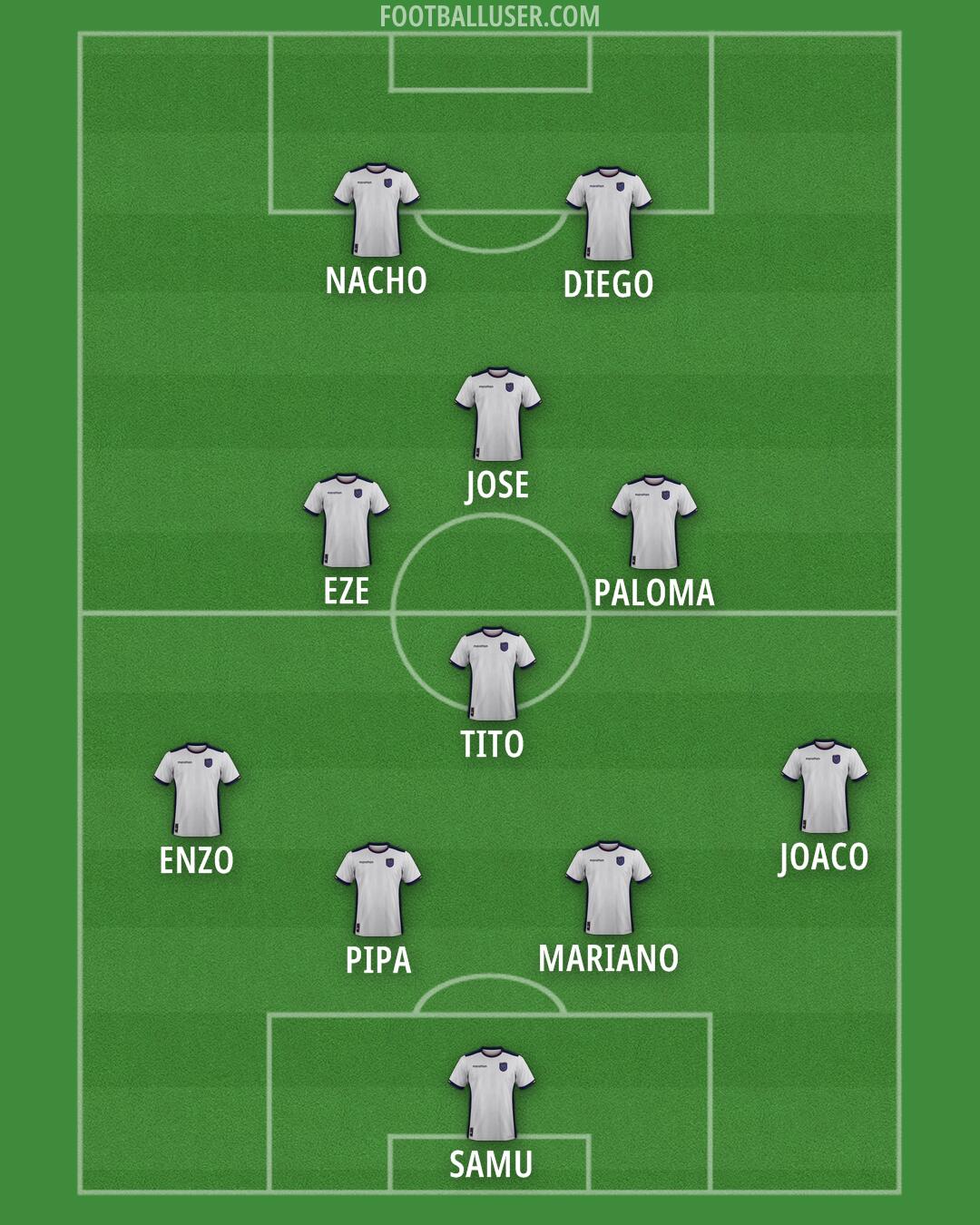
SAMU · JOACO · MARIANO · PIPA · ENZO · TITO · PALOMA · EZE · JOSE · NACHO · DIEGOEcuador relies on a heavy defensive foundation and quick verticality in a 5-3-2 formation. This lineup is built to sit deep and wait for the opponent to commit numbers forward before hitting them on the transition. By using this shape, the team aims to remain hard to beat while staying compact in the middle of the pitch.
SAMU guards the goal as the last line of defense. In front of him, a back five provides a narrow defensive block that is difficult to penetrate. TITO sits in the center to anchor the defense, while PIPA and MARIANO act as the wide centre-backs to cover the channels. The wing backs, ENZO and JOACO, are tasked with providing width and must track back to form a flat line of five when defending deep. This unit works to squeeze the space between the lines and ensure no runner can slip through.
The midfield consists of a three-man midfield with a carrier and creative links. PALOMA and EZE operate as the central duo, where they work to win the second ball and recycle possession quickly. JOSE plays as an attacking ten in the hole, looking to find pockets of space between the opposition midfield and defense. While PALOMA and EZE focus on protecting the central zone, JOSE acts as the link to the front two, looking to play through the lines once the ball is regained.
Ecuador uses two forwards in a partnership to stretch the opposition. NACHO and DIEGO lead the line, working together to pull defenders out of position. NACHO often plays as the more advanced striker, while DIEGO can drop slightly to hold up the ball and lay it off to oncoming runners. When attacking, ENZO and JOACO push high to provide width, allowing the forwards to stay central and search for runs in behind. This movement creates chances for the team to break quickly through combinations.
A major tactical advantage for Ecuador is the compactness when defending in a low block. This makes it very hard for opponents to find gaps in the central zone. The team also benefits from the ability to use the wing backs to create wide overloads during a transition. Because the midfield and defense stay so close together, they can shift quickly to double up on wide players and deny the turn.
This formation focuses on a disciplined defensive identity and rapid counter attacks. It is best suited for matches against teams that dominate possession and leave space behind their high line.