
Germany National Football Team Formation
 May 4, 2025


Starting Lineup
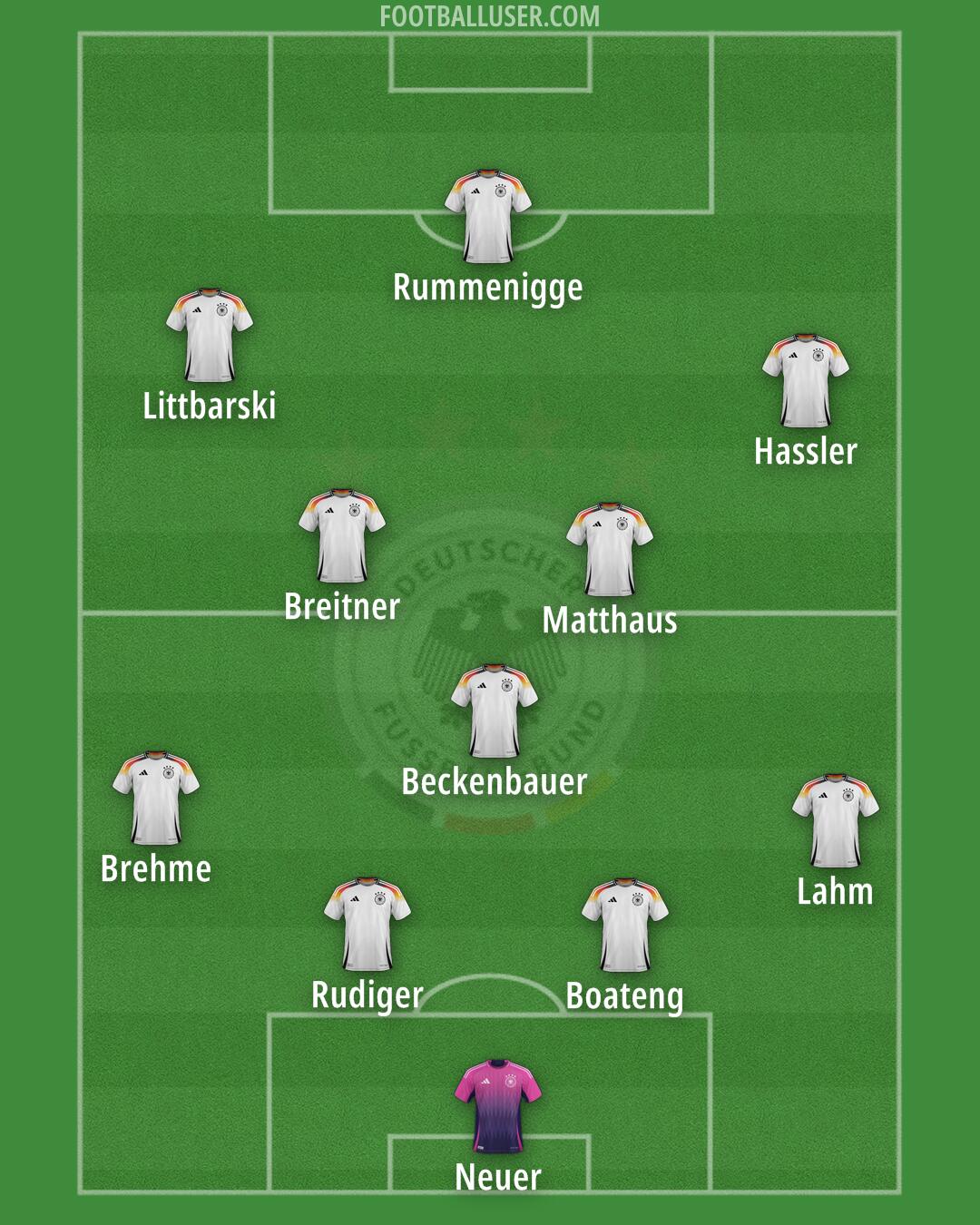
Matthaus · Beckenbauer · Breitner · Rummenigge · Littbarski · Brehme · Rudiger · Boateng · Neuer · Lahm · HasslerGermany plays with a heavy focus on high pressing and quick transitions through a 5-2-3 formation. This lineup is designed to win the ball high up the pitch and strike before the opposition can get organized. The focus is on verticality and using the width of the pitch to stretch the defence.
Neuer operates between the posts to organize the defence. The back line works as a back three with Beckenbauer acting as the central ball playing defender who can step up into midfield. Rudiger and Boateng sit on either side to cover the space and win headers. Lahm acts as an attacking wing back on the right while Brehme provides similar width on the left. These wide defenders push up to support the attack and help to pin the last defender.
The midfield consists of a two man unit featuring Matthaus and Breitner. Matthaus works to press aggressively and win the second ball to regain possession quickly. Breitner links the defensive and attacking lines by carrying the ball forward and playing through the lines. This pairing ensures the team stays compact when defending in a mid block. They work together to protect the centre and allow the wing backs to spread wide.
In the final third, Germany uses three attackers. Littbarski and Hassler operate as wide wingers to stretch the defence. Littbarski looks to cut inside to create chances while Hassler provides width and looks to whip it in. Rummenigge leads the line as a pressing centre forward who stays central to receive the ball and run in behind. This front three works in combination to attack the near post and far post depending on the ball position.
One major advantage for Germany is the ability to create wide overloads from the overlapping runs of Lahm and Brehme. The team also benefits from the capacity to press high in coordinated waves with the front three and the two central midfielders. This formation makes it difficult for opponents to play out from the back and often forces a long ball which the back three can easily clear the lines.
The 5-2-3 formation provides a balance between defensive solidity and rapid attacking transitions. It is best suited for matches against teams that rely on possession and leave space behind their defensive line.