Liverpool Football Formation
 May 5, 2025


Starting Lineup
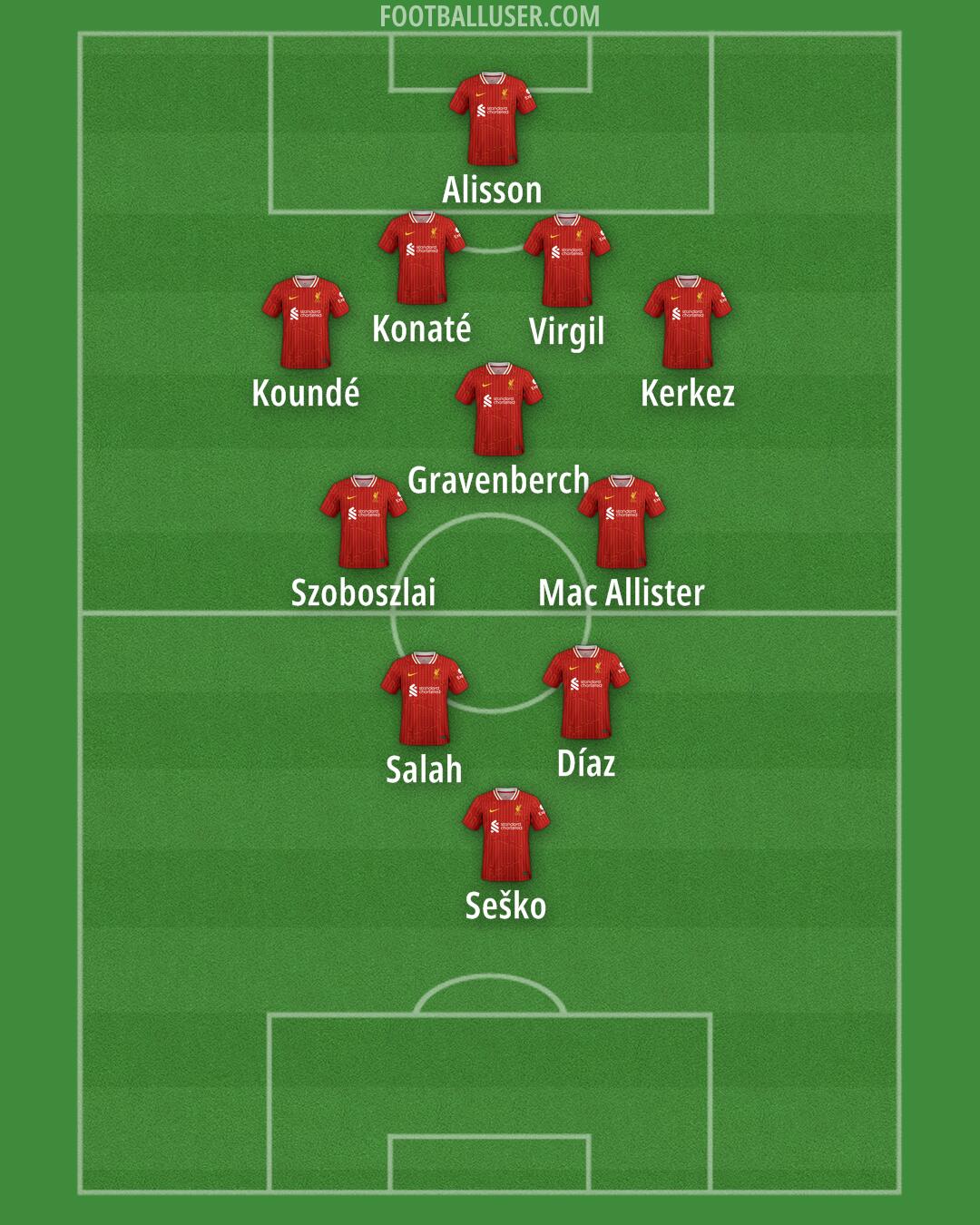
Kerkez · Alisson · Konaté · Koundé · Virgil · Seško · Szoboszlai · Gravenberch · Mac Allister · Salah · DíazLiverpool looks to win the ball back high up the pitch and attack with heavy verticality through a 5-2-3 formation. This lineup focuses on quick transitions and controlling the half spaces to stretch the opposition. By using a wide attacking front, the team aims to create constant pressure on the opponent's back line.
Alisson starts between the posts to organize the defense and sweep behind the line when the team pushes high. The back five features Virgil as the leader of the central unit, using his aerial strength and reading of the game to command the area. Konaté provides physical presence alongside him, while Gravenberch acts as a third central defender to help play out from the back. Koundé operates as a right wing back to provide defensive solidity, whereas Kerkez acts as an attacking wing back to push high and provide width.
The midfield works as a double pivot to manage the center of the pitch. Mac Allister connects the defensive and attacking lines with his passing range, while Szoboszlai uses his pressing intensity to win it back high up the pitch. This pair must stay compact to deny the turn of opposition midfielders and prevent direct passes through the center. They serve as the engine that allows the team to shift from a defensive block into a rapid counter at pace.
In the final third, Liverpool uses three attackers to pin the last defender. Seško operates as a lone striker to hold up the ball and lead the press from the front. On the flanks, Díaz acts as an inverted winger to cut inside into the half spaces, creating room for Kerkez to overlap the winger. Salah plays as an inverted winger on the right, looking to cut inside and find the feet of the striker or shoot.
This formation offers significant tactical advantages through its ability to create wide overloads. When Kerkez and Díaz combine, they force the opposition to commit extra players, which opens gaps in the middle. The team also benefits from a high degree of compactness when defending in a mid-block, making it very difficult for opponents to find space between the lines.
Liverpool relies on this aggressive setup to dominate teams that struggle with high-intensity pressing. This formation is best suited for matches where the team can exploit space on the transition against a high defensive line.