
Japan National Football Team Formation
 May 5, 2025


Starting Lineup
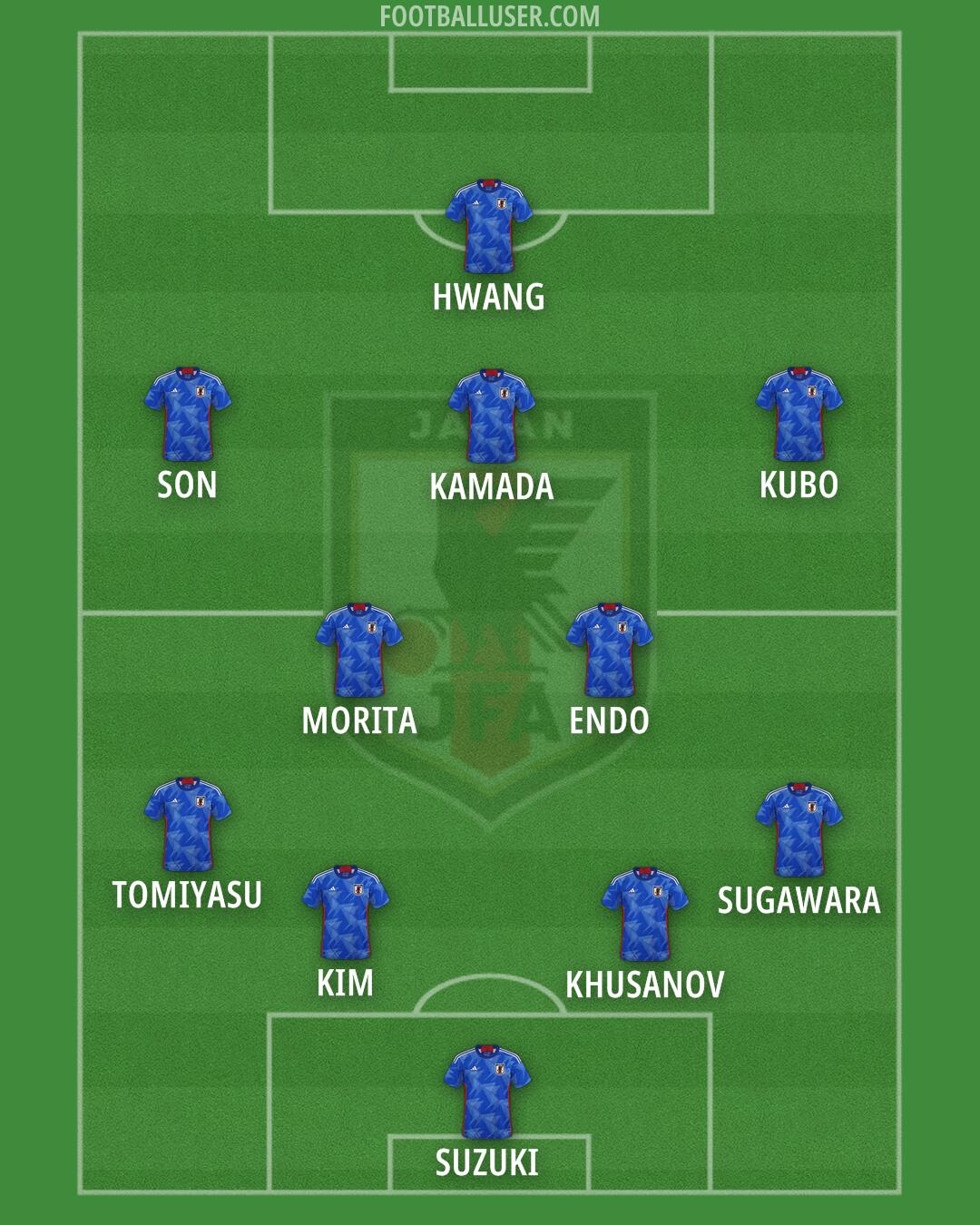
KIM · KHUSANOV · KUBO · SON · TOMIYASU · HWANG · KAMADA · MORITA · SUZUKI · ENDO · SUGAWARAJapan plays with a heavy focus on verticality and high pressure using a 4-2-4 formation. This lineup seeks to overwhelm the opposition in the final third and transition quickly once the ball is won. The goal is to use the front four to pin the opposition back and create constant chaos through direct attacking movements.
SUZUKI stands between the posts to manage the defensive line. The back four features SUGAWARA at right back and TOMIYASU at left back, both expected to provide width and track back when needed. KHUSANOV and KIM operate as the central defensive pairing, where KIM provides aerial strength and KHUSANOV acts as a covering defender. The defensive unit aims to hold a high line to squeeze the space and keep the play in the opponent half while they defend zonally.
A double pivot forms the engine room for Japan. ENDO sits in the right central midfield role to shield the defense and intercept passes, using his high work rate to win the second ball. MORITA plays as the left central midfielder to connect the defense and attack, often carrying the ball forward to find the front four. This pair must work hard to cover the large spaces left behind the high defensive line and ensure they do not get bypassed by central runners.
The attack is built around four aggressive players. KUBO operates on the right wing as an inverted winger with a distinctive dribbling style who cuts inside to create chances, while SON plays on the left with his clinical finishing and pace. KAMADA and HWANG lead the line as a striking partnership. KAMADA often drops deep to link play, while HWANG acts as a pressing centre-forward to harass the opposition center backs. The front four look to exploit runs in behind and use quick combinations to break the line and find space in the box.
This 4-2-4 formation offers massive width and pressure in the attacking third. By using four attackers, Japan can create wide overloads when KUBO or SON pull defenders out of position. Another advantage is the ability to press high in coordinated waves, making it difficult for opponents to play out from the back. The speed of transition allows the team to hit in behind on the transition before the opposition can settle or clear the lines.
The Japan lineup is built for aggressive, direct football that targets weak defensive lines. This formation is best suited for matches where the team needs to break down a low block or catch an opponent playing a high line.