
Japan National Football Team Formation
 May 10, 2025


Starting Lineup
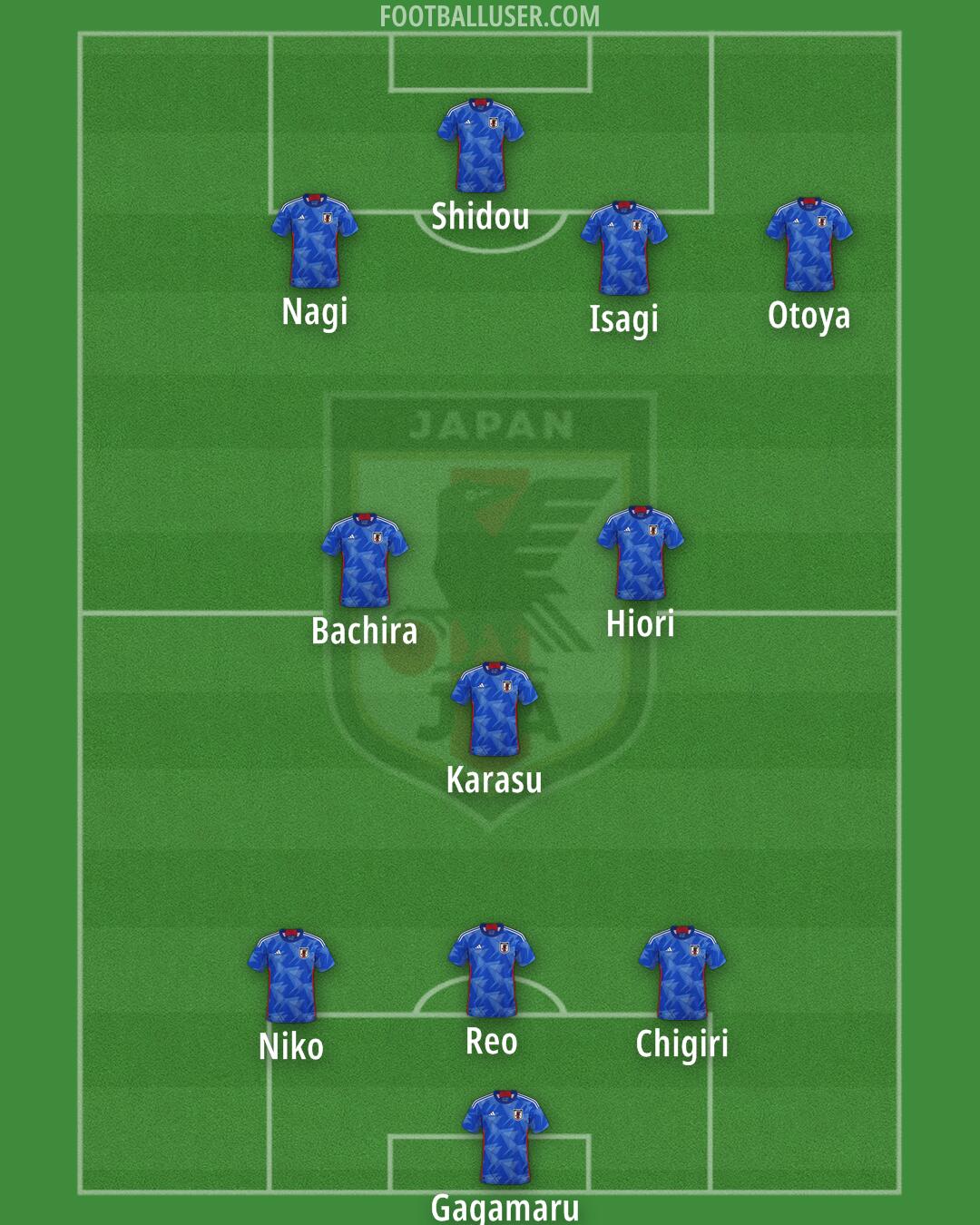
Shidou · Isagi · Hiori · Bachira · Niko · Reo · Karasu · Gagamaru · Chigiri · Otoya · NagiJapan relies on a direct and vertical style of play to exploit spaces behind the opposition, utilizing a 3-3-4 formation. This lineup focuses on overwhelming the final third by committing many players forward to pressure the back line. The goal is to win the ball high up the pitch and strike with speed before the opponent can regroup.
Shidou stays between the posts to command the area. The defensive unit operates as a back three, with Isagi acting as the central defender to sweep behind the line and manage the space. Nagi plays as the right centre-back to provide presence in the air, while Otoya sits on the left to cover the wide areas. This defensive trio must hold a high line to compress the pitch and keep the team compact.
In the middle of the park, a three-man midfield provides the link between the defence and the attack. Karasu operates as the attacking ten, looking to find pockets of space and pick up runners. Hiori acts as the right central midfielder to progress through the thirds with his passing range, while Bachira plays on the left to drive forward with the ball. These players work to win the second ball and quickly switch play to the wings.
The attacking unit is heavy and designed to stretch the defence. Chigiri plays as a wide winger on the left to use his pace and knock it in behind. On the right, Niko acts as an inverted winger to cut inside and create overloads. Reo and Gagamaru lead the line as a strike partnership, with Reo working to hold up the ball and find the feet of the striker. They press from the front to force a long ball from the opposition.
Japan gains a massive advantage through their ability to press high in coordinated waves. By committing four players to the front, they can squeeze the space and force turnovers in dangerous areas. The combination of Bachira and Karasu in the midfield allows for quick transitions, often resulting in numerical superiority in the final third. This setup makes it very difficult for opponents to build play from the back.
This 3-3-4 formation is built for high intensity and aggressive attacking. It is best suited for games where the opponent plays a high line and can be punished with quick, vertical movements.