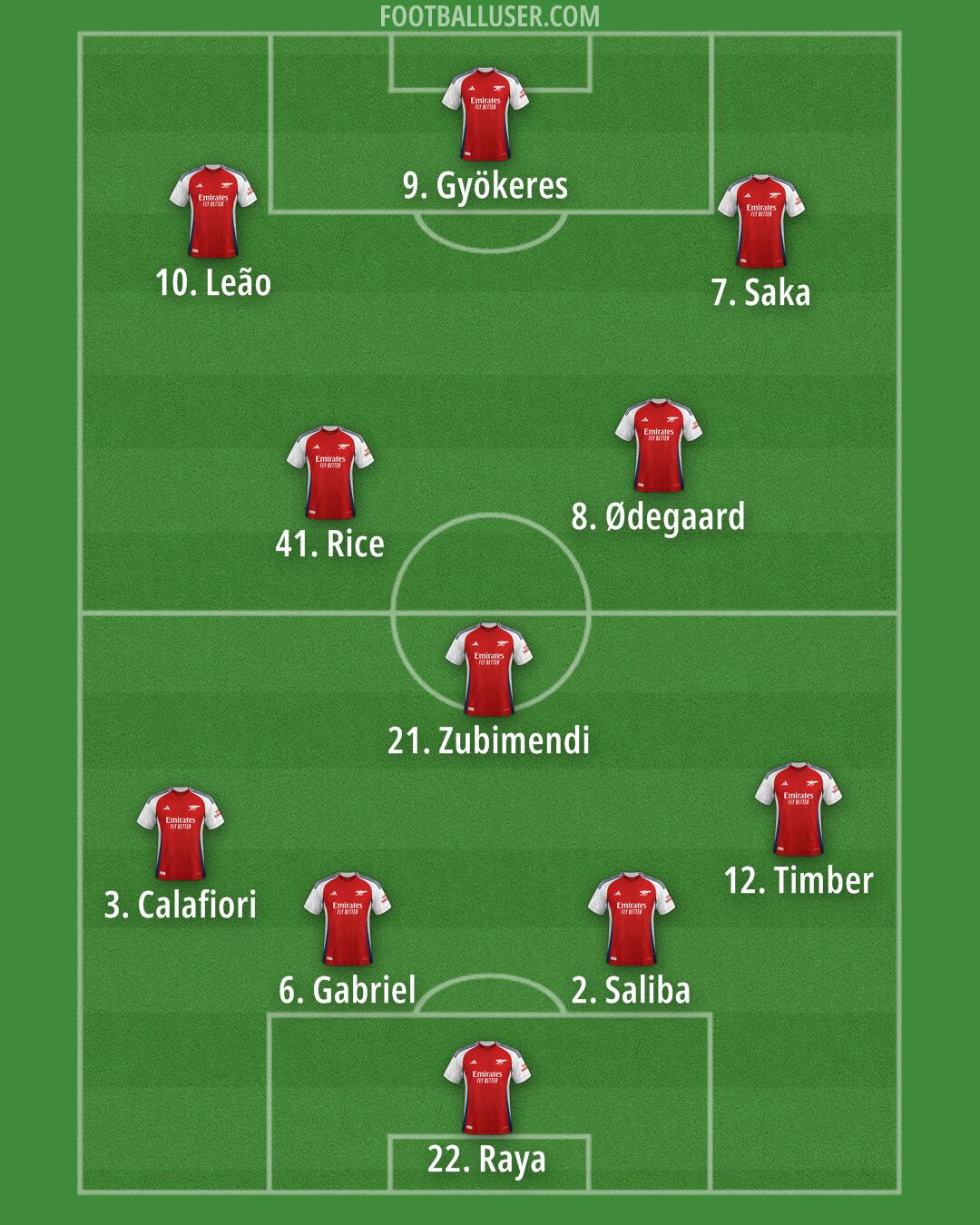
Arsenal Football Formation
 May 10, 2025


Starting Lineup
9. Gyökeres7. Saka
10. Leão
8. Ødegaard
41. Rice
21. Zubimendi
2. Saliba
6. Gabriel
3. Calafiori
12. Timber
22. Raya
Arsenal aims to control matches through a high press and rapid verticality using a 5-2-3 formation. This lineup is built to win the ball high up the pitch and immediately attack the space between the opposition lines. By using a back five, the team creates a solid base that allows the wing backs to push very high in possession.
Raya operates between the posts to sweep behind a high line. The defensive unit consists of a back three with Zubimendi acting as the central defender to command the area. Saliba plays as the right centre back and uses his recovery pace to cover large spaces, while Gabriel stays on the left to provide aerial strength. Timber and Calafiori act as attacking wing backs, providing width and pushing up to join the midfield when Arsenal has the ball.
A two man midfield serves as the engine room for this Arsenal side. Rice plays as the left sided midfielder to shield the defense and win second balls, while Ødegaard operates as the right sided creator to drive forward and link the defense to the attack. This pairing requires intense work rate to compress the midfield and prevent opponents from playing through the center. They must be ready to press in pairs to force long balls from the opposition.
The attacking unit features three players positioned to stretch the defense. Gyökeres acts as the central striker to hold up the ball and pin the last defender. Leão and Saka operate as wide attackers, with Leão cutting inside from the left and Saka staying wide on the right to isolate defenders in one on one situations. This front line is designed to attack in combinations, using quick passes to find Gyökeres or making runs in behind the defensive line.
This formation offers significant tactical advantages through its ability to create wide overloads when Timber and Calafiori advance. Arsenal can also achieve numerical superiority in the final third by having the wing backs occupy the wide areas. The compactness when defending in a mid block makes it difficult for opponents to find gaps, while the speed of transition allows the team to hit opponents in behind.
The 5-2-3 formation provides a robust platform for a team that wants to dominate both through defensive stability and aggressive attacking transitions. It is best suited for facing opponents who play with a high line or those who struggle to handle intense pressure in their own half.