
Milan Football Formation
 May 13, 2025


Starting Lineup
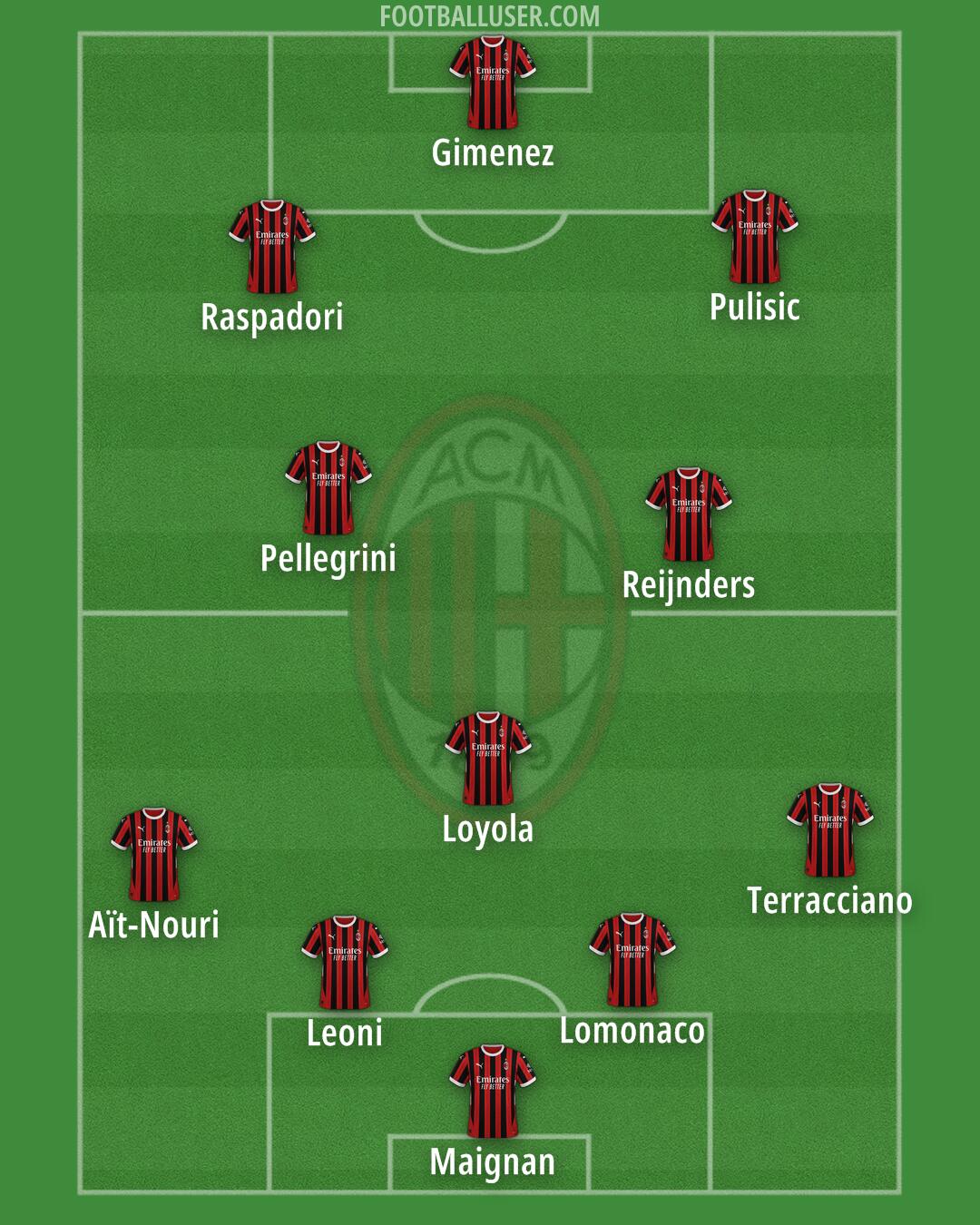
Terracciano · Lomonaco · Leoni · Maignan · Loyola · Reijnders · Pellegrini · Pulisic · Raspadori · Gimenez · Aït-NouriMilan relies on a direct and vertical identity. The team utilizes a 5-2-3 formation to focus on quick transitions and attacking in space. This lineup is built to play a game of high intensity where the focus is on winning the ball and moving forward immediately.
Maignan operates between the posts to command the area with his shot stopping and ability to sweep behind the defensive line. The defensive unit consists of a back five where Loyola holds the central position to cover the wider defenders. Leoni and Lomonaco provide stability as the side centre-backs, capable of stepping up to intercept passes. Aït-Nouri and Terracciano act as attacking wing backs who push high up the pitch to stretch the defence. When the team defends in a low block, these five work together to stay compact and force the opposition wide.
In the middle of the pitch, the team uses a double pivot to control the central zone. Reijnders acts as a carrier to drive the ball forward and connect the defensive line to the attackers. Pellegrini plays a more defensive role to shield the defence and win the second ball in midfield. Together, they work to squeeze the space and prevent the opposition from playing through the lines. They also look to intercept play and trigger a press when the ball enters their zone.
The attacking unit features three players who push high to pressure the opposition back line. Gimenez works as a pressing centre-forward to harass defenders and win the ball back high up the pitch. Pulisic operates as an inverted winger who uses his dribbling to cut inside and create chances, while Raspadori stays wide to provide width and deliver a cross. This front three aims to hit in behind on the transition by making runs in behind the defenders. They combine in tight spaces to pull the opposition out of position.
The tactical advantages of this 5-2-3 are clear in how Milan uses the width of the pitch. The overlapping wing backs allow Aït-Nouri and Terracciano to create wide overloads that pin the last defender. This extra presence in the wide areas allows the wingers to find more space in the half-spaces. Additionally, the formation allows the team to transition from a mid-block to a counter at pace, catching opponents while they are disorganized.
Milan employs this formation to maintain a solid defensive base while remaining lethal on the break. It is best suited for facing teams that commit many players forward and leave space behind their defenders.