
Inter Football Formation
 May 24, 2025


Starting Lineup
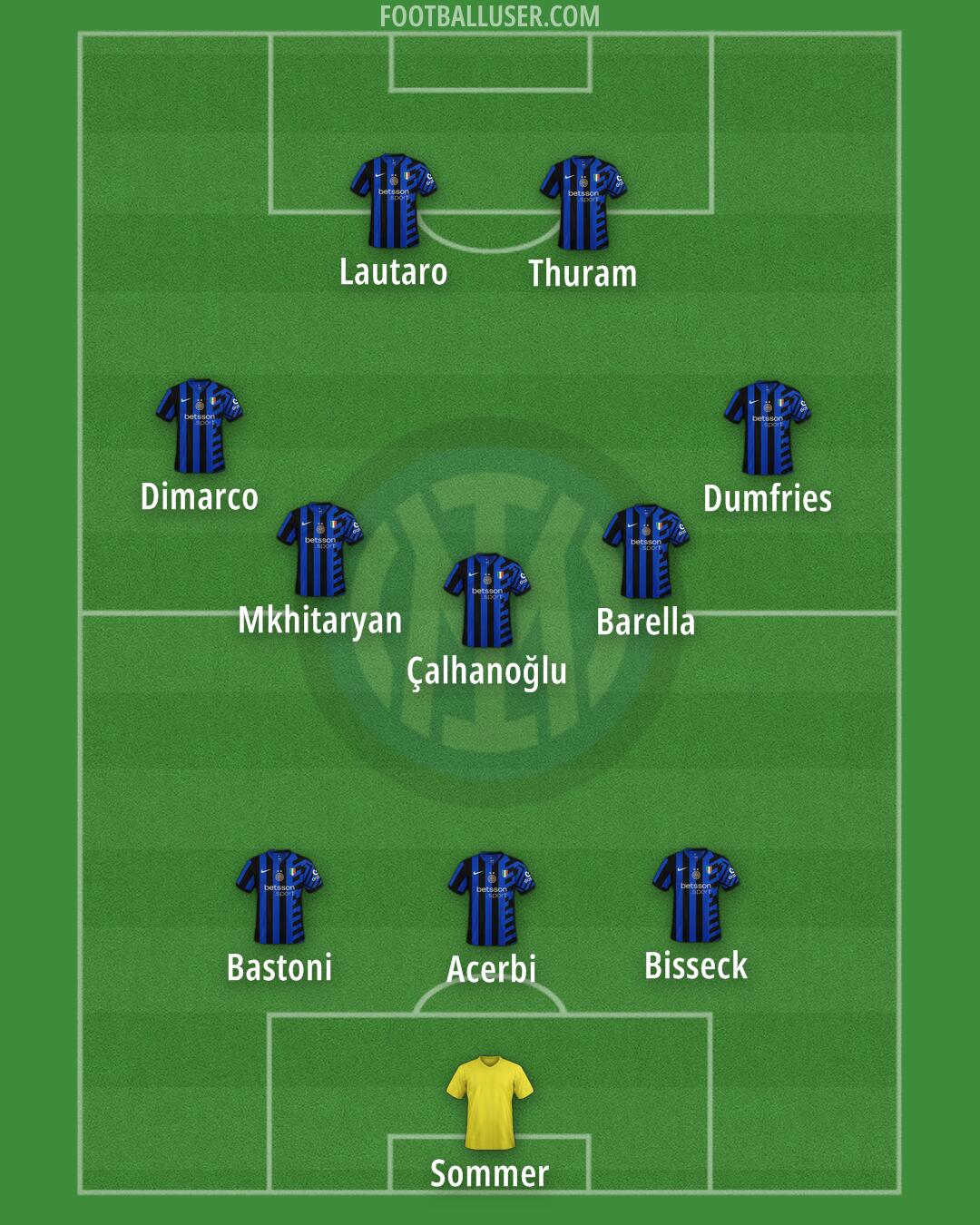
Lautaro · Thuram · Dimarco · Dumfries · Acerbi · Barella · Çalhanoğlu · Mkhitaryan · Bisseck · Bastoni · SommerInter prioritizes high intensity and directness to control the rhythm of the match. This 3-5-2 formation is built to dominate the central areas while utilizing the full width of the pitch to stretch the opposition. The team relies on a high press and quick transitions to break the lines of the defense and create scoring chances.
Sommer acts as the goalkeeper to organize the defensive unit. The back line features a back three where Acerbi, Bastoni, and Bisseck defend zonally. Bastoni operates as a ball playing defender on the left, while Bisseck covers the right side. Acerbi stays central to win the header and hold the line. Dimarco and Dumfries function as attacking wing backs, providing width in possession but must track back to support the defense when the team sits in a mid-block.
Midfield control is provided by a three-man unit with a deep playmaker and a carrier. Çalhanoğlu sits deep to recycle possession and play through the lines. Barella works as an inverted eight, driving forward with the ball and arriving late into the box. Mkhitaryan connects the defensive and attacking lines, ensuring the team can move the ball from the back to the front. This midfield unit works to squeeze the space and win the second ball.
The attacking front line of Inter uses two forwards in a partnership to pressure the opposition. Lautaro plays as a pressing centre-forward to force a long ball, while Thuram looks to run in behind. Width is provided by Dimarco and Dumfries, who stretch the defence by playing high up the pitch. While Dimarco frequently cuts inside to create central numbers, Dumfries aims to get to the byline to deliver a cross.
A key advantage of this formation is the numerical superiority in midfield, which allows Inter to control the tempo and dictate play. The wide overloads created by Dimarco and Dumfries can isolate wide players in one on one situations, forcing defenders out of position. Furthermore, the team possesses great speed of transition to exploit spaces when the opponent loses the ball, allowing for rapid attacks.
This lineup provides a balanced way to control games through both central dominance and wide play. It is most effective against teams that defend in a narrow formation and struggle to track wide runners or deal with the pressure from the front.