
Brazil National Football Team Formation
 May 30, 2025


Starting Lineup
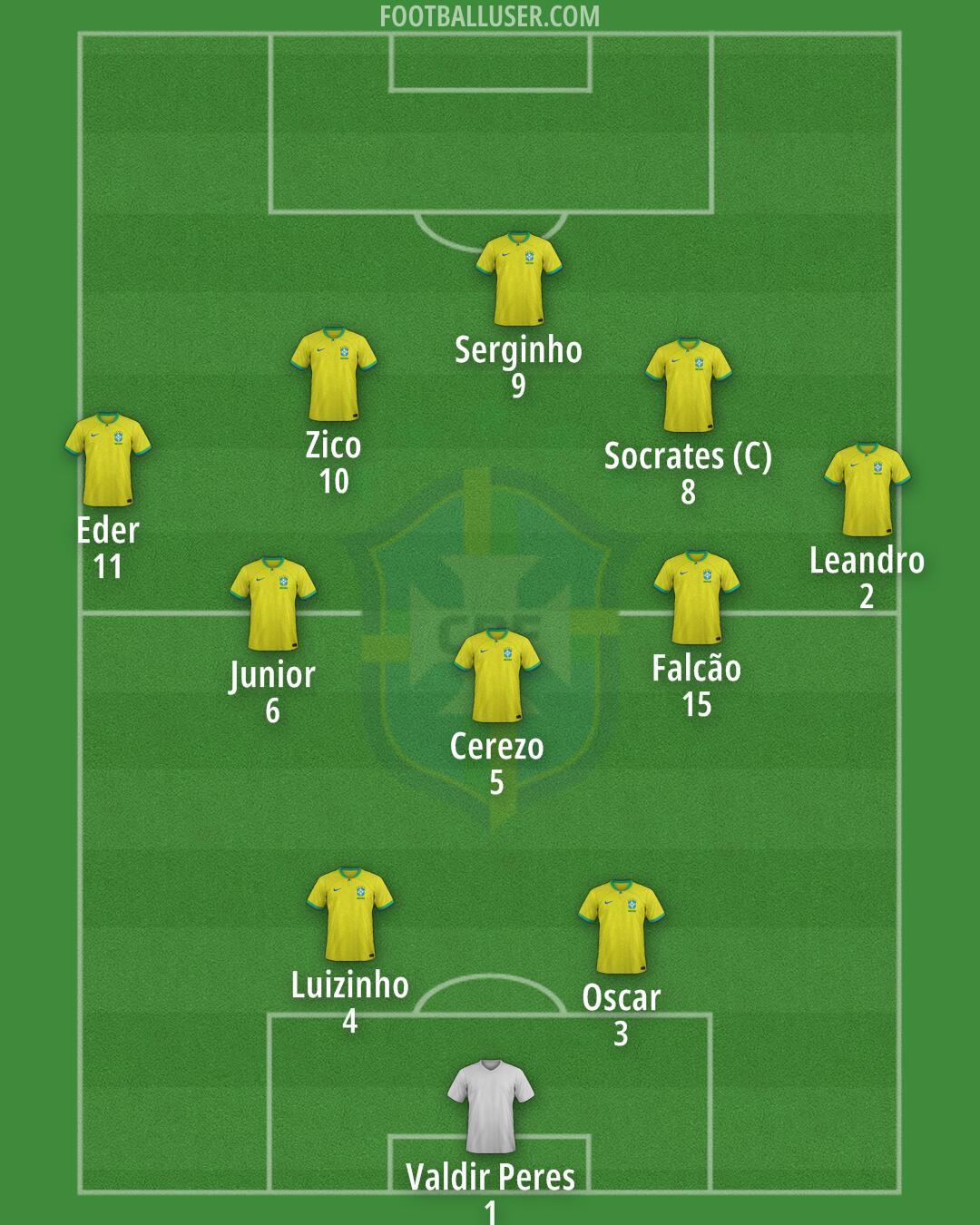
Valdir Peres (1) · Luizinho (4) · Socrates (C) (8) · Junior (6) · Leandro (2) · Oscar (3) · Falcão (15) · Cerezo (5) · Eder (11) · Serginho (9) · Zico (10)Brazil plays with a heavy focus on attacking numbers and verticality using a 2-5-3 formation. This lineup is built to dominate the middle of the pitch and overwhelm the opposition through high volume of passing and aggressive forward movements. The team aims to control the tempo and push high up the pitch to sustain pressure in the final third.
Valdir Peres stays between the posts to manage the defensive line. The defensive unit is very minimal with only two central defenders, Oscar and Luizinho, who must hold a high line to keep the team compact. These two need to be dominant in the air and quick to cover space when the midfield is bypassed. Because the back line is so small, Oscar and Luizinho must constantly communicate to protect the space behind them and handle any long balls played against them.
The midfield is the engine room for Brazil, functioning as a five man unit that controls the center. Cerezo operates as a single pivot to shield the defense and recycle possession. Junior and Falcão play as the central midfielders, with Junior acting as a carrier to drive forward with the ball while Falcão looks to connect the lines. Leandro and Eder provide much needed width from the half spaces, acting as attacking midfielders who can push wide or drift inside to create overloads. This midfield group is designed to win the second ball and quickly progress through the thirds.
The attacking front line uses three attackers to stretch the defense. Serginho acts as a pressing centre-forward to harass the opposition back line. Zico operates as an inverted winger on the left, looking to cut inside and create chances with his passing range. Socrates (C) leads the group from the right wing, using his intelligence to drop into pockets of space and link up with the midfield. This trio creates constant threat through combinations and runs in behind, often forcing the opposition to defend in very deep areas.
This formation offers significant tactical advantages, primarily through massive numerical superiority in the midfield. The ability of Leandro and Eder to occupy the wide areas creates wide overloads that pull defenders out of position. Brazil can also press high in coordinated waves, using the front three and the wide midfielders to squeeze the space in the opponent half. This allows the team to win the ball back high up the pitch and attack before the defense can settle.
Brazil relies on a high risk, high reward system that prioritizes offensive dominance. This lineup is best suited for matches where they need to break down a low block or overwhelm a technically inferior side.