Liverpool Football Formation

Creation DateJune 4, 2025

Starting Lineup

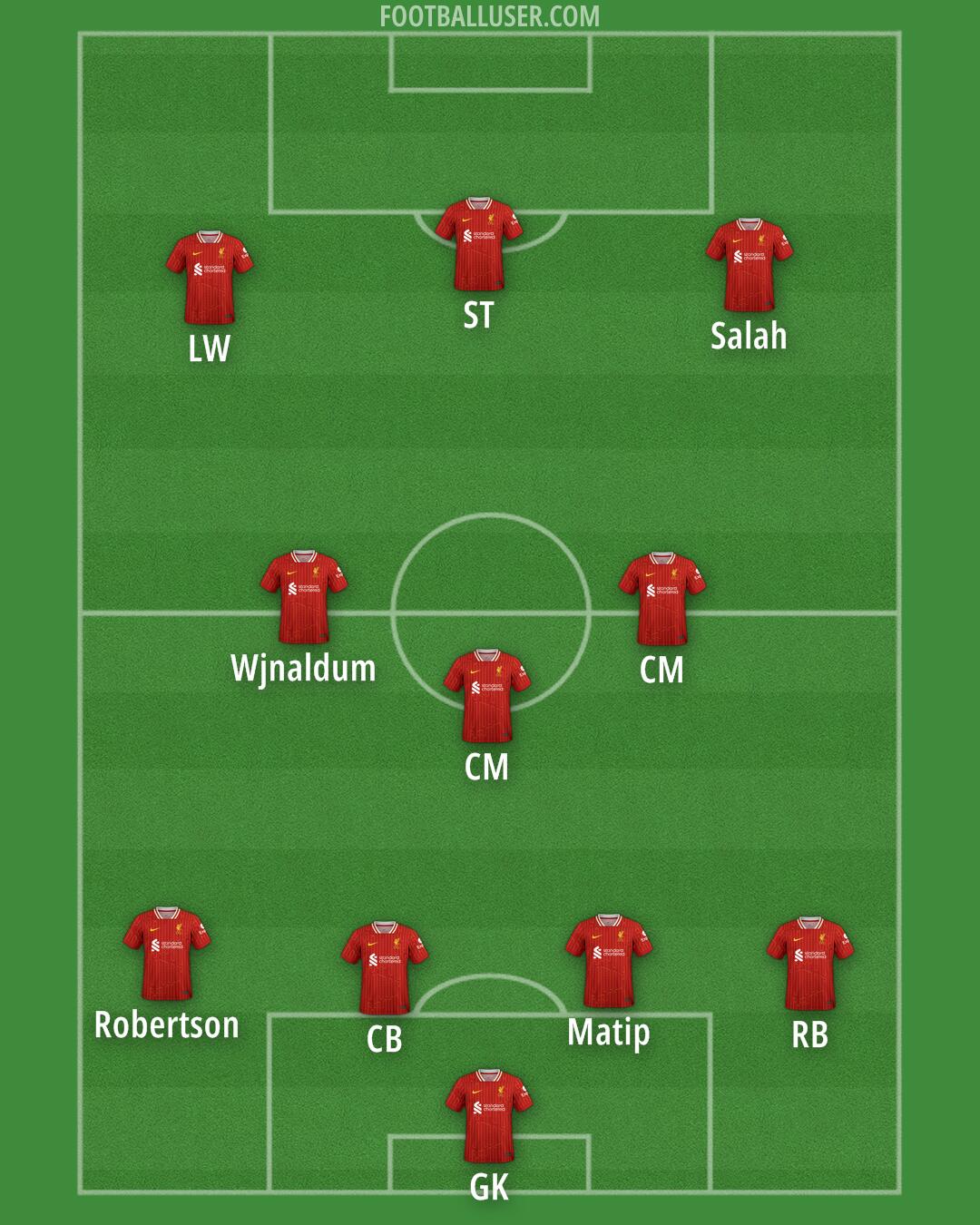
GK · Robertson · Matip · CB · RB · Wjnaldum · CM · CM · Salah · ST · LW

Liverpool relies on a heavy high press and quick transitions to overwhelm opponents, operating primarily in a 4-3-3 formation. This lineup is built to hunt the ball high up the pitch and strike with immense speed once possession is won. The goal is to squeeze the space in the opposition half and use verticality to punish teams that fail to keep possession under pressure.

In the defensive unit, the goalkeeper acts as the first line of defense to sweep behind a high line. The back four consists of Matip as the right centre-back and his partner on the left, while Robertson operates as an attacking left-back. On the right, the full-back provides width, often pushing high to support the attack. The central defenders must be comfortable playing out from the back and capable of stepping up to set the offside trap, ensuring the team stays compact while defending zonally.

The midfield functions with a three man unit that connects the defense to the attack. A central defensive midfielder sits in front of the back four to shield the defense and deny the pivot. Alongside him, Wjnaldum works as a left central midfielder, using his physical presence to win the second ball and drive the team forward. The right central midfielder completes this trio, helping to recycle possession and pressing aggressively to win the ball high up the pitch.

Moving into the attacking phase, Liverpool uses three attackers across the front to stretch the defense. Salah operates as an inverted winger on the right, frequently cutting inside to find scoring opportunities with his clinical finishing. The left winger stays wide to pull defenders out of position, while the striker leads the line as a focal point. This front line is designed to press the opposition back line relentlessly, creating chances through runs in behind and quick combinations in the final third.

A key advantage for Liverpool is the ability to press high in coordinated waves, making it difficult for opponents to build play. The formation also creates wide overloads through the movement of Robertson and the overlapping full-back, which forces the opposition to shift and leave gaps in the middle. This constant movement allows the team to exploit spaces quickly during transitions.

This 4-3-3 formation is built for high intensity and direct attacking play. It is most effective against teams that struggle to play under pressure or those that leave large gaps between their midfield and defensive lines.