Man City Football Formation
 June 4, 2025


Starting Lineup
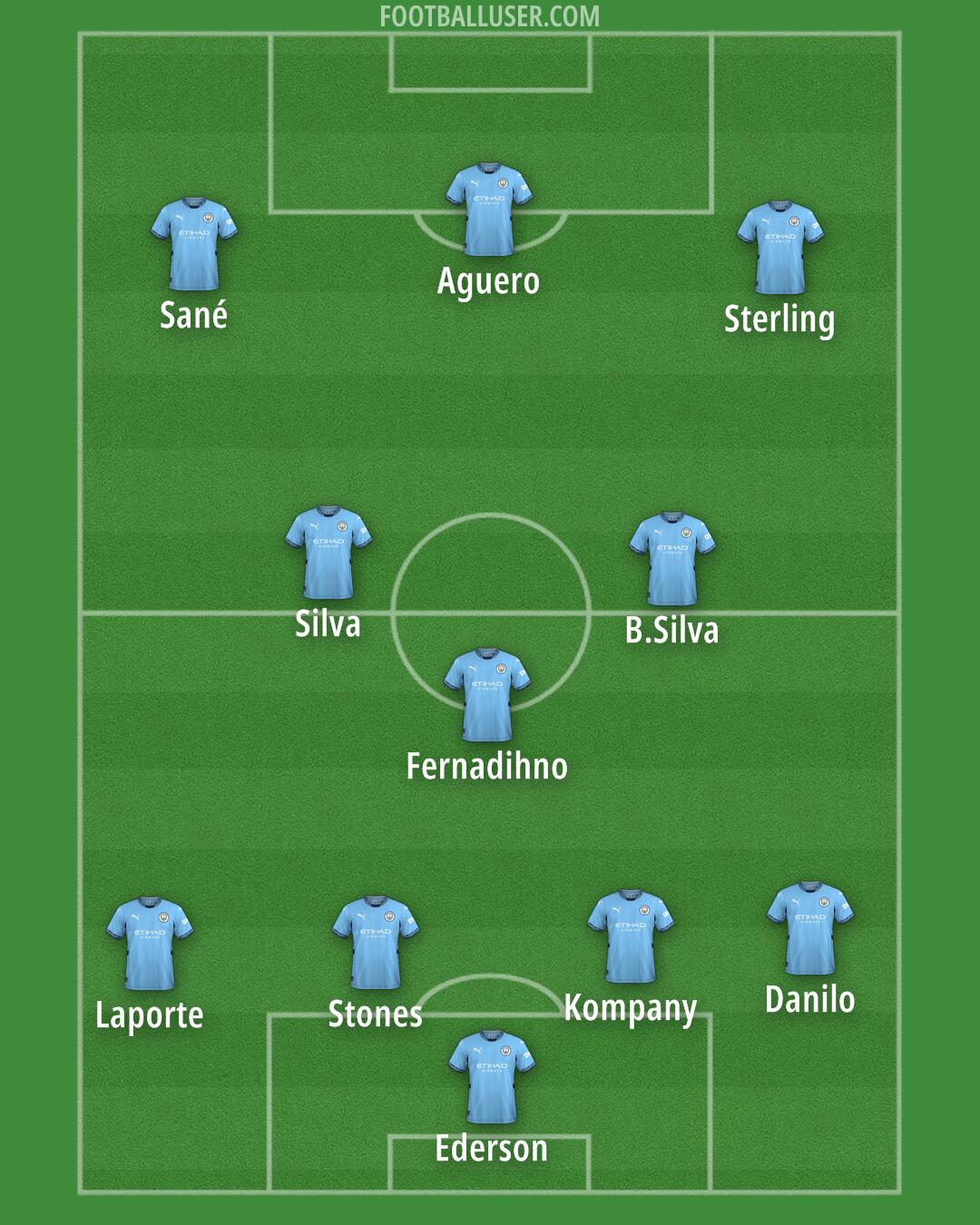
Ederson · Danilo · Kompany · Stones · Laporte · Fernadihno · B.Silva · Silva · Sterling · Aguero · SanéMan City look to control matches through heavy possession and high pressing in a 4-3-3. This formation is built to dominate the ball and squeeze the opposition into their own half. By maintaining a high line and spreading the pitch, the team seeks to pin the opposition back and create scoring chances through constant movement and ball circulation.
Ederson plays behind a back four that works to play out from the back. Stones and Kompany act as central defenders, with Kompany providing aerial strength and Stones acting as a ball playing defender who can step into midfield. Laporte operates as a left back who can push forward to support the attack, while Danilo plays as a right back to provide balance. This defensive unit stays compact to defend zonally and prevent through balls.
The midfield functions as a three-man midfield with a single pivot. Fernandinho sits in front of the defense to shield the back line and win the second ball. Beside him, B. Silva and Silva operate as two inverted eights who connect the defense and attack. B. Silva uses his passing range to switch play, while Silva works to drive forward with the ball and occupy the half spaces. This group works to recycle possession and ensure the team always has passing options.
Up front, the attacking trio uses wide wingers who hug the touchline to stretch the defense. Sané plays on the left as an inverted winger who likes to cut inside, while Sterling operates on the right to create overloads. Aguero acts as the central striker, using his clinical finishing to find space in the box. The forwards press from the front to force a long ball from the opposition, often using quick combinations to hit in behind on the transition.
One major advantage for Man City is the ability to create numerical superiority in midfield through the movement of the central players. The wide overloads provided by Laporte and the wingers allow the team to pull the opposition defense apart. Additionally, the high pressing in coordinated waves makes it very difficult for opponents to build play from their own goalkeeper.
This 4-3-3 formation focuses on ball dominance and aggressive pressure to control the tempo of the game. It is best suited for facing teams that sit deep and struggle to manage high intensity in tight spaces.