
Brazil National Football Team Formation
 June 6, 2025


Starting Lineup
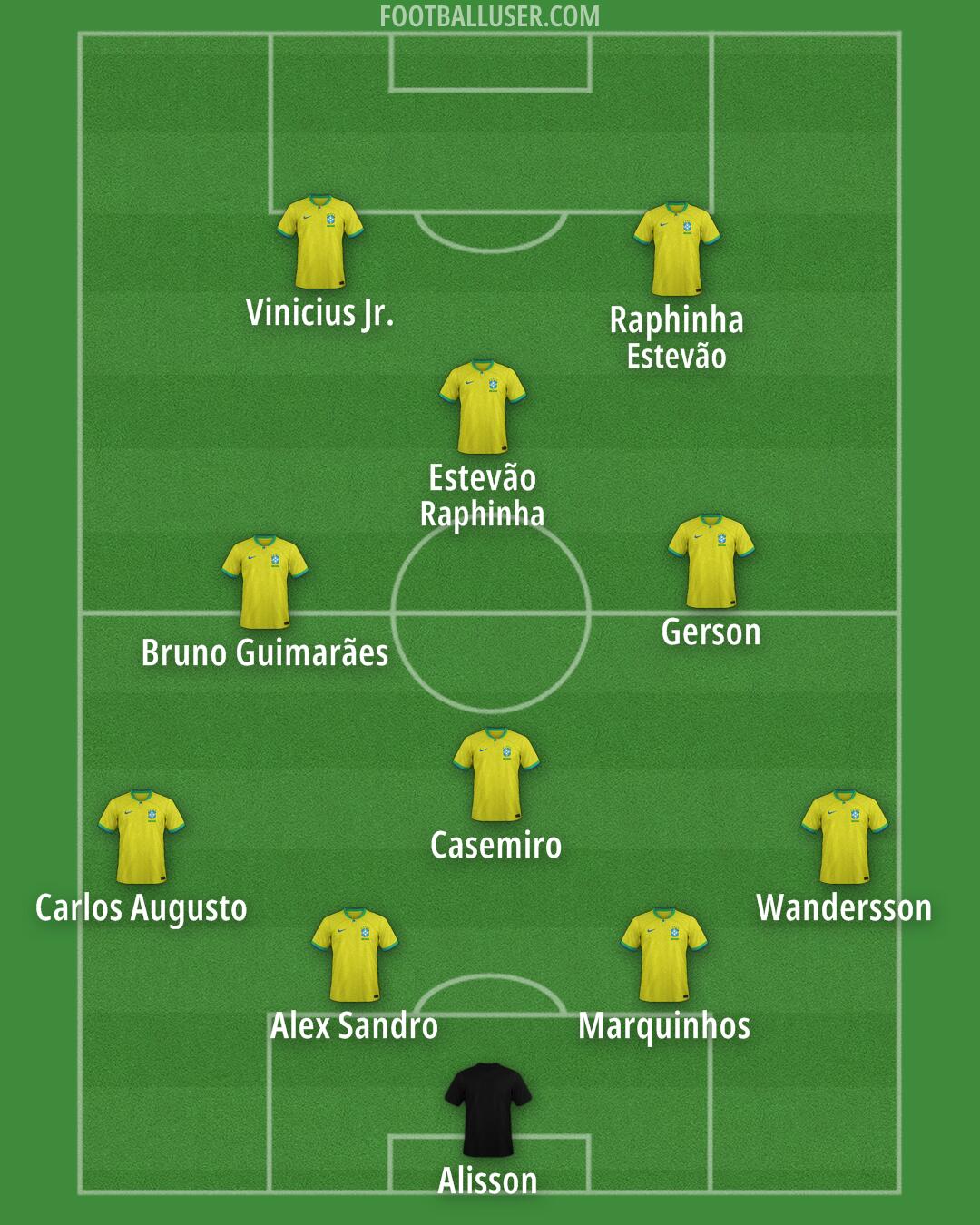
Alisson · Marquinhos · Alex Sandro · Wandersson · Carlos Augusto · Casemiro · Bruno Guimarães · Gerson · Estevão (Raphinha) · Raphinha (Estevão) · Vinicius Jr.Brazil focuses on defensive stability and rapid transitions with a 5-3-2 formation. This lineup is built to sit deep and strike teams on the counter after winning the ball. By utilizing a back five, the team can absorb intense pressure and look to play through the lines quickly to catch the opposition out of position.
Alisson stands between the posts to command the area. The defensive unit operates with a back five, using Casemiro as the central defender to win the second ball and hold the line. Marquinhos and Alex Sandro play as the wide centre-backs to cover the gaps and provide cover. Wandersson and Carlos Augusto act as attacking wing backs, pushing high to provide width and stretch the play. The whole unit works to defend zonally and squeeze the space in a mid-block to deny the turn to attackers.
The midfield consists of a three-man unit to bridge the gap between the defence and attack. Gerson and Bruno Guimarães operate in the middle, with Gerson working to recycle possession and keep the ball moving. Bruno Guimarães acts as a carrier to drive the ball forward and connect the defensive and attacking lines. Estevão plays as an attacking ten in the hole, tasked to create chances and find the feet of the strikers. This group works to press the ball high and prevent the opposition from playing short from the back.
In the final third, the team uses a two-man partnership of Raphinha and Vinicius Jr. Vinicius Jr. uses his incredible pace and dribbling to cut inside from the left and threaten the goal. Raphinha works in the channels to link up play and make runs in behind the defence. The two forwards press from the front to force a long ball from the opposition. This formation creates opportunities for the wing backs to overlap the winger and deliver crosses into the box to create chances.
This formation provides clear tactical advantages. The defensive unit offers great compactness when defending in a low block. The use of Wandersson and Carlos Augusto creates wide overloads to stretch the defence and isolate wide players in one on one situations. Furthermore, the speed of transition allows the team to hit the opponent in behind with high intensity before they can recover.
Brazil utilizes this formation to remain defensively solid while exploiting space on the break. It is most effective against opponents that play with a high line and commit many players forward.