
Portugal National Football Team Formation
 June 7, 2025


Starting Lineup
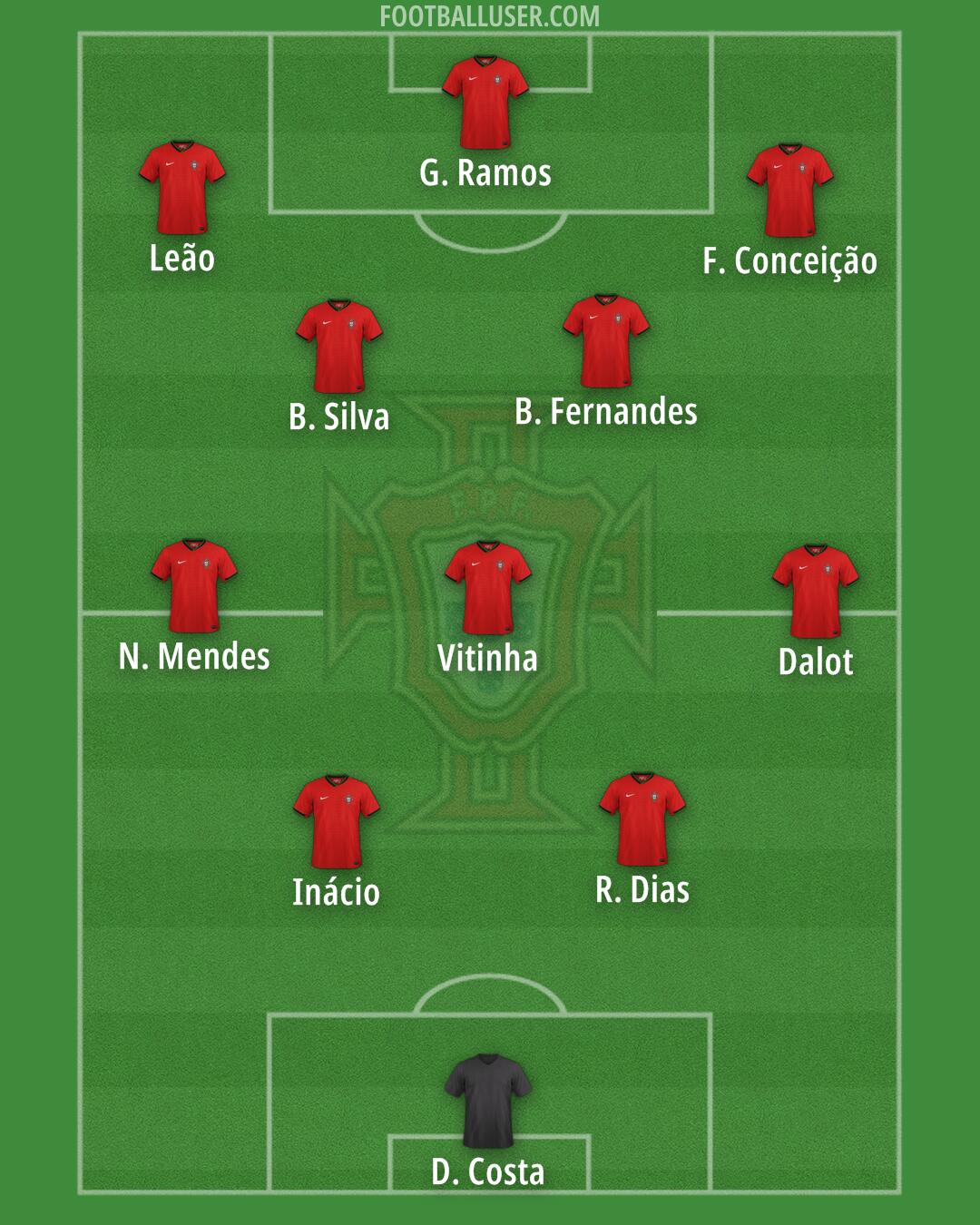
G. Ramos · F. Conceição · Leão · B. Silva · B. Fernandes · Vitinha · Dalot · N. Mendes · Inácio · R. Dias · D. CostaPortugal aims to use a strong defensive base and rapid transitions, operating within a 5-2-3 formation. This lineup is built to absorb pressure and hit teams on the break with speed and directness. The team seeks to control the game through defensive stability before launching quick attacks.
D. Costa stays between the posts to command the area. The back five relies on R. Dias, who uses his aerial strength to defend zonally. Vitinha occupies the central spot in the back line, while Inácio covers the left side. On the flanks, N. Mendes functions as an attacking wing back to push high, while Dalot acts as a right wing back to cover the wide areas. The unit works to stay compact and protect the central zone, often dropping into a low block when under pressure.
The midfield employs a double pivot to control the center of the pitch. B. Silva works to recycle possession and helps to move the ball from the defenders toward the front line. B. Fernandes plays in the right central midfield role, using his passing range to break the line and find runners. These two must stay close to prevent the opposition from playing through the lines, and they are tasked with winning the second ball to spark transitions. The midfield serves as the link between the back five and the attacking trio.
The attack uses three forwards to pin the last defender. G. Ramos plays as the lone striker, working to hold up the ball and link with the wingers. Leão operates as an inverted winger on the left, using his dribbling style to cut inside and create chances. F. Conceição stays wide on the right to pull the defense apart and deliver crosses. The movement of the front three is designed to create runs in behind and allow the wing backs to overlap and provide width.
This formation offers clear advantages, particularly the ability to create wide overloads through the runs of N. Mendes and Dalot. The defensive unit provides compactness when defending, making it difficult for opponents to find space. Portugal can also utilize the speed of transition to catch teams high up the pitch, turning defense into attack in seconds.
The 5-2-3 formation provides a strong balance between defensive security and attacking penetration. This formation is best suited for matches against opponents that prefer to dominate possession and leave space behind their defense.