
PSG Football Formation
 June 7, 2025
 joaquin


Starting Lineup
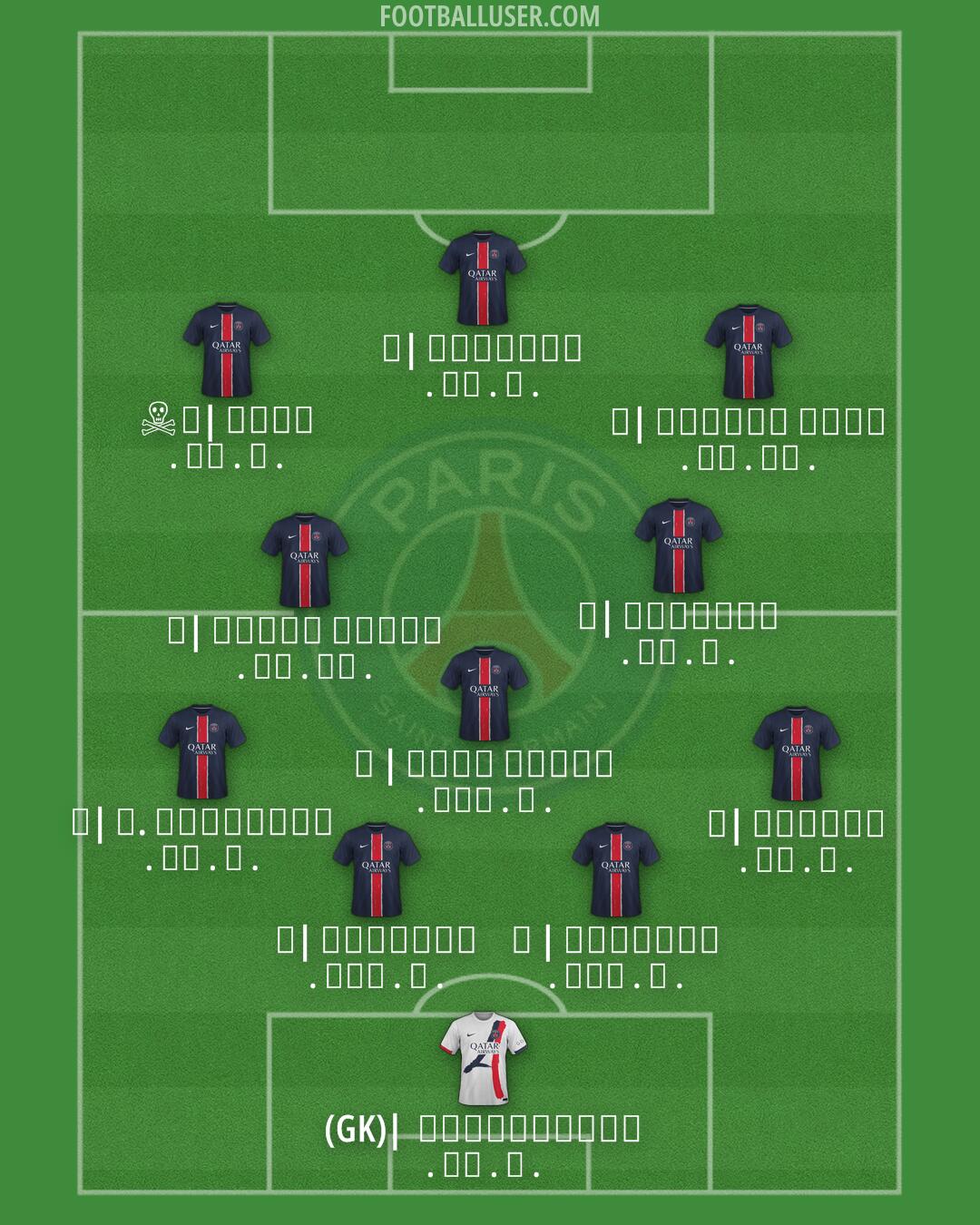
🧤| 𝗗𝗼𝗻𝗻𝗮𝗿𝘂𝗺𝗺𝗮 (. 𝗚𝗞 . 𝟭 .) · 🧱| 𝗠𝗶𝗹𝗶𝘁𝗮𝗼 (. 𝗗𝗙𝗖 . 𝟰 .) · 💪 | 𝗥𝘂𝗱𝗶𝗴𝗲𝗿 (. 𝗗𝗙𝗖 . 𝟱 .) · 💣| 𝗟. 𝗛𝗲𝗿𝗻𝗮𝗻𝗱𝗲 (. 𝗟𝗜 . 𝟯 .) · 🐧| 𝗛𝗮𝗸𝗶𝗺𝗶 (. 𝗟𝗗 . 𝟮 .) · ✨ | 𝗝𝗼𝗮𝗼 𝗡𝗲𝘃𝗲𝘀 (. 𝗠𝗖𝗗 . 𝟲 .) · 🌟| 𝗩𝗶𝘁𝗶𝗻𝗵𝗮 (. 𝗠𝗖 . 𝟴 .) · ⚡| 𝗭𝗮𝗶𝗿𝗲 𝗘𝗺𝗲𝗿𝘆 (. 𝗠𝗖 . 𝟮𝟴 .) · 💣| 𝗗𝗲𝗺𝗯𝗲𝗹𝗲 (. 𝗗𝗖 . 𝟵 .) · 🧠| 𝗗𝗲𝘀𝗶𝗿𝗲 𝗗𝗼𝘂𝗲 (. 𝗘𝗗 . 𝟭𝟬 .) · ☠️| 𝗦𝗮𝗸𝗮 (. 𝗘𝗜 . 𝟳 .)PSG focuses on quick transitions and verticality using a 5-2-3. This formation is built to absorb pressure and then hit the opposition back with massive speed. The team looks to use the width of the pitch to stretch the defense before breaking through the center.
Donnarumma stays between the posts to command his area. The defensive unit operates as a back five with Joao Neves acting as the central man to sweep behind a high line. Rudiger and Militao sit beside him as ball playing defenders to start attacks. On the flanks, Hakimi and L. Hernande play as attacking wing backs to provide width. These players are expected to push high to support the attack and track back to cover the wide areas when the ball is lost.
The midfield consists of a two man unit. Vitinha works to create from deep and recycle possession to keep the team in control. Zaire Emery acts as the carrier to drive forward with the ball and connects the defensive and attacking lines. These two players must work hard to compress the midfield and prevent the opposition from playing through the lines. They provide the necessary energy to win the second ball and launch the next phase of play.
In the final third, PSG uses three attackers across the front. Dembele acts as a lone striker to hold up the ball and link play with the wingers. Saka plays as an inverted winger on the left to cut inside and create chances, while Desire Doue operates on the right to pull wide or look for runs in behind. The forwards press from the front to force a long ball from the opposition. This attacking lineup aims to isolate wide players in one on one situations to break the defensive block.
One major strength of this formation is the ability to provide wide overloads when Hakimi and L. Hernande overlap the wingers. The team also gains tactical advantages through its speed of transition, moving from a deep defensive block to a direct attack in seconds. This allows PSG to catch opponents while they are out of position.
This formation is ideal for teams that want to sit deep and wait for the right moment to strike. It is best suited for matches against dominant sides where catching them on the break is the primary goal.