Man City Football Formation
 June 9, 2025


Starting Lineup
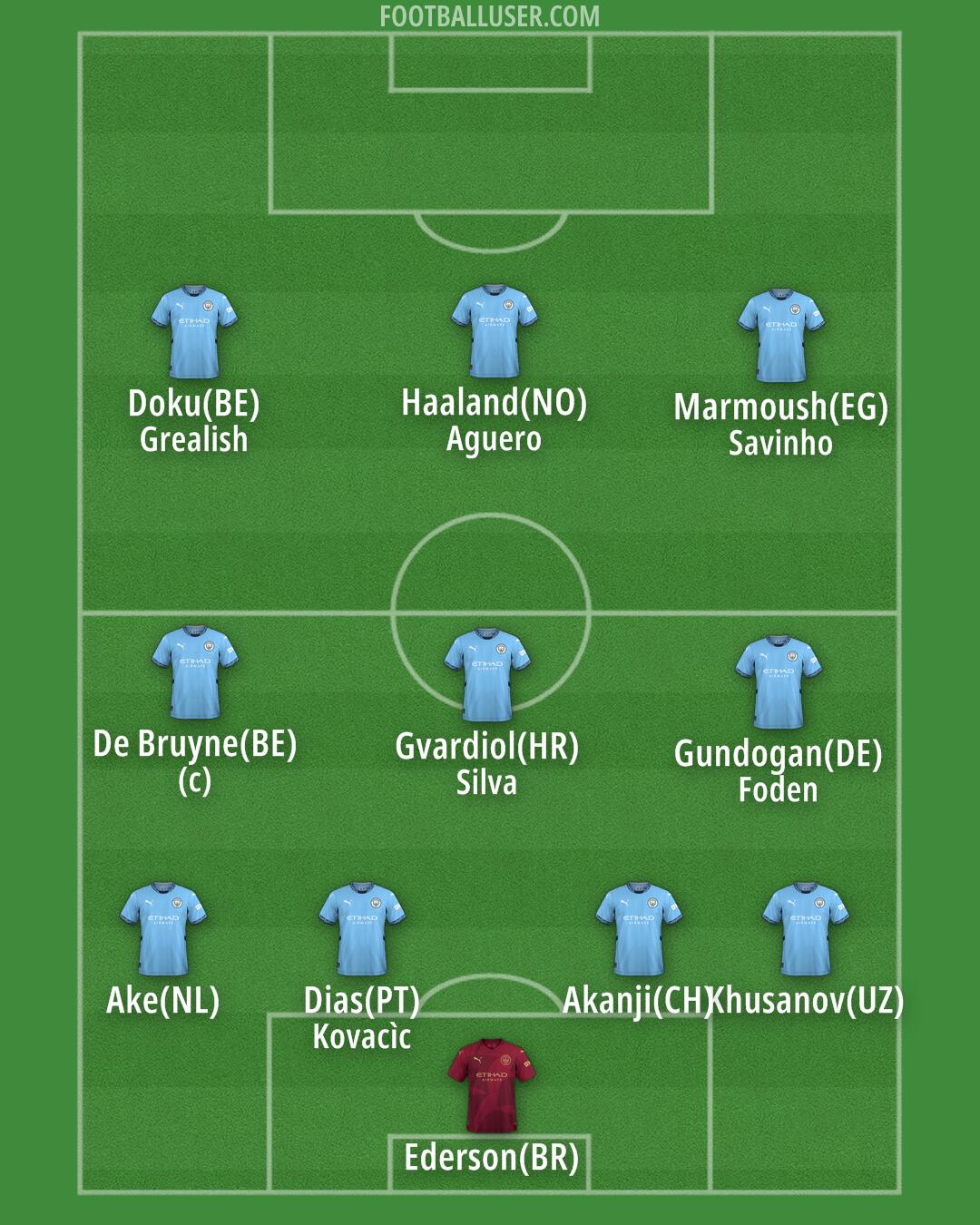
Doku🇧🇪 (Grealish) · Haaland🇳🇴 (Aguero) · Marmoush🇪🇬 (Savinho) · Gundogan🇩🇪 (Foden) · Gvardiol🇭🇷 (Silva) · De Bruyne🇧🇪 (c) · Khusanov🇺🇿 · Dias🇵🇹 (Kovacìc) · Akanji🇨🇭 · Ake🇳🇱 · Ederson🇧🇷Man City looks to control matches through heavy possession using a 4-3-3 formation. This lineup is built to dominate the ball and squeeze the space in the opponent half through constant passing. By keeping players close together, the team can move the ball through the thirds and dictate the tempo of the game from the back.
Ederson plays between the posts and acts as a key part of the build up by playing short from the back. The defensive line operates as a flat back four with Ake at left back and Khusanov at right back. Akanji and Dias form the central pairing, where Dias provides aerial strength and leadership while Akanji covers space and steps up to intercept play. This unit aims to hold a high line to keep the team compact and reduce the distance between the defense and the midfield.
The midfield relies on a three-man midfield with a mix of control and creativity. Gvardiol sits in the center to shield the defense and recycle possession, allowing the more advanced players to push up. Gundogan works to connect the defensive and attacking lines, often making late runs into the box to cause trouble. De Bruyne operates on the left side of the trio, using his immense passing range to break the line and find attackers in dangerous areas.
In the attacking phase, the team uses three attackers across the front to stretch the defense. Doku plays as an inverted winger on the left, looking to cut inside and drive at the opposition, while Marmoush stays wide on the right to provide width. Haaland acts as a lone striker and a constant threat to hit in behind or win the header when crosses come in. The wingers and midfielders combine in tight spaces to create chances, often looking for cutbacks from the byline to find the striker.
Man City gains a major advantage through numerical superiority in midfield, which allows them to control the rhythm of the match. The ability to press high in coordinated waves also forces many opponents into making mistakes in their own half. By using the width of the pitch through the full backs and wingers, they can create overloads that pull the opposing defensive block apart.
This 4-3-3 formation provides a dominant presence for teams that want to dictate play through ball retention. It is best suited for matches where the goal is to pin the opponent back and control every phase of the game.