
Austria National Football Team Formation
 June 9, 2025


Starting Lineup
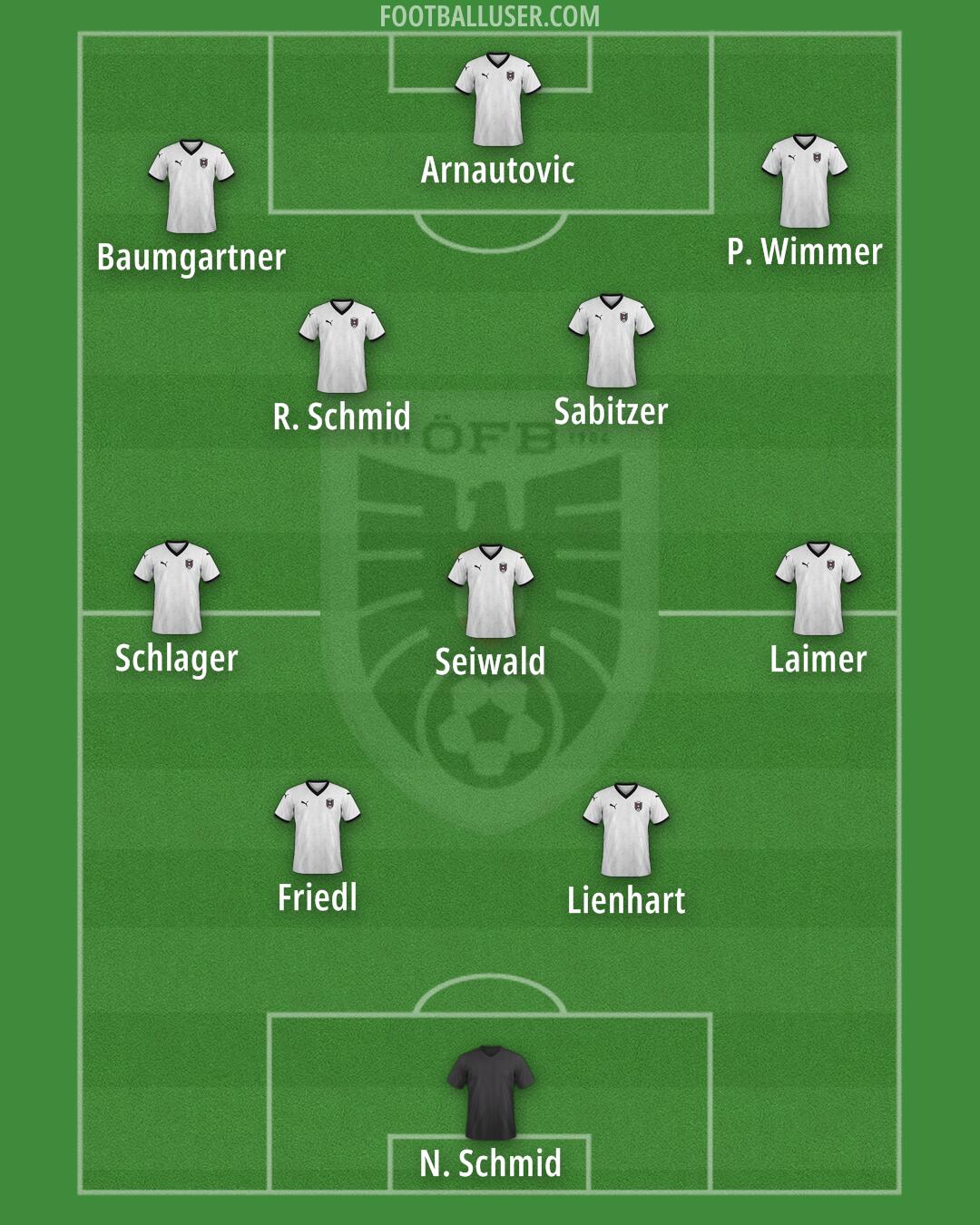
Arnautovic · Baumgartner · P. Wimmer · R. Schmid · Sabitzer · Seiwald · Laimer · Schlager · Friedl · Lienhart · N. SchmidAustria focuses on high pressing and rapid vertical football through a 5-2-3 formation. This lineup is built to win the ball back high up the pitch and attack with speed. The team wants to squeeze the space in the opponent half and move the ball forward quickly to catch the defence.
N. Schmid sits between the posts to organize the back line. The formation uses a back five where Seiwald sits centrally to protect the area. Lienhart and Friedl play as the wide centre backs, ready to cover the space behind the wing backs. Laimer operates as an attacking wing back on the right, while Schlager acts as the left wing back to provide width. These defenders must hold the line and be ready to intercept passes or win the header during aerial duels.
The midfield relies on a double pivot to control the centre of the pitch. Sabitzer uses his passing range and high work rate to carry the ball forward and link the defence to the attack. R. Schmid works to shield the defence and win the second ball in the middle third. This duo must press aggressively to win the ball in the center of the pitch. They are responsible for recycling possession and finding the feet of the striker.
In the attacking phase, Austria uses three attackers to pin the opposition. Arnautovic acts as a physical presence to hold up the ball and allow others to run in behind. P. Wimmer and Baumgartner act as inverted wingers who look to cut inside and create chances in the half spaces. Laimer and Schlager push high to overlap the wingers and whip it in toward the box. This creates various combinations to break the line and catch the defence off guard.
The tactical advantages of this 5-2-3 lineup include the ability to press high in coordinated waves. By using wing backs like Laimer and Schlager, the team can create wide overloads to stretch the defence. This formation also allows for compactness when defending in a mid block to deny the turn of the opponent.
Austria relies on this high intensity and quick transition model. This formation is best suited for matches against teams that struggle to play out from the back under pressure.