FC Porto Logo

FC Porto Football Formation

Creation DateJune 9, 2025

Starting Lineup

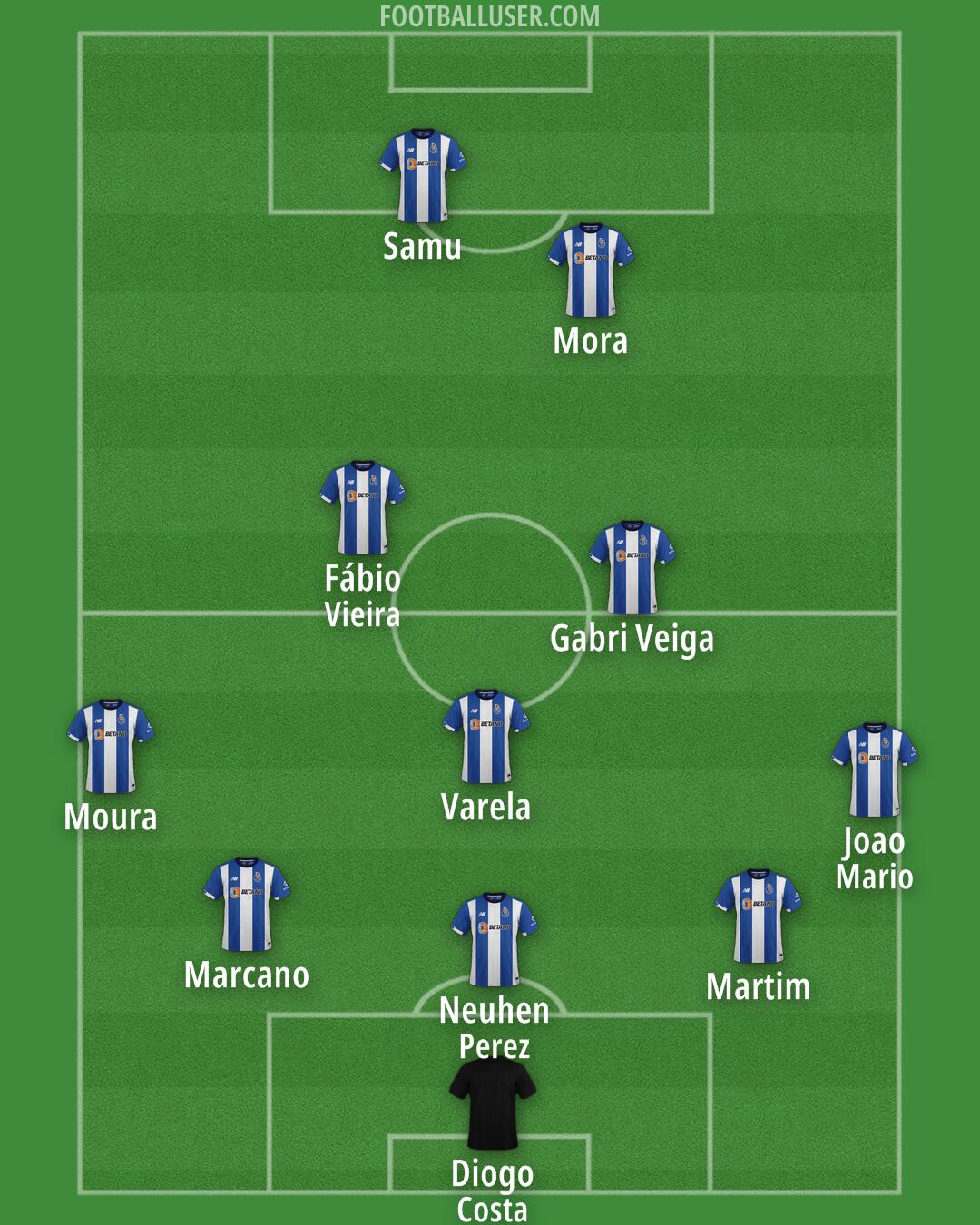
Martim · Diogo (Costa) · Neuhen (Perez) · Marcano · Moura · Joao (Mario) · Varela · Gabri Veiga · Fábio (Vieira) · Mora · Samu

FC Porto aims to control the game through a heavy central presence, utilizing a 3-6-1 formation. This lineup is built to dominate the middle of the pitch and sustain pressure in the opposition half. By packing the center, the team seeks to win the second ball and keep the play moving through quick combinations.

Diogo stays between the posts to organize the back line. The defensive unit functions as a back three, where Marcano acts as the left centre-back to cover space while Martim operates as the right centre-back. Neuhen sits in the center to command the area and win headers. This trio maintains a compact defensive block to deny space between the lines.

The midfield is a massive engine designed to squeeze the space in the center of the pitch. Moura and Joao work as a double pivot to shield the defense and recycle possession. Varela sits ahead of them to link the play, while Fábio and Mora operate in the half spaces to press aggressively and win the ball high up the pitch. Gabri Veiga plays as an attacking ten, looking to find pockets of space and play through the lines to support the lone forward.

Samu leads the line as a lone striker, tasked to hold up the ball and pin the last defender. The attack relies on the wide midfielders and the attacking ten to create overloads around him. When FC Porto moves into transition, the front line looks to hit in behind or use Samu to lay it off for runners coming from deep. The team uses the density in the midfield to drive forward and feed Samu in tight spaces.

This formation offers significant numerical superiority in midfield, making it very difficult for opponents to play through the center. The coordination between the six midfielders allows the team to press in waves and recover the ball quickly. By crowding the central zones, Porto can also force a long ball from the opposition, making it easier for the back three to defend zonally.

This 3-6-1 formation provides a massive central presence for controlling games through possession and high pressing. It is best suited for facing teams that try to play through the middle of the pitch.