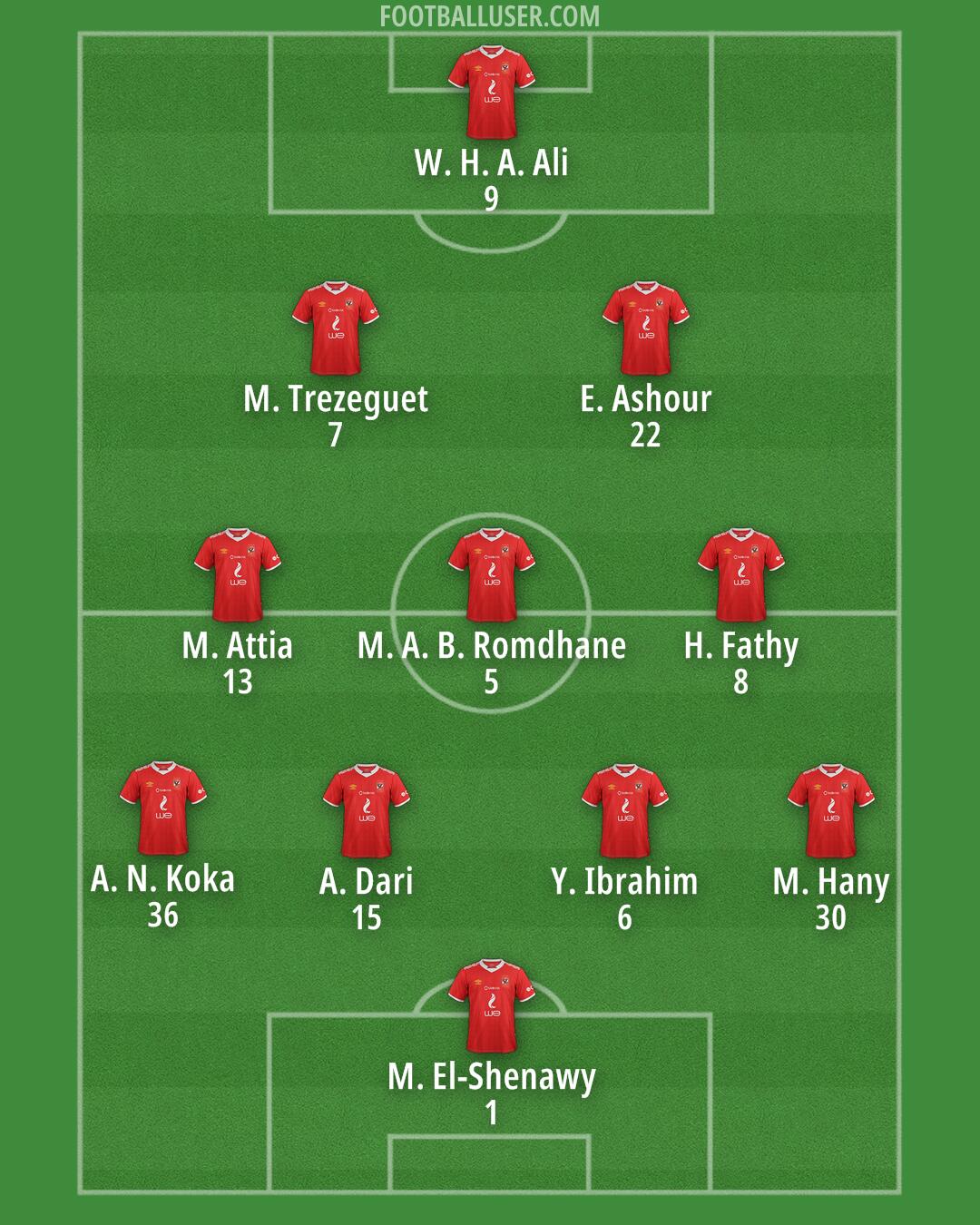

Al-Ahly Football Formation
 June 15, 2025


Starting Lineup
M. El-Shenawy (1) · A. N. Koka (36) · M. Hany (30) · A. Dari (15) · Y. Ibrahim (6) · M. A. B. Romdhane (5) · M. Attia (13) · H. Fathy (8) · M. Trezeguet (7) · E. Ashour (22) · W. H. A. Ali (9)Al-Ahly looks to control games through a compact defensive block and quick transitions using a 5-4-1 formation. This lineup is built to sit deep and absorb pressure before launching direct attacks. The team relies on a low block to squeeze the space between the lines and force the opponent to play wide.
In goal, W. H. A. Ali sits behind a back five that provides a deep defensive line. M. A. B. Romdhane acts as the central anchor, while E. Ashour and M. Trezeguet operate as wide centre-backs to cover the channels. H. Fathy and M. Attia play as attacking wing backs to provide width, but they must track back to help the back line. This unit works to defend zonally and win the second ball in front of the central defenders.
The midfield operates in a flat four to maintain compactness. A. Dari and Y. Ibrahim form a central pairing to protect the defense and recycle possession. They work to pick up runners and intercept passes in the middle third. A. N. Koka and M. Hany occupy the wide areas, tasked to press in a mid-block and stop opposition crosses. This group links the defense to the lone attacker by playing short from the back and finding the feet of the striker.
Al-Ahly uses a lone striker in M. El-Shenawy to lead the line. He must hold up the ball and work as a target man to bring the midfielders into the game. The attack relies on the wingers, A. N. Koka and M. Hany, to push forward and provide service into the box. The goal is to use the width provided by the wing backs to whip it in or create one on one situations for the forwards during a quick break.
The main strengths of this Al-Ahly lineup lie in its ability to remain defensively solid and limit space in the final third. The formation offers great compactness when defending, making it hard for opponents to play through the lines. Additionally, the team can use the speed of transition to hit in behind on the transition when the wing backs move up the pitch.
This 5-4-1 formation is designed for a team that wants to frustrate stronger sides by sitting deep. It is best suited for matches where the opponent dominates possession and the team needs to counter at pace.