
PSG Football Formation
 June 16, 2025


Starting Lineup
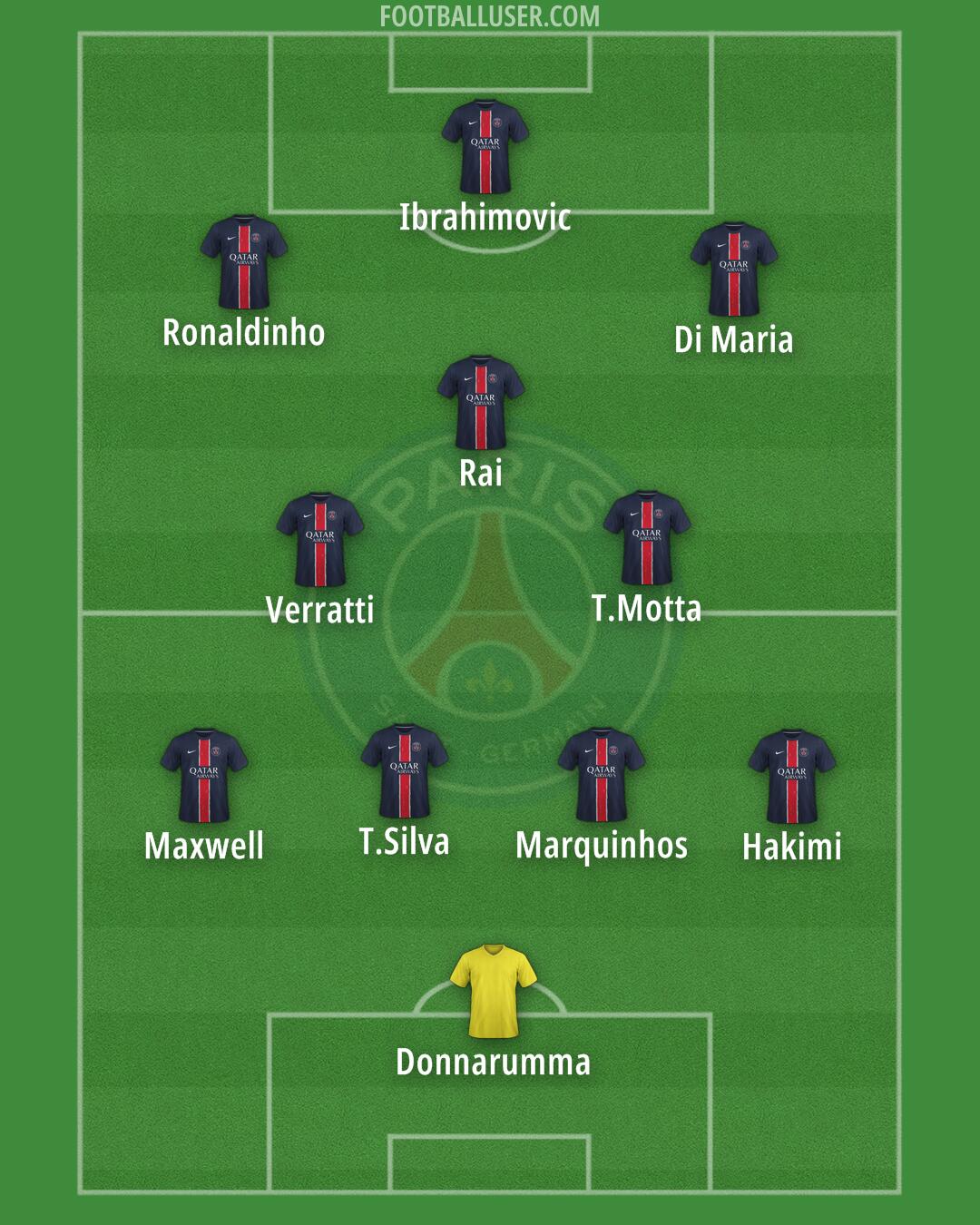
Donnarumma · Maxwell · Hakimi · T.Silva · Rai · Marquinhos · Verratti · T.Motta · Ibrahimovic · Ronaldinho · Di MariaPSG operates with a high press and possession based identity in a 4-3-3. This formation is built to dominate the ball and keep the opposition under constant pressure. The goal is to squeeze the space and force mistakes through relentless ball movement and high positioning.
Donnarumma stays between the posts to protect the net with his shot stopping. The back line works as a flat back four to maintain compactness. Marquinhos plays as a ball playing defender who can step into midfield and uses his recovery speed to cover large areas. T.Silva provides aerial strength and works to defend zonally. Hakimi acts as an attacking full back to provide width, while Maxwell maintains the defensive line to ensure the team stays solid when defending.
The midfield works as a three man midfield with a carrier to link the lines. Verratti acts as a deep lying playmaker who uses his passing range to break the line. He also shows high pressing intensity to win the ball back high up the pitch. T.Motta sits deeper to shield the defence and win the second ball. Rai plays as an attacking ten behind the striker, making late runs into the box to support the play. This unit works to recycle possession and move the ball through the thirds.
Ibrahimovic leads the attack as a lone striker and target man. He uses his strength to hold up the ball and link with the midfielders. Di Maria and Ronaldinho play as inverted wingers who cut inside from the flanks. Di Maria uses his passing range to find teammates, while Ronaldinho uses his dribbling style to beat his marker. They look to create runs in behind and use overlaps from the full backs to stretch the defence and isolate wide players.
One major advantage for PSG is the ability to press high in coordinated waves to win it back high up the pitch. The team also creates wide overloads when Hakimi moves forward to support the wingers. This allows the team to pull wide and switch play quickly to find openings in the opposition defence.
This 4-3-3 formation is designed for teams that want to control the game through ball retention. It is best suited for matches against opponents that drop into a low block and require constant pressure to break down.