
South Korea National Football Team Formation
 June 17, 2025


Starting Lineup
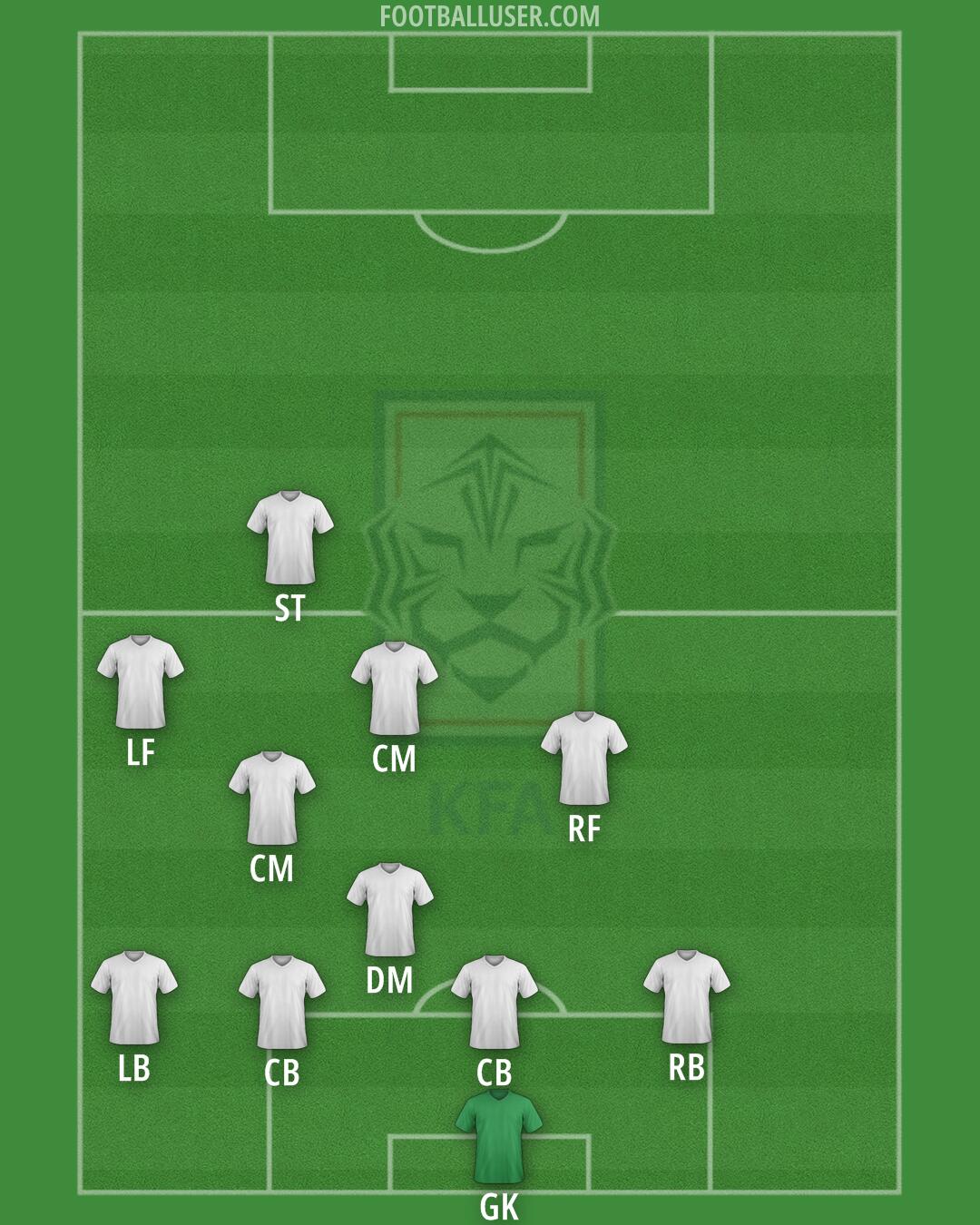
GK · LB · CB · CB · RB · DM · CM · CM · RF · LF · STSouth Korea aims to be defensively solid, relying on a compact block to absorb pressure before looking to strike. This 5-4-1 formation is built to play a reactive style of football where the team stays hard to beat. By sitting deep, the lineup allows the team to protect the central areas and wait for the right moment to transition.
The goalkeeper sits behind a back five that maintains a narrow defensive block. The center back occupying the DM position acts as a sweeper, while the RCB and LCB provide strength in the middle to win the second ball. The RWB and LWB are tasked with providing width, often dropping back to form a flat five when defending deep, but they must be ready to push up the flanks during transitions. This defensive unit works to squeeze the space between the lines and keep the opposition from playing through the middle.
In the middle of the pitch, a four man midfield works to shield the defense. The CM in the DM role sits right in front of the back five to deny the pivot and pick up runners. Beside him, the LCM and RCM operate in the half spaces to help the team recycle possession and move the ball from deep. This midfield group focuses on staying compact and forcing the opposition to the wings, where they can press in pairs to win the ball back high up the pitch if the opportunity arises.
The attacking phase relies on a lone striker who acts as a target man to hold up the ball. Because the LF and RF operate as attacking midfielders, they provide support by making runs into the box or drifting wide to help the wing backs. The team builds attacks through quick transitions, looking to hit in behind on the transition once the ball is won. The goal is to use the width provided by the wing backs to stretch the defence and deliver crosses into the central area.
South Korea gains a major advantage through their defensive compactness, making it very difficult for opponents to find passing lanes through the center. They also create wide overloads when the wing backs push forward to join the midfield. This setup allows the team to shift between a low block and a quick counter at pace, using the distance between the lines to frustrate much stronger teams.
This 5-4-1 formation provides a reliable way to sit deep and defend against heavy possession. It is best suited for matches against dominant opponents where the team needs to stay organized and strike on the break.