Derby Football Formation
 June 26, 2025


Starting Lineup
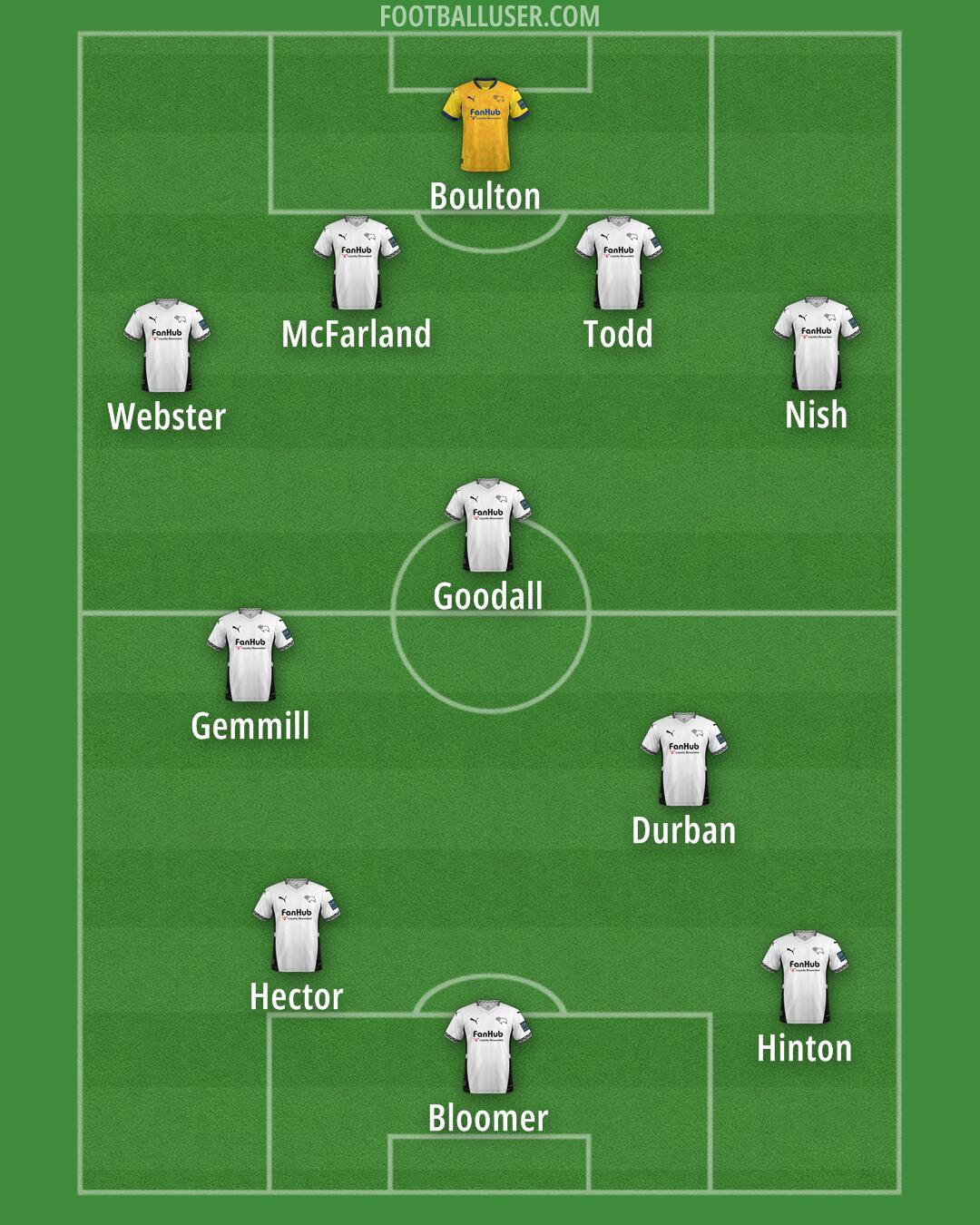
Boulton · McFarland · Todd · Webster · Nish · Goodall · Gemmill · Bloomer · Hinton · Hector · DurbanDerby looks to control games through high pressing and verticality in a 4-3-3. This lineup is built to win the ball back high up the pitch and quickly transition into attacking phases. The goal is to squeeze the space in the opposition half and create constant pressure on the back line.
Boulton guards the goal while the defensive unit sits in a high line to keep the team compact. McFarland and Todd act as the central defenders, with Todd providing cover and McFarland looking to step into midfield when possible. Nish operates as an attacking left back to provide width, while Webster plays as a more traditional right back to help stabilize the defense. This back four works together to hold the line and push up to support the midfield.
The midfield operates with a single pivot and two advanced players. Goodall sits in front of the defense to shield the back four and recycle possession. Gemmill plays as a carrier to drive the ball forward, while Durban operates as an attacking ten to link the midfield to the attack. This trio works to control the center of the pitch, with Durban looking to find space between the lines and Gemmill arriving late into the box.
Up front, Derby utilizes a front three to stretch the defense. Bloomer acts as a pressing centre-forward to harass the opposition center backs and hold up the ball. On the flanks, Hinton plays as an inverted winger on the left to cut inside, while Hector stays wide on the right to cross the ball. The team attacks in combinations, using the width provided by Nish and Hector to create space for Bloomer and Durban to operate centrally.
One major advantage for Derby is the ability to press high in coordinated waves, using the front three to trigger a press. The team also benefits from wide overloads when Nish and Hinton move into advanced positions. This allows the side to create numerical superiority in the final third and force many turnovers in dangerous areas.
This 4-3-3 formation is designed for a high energy game that focuses on quick transitions. It is best suited for matches against teams that struggle to play out from the back under intense pressure.