Arsenal Football Formation
 June 27, 2025


Starting Lineup
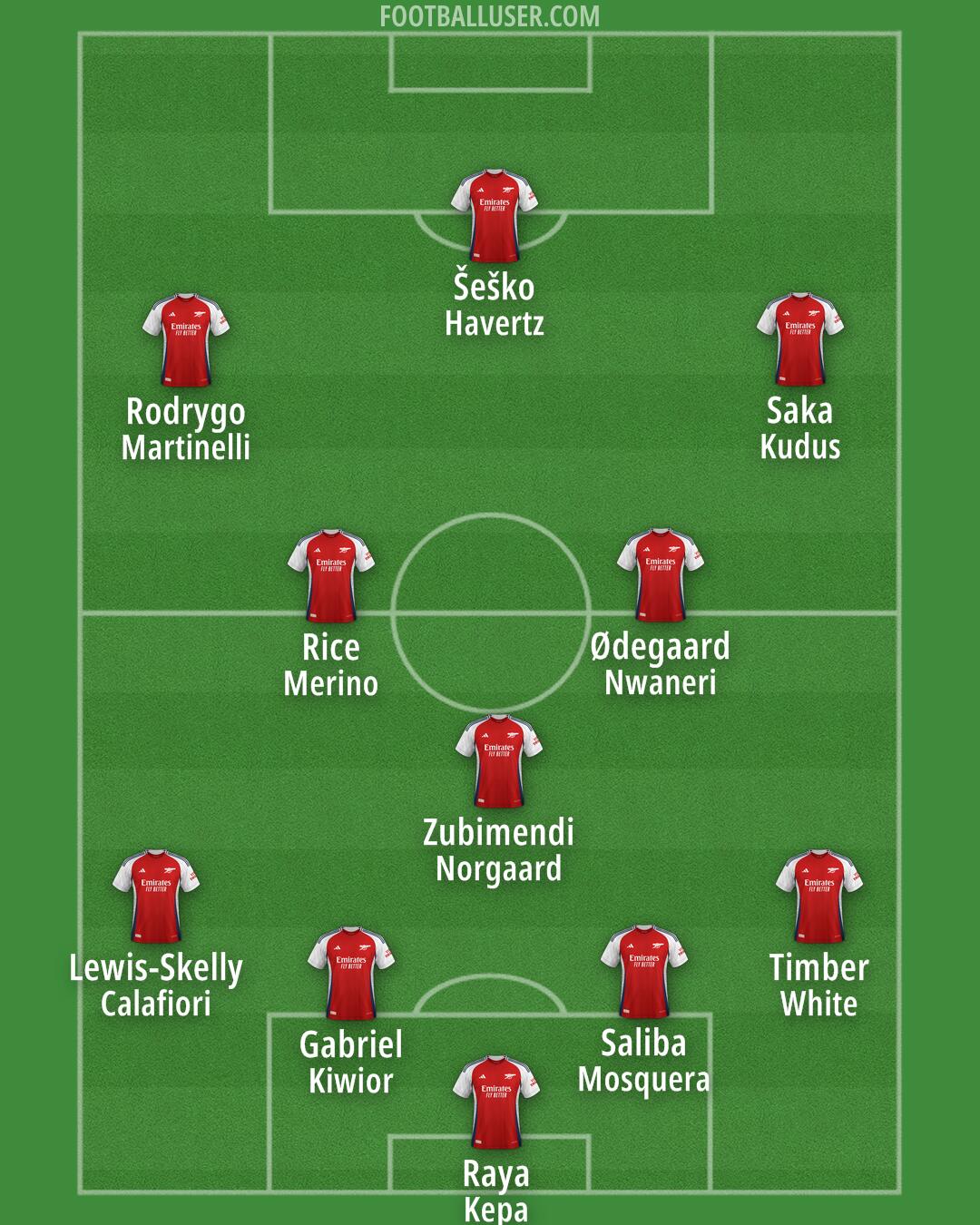
Saliba (Mosquera) · Gabriel (Kiwior) · Zubimendi (Norgaard) · Timber (White) · Ødegaard (Nwaneri) · Rice (Merino) · Šeško (Havertz) · Saka (Kudus) · Rodrygo (Martinelli) · Raya (Kepa) · Lewis-Skelly (Calafiori)Arsenal prioritizes defensive stability and rapid transitions using a 5-2-3 formation. This lineup is built to sit in a mid-block and strike quickly when the ball is won. The team looks to squeeze the space in the middle while remaining dangerous on the break through quick vertical play.
Raya plays between the posts to command the area and play short from the back. The defensive unit sits in a back five with Zubimendi acting as the central man to sweep behind a high line. Saliba and Gabriel operate as the two central defenders, where Saliba uses his composure and Gabriel provides aerial strength. Timber acts as an attacking wing back on the right to provide width, while Lewis-Skelly plays as an attacking wing back on the left. This formation allows the wide defenders to push up and overlap the winger during attacking phases.
In the middle, Rice and Ødegaard form a double pivot to control the game. Rice works to shield the defence and uses his ability to carry the ball forward to move the team up the pitch. Ødegaard uses his vision and passing range to connect the defensive and attacking lines, often dropping deep to receive the ball and switch play. They must win the second ball and press aggressively to win it back high up the pitch. This duo works to recycle possession and find the attackers in space.
The front three consists of Saka, Rodrygo, and Šeško. Saka and Rodrygo act as inverted wingers who cut inside to create threats. Dribbling allows Saka to isolate defenders one on one, while Rodrygo looks to move between the lines. Šeško operates as a pressing centre-forward, looking to pin the last defender and make runs in behind. They build attacks by spreading wide through the wing backs to provide crosses or cutbacks from the byline.
This Arsenal lineup offers significant advantages through wide overloads. When Timber and Lewis-Skelly push high, they create two on one situations against opposition full backs. The team also finds success through speed of transition, using the passing range of Ødegaard to hit in behind on the transition. Compactness when defending in a mid-block makes it hard for opponents to play through the lines.
The 5-2-3 formation provides a solid base for a team that wants to control the middle and exploit wide areas. This lineup is best suited for facing teams that commit many players forward and leave space behind their midfield.