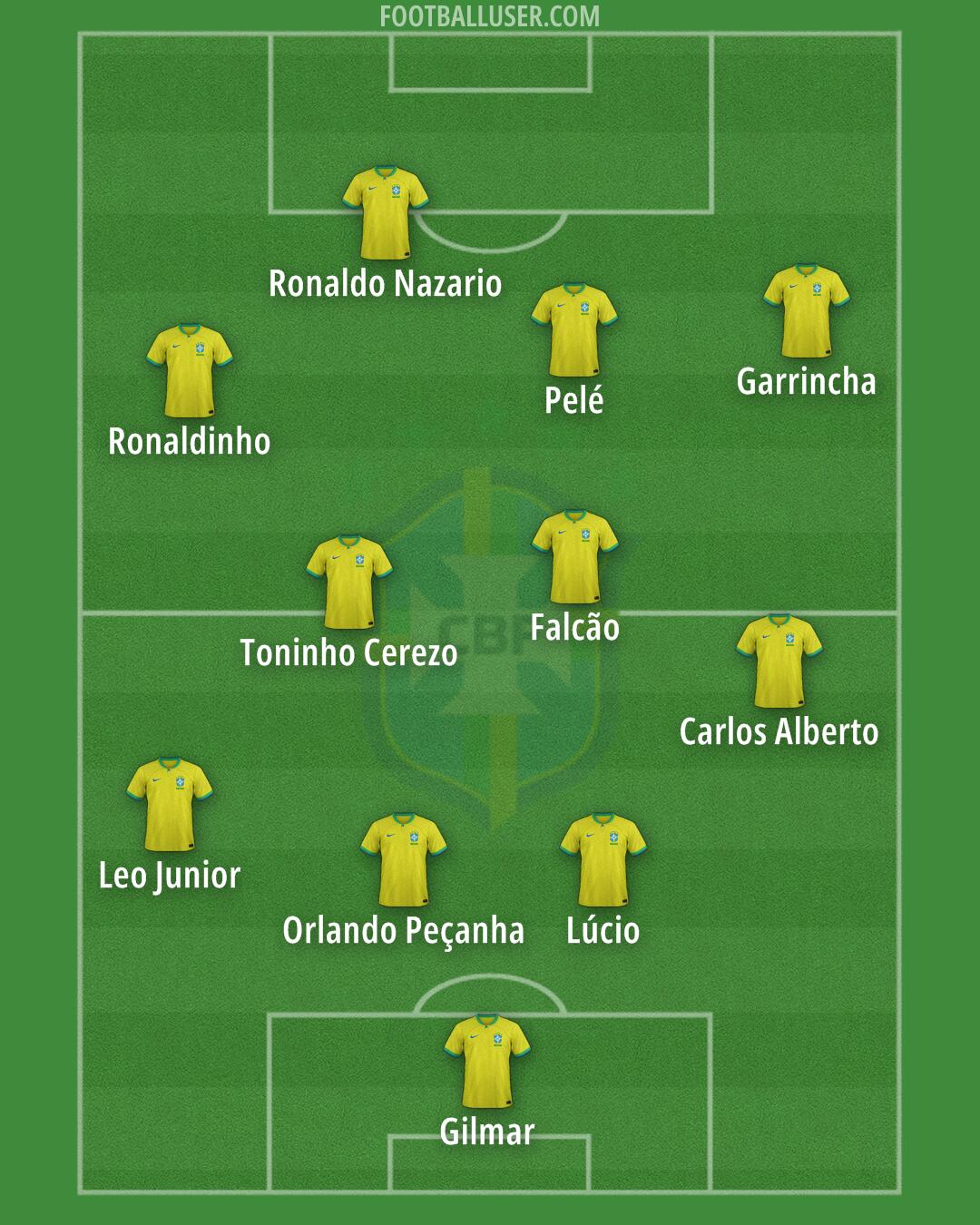

Brazil National Football Team Formation
 June 28, 2025


Starting Lineup
Gilmar · Leo Junior · Orlando Peçanha · Lúcio · Carlos Alberto · Toninho Cerezo · Falcão · Ronaldinho · Ronaldo Nazario · Pelé · GarrinchaBrazil relies on a heavy attacking identity through a 3-3-4 formation. This lineup focuses on overwhelming the opposition with numbers in the final third to create constant goalscoring chances. The team looks to play with extreme verticality, aiming to break lines quickly and use individual brilliance to dismantle defensive blocks.
Gilmar guards the goal as the last line of defense. The back line consists of a back three featuring Orlando Peçanha, Lúcio, and Leo Junior. Lúcio provides aerial strength and physical presence while Leo Junior and Orlando Peçanha cover the spaces behind the midfield. This defensive unit often has to defend in a mid-block to manage the large gaps left behind during transitions, with the defenders tasked to step up and catch opponents offside or drop back to cover runs in behind.
The midfield functions as a three-man midfield with a carrier and two creative links. Carlos Alberto sits in the single pivot role to shield the defense and recycle possession. Toninho Cerezo and Falcão operate in the half-spaces to connect the defensive and attacking lines. Toninho Cerezo uses his passing range to switch play, while Falcão looks to drive forward with the ball to support the front four. This trio works to win the second ball and provide a platform for the attack to move forward.
The front line is a massive four-man unit designed to stretch the defense. Pelé and Ronaldo Nazario operate as two forwards in a partnership, with Pelé finding space between the lines and Ronaldo Nazario using his incredible dribbling style to run at defenders. Garrincha acts as a wide winger who stays wide to isolate defenders, while Ronaldinho plays as an inverted winger who cuts inside to create. This group presses from the front to force a long ball and uses quick combinations to find the feet of the striker.
Brazil gains massive tactical advantages from the width provided by Garrincha and Ronaldinho. The numerical superiority in the attacking third allows the team to create many one on one situations for their star forwards. The speed of transition is a major threat because the midfield can quickly find the front four as soon as the ball is won high up the pitch.
This attacking formation is built to dominate games through sheer offensive power and individual skill. It is best suited for matches where Brazil can control the tempo and punish an opponent through high pressing and rapid forward movements.