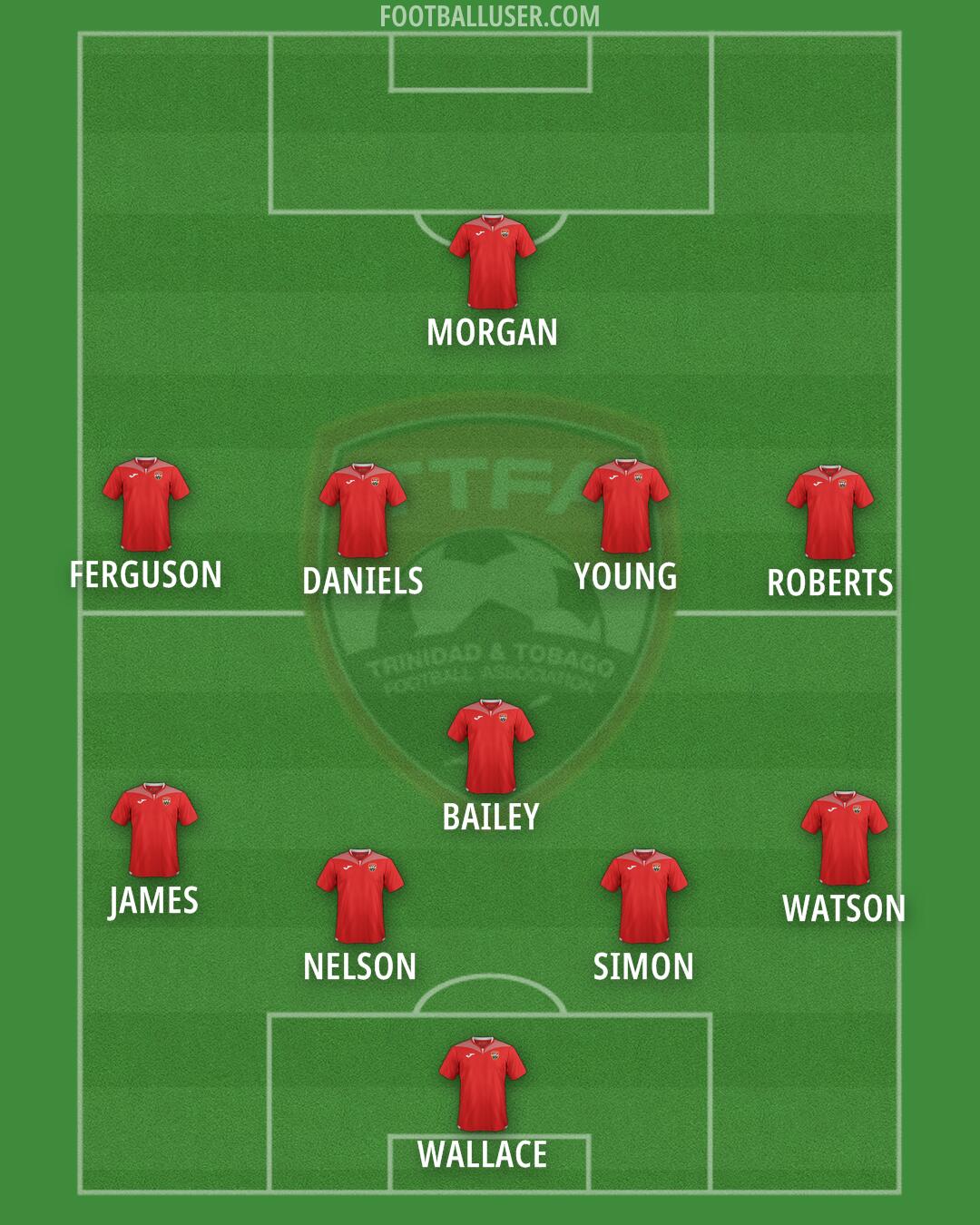

Trinidad and Tobago National Football Team Formation
 July 1, 2025
 PELUCOSAURIO


Starting Lineup
WALLACE · WATSON · SIMON · NELSON · JAMES · BAILEY · DANIELS · YOUNG · ROBERTS · FERGUSON · MORGANDefending with high intensity and looking to strike on the break is how Trinidad and Tobago operates. The team uses a 5-4-1 formation to keep a low block and frustrate the opponent. This formation is built to sit deep, absorb pressure, and wait for the moment to transition into attack using quick movements.
WALLACE protects the goal while the defensive unit stays tight. BAILEY sits in the middle of the back five to clear the lines and command the area. SIMON and NELSON play as the wide centre-backs to cover the space and pick up runners. WATSON and JAMES function as attacking wing backs, tasked to push up the pitch and provide width during transitions. This lineup works to squeeze the space and deny the turn to the opposition while staying compact.
In the middle of the pitch, DANIELS and YOUNG operate as a double pivot to shield the defence. They focus on winning the second ball and recycling possession to keep the team organized. ROBERTS and FERGUSON operate on the flanks to press the opposition wingers and track back to help the wing backs. This four-man midfield works to connect the defence to the attack by playing short from the back and moving the ball quickly to bypass the midfield.
MORGAN stays high as a lone striker to hold up the ball and pin the last defender. The attack moves through quick combinations where the wide players look to get to the byline. ROBERTS and FERGUSON try to cut inside to create numbers in the middle. WATSON and JAMES look to overlap the wingers and whip it in to find the striker in the box.
One clear advantage for Trinidad and Tobago is the compactness when defending in a low block. The team is very hard to break down because they defend zonally and stay close together. Another strength is the speed of transition, as the team can hit in behind on the transition as soon as the midfield intercepts a pass and sends the ball forward. The ability to shift as a unit makes them difficult to stretch.
This formation is ideal for teams that want to deny space and play on the counter. It is best suited for facing dominant sides that hold a lot of possession and struggle against direct play.