
Wydad Casablanca Football Formation
 July 3, 2025


Starting Lineup
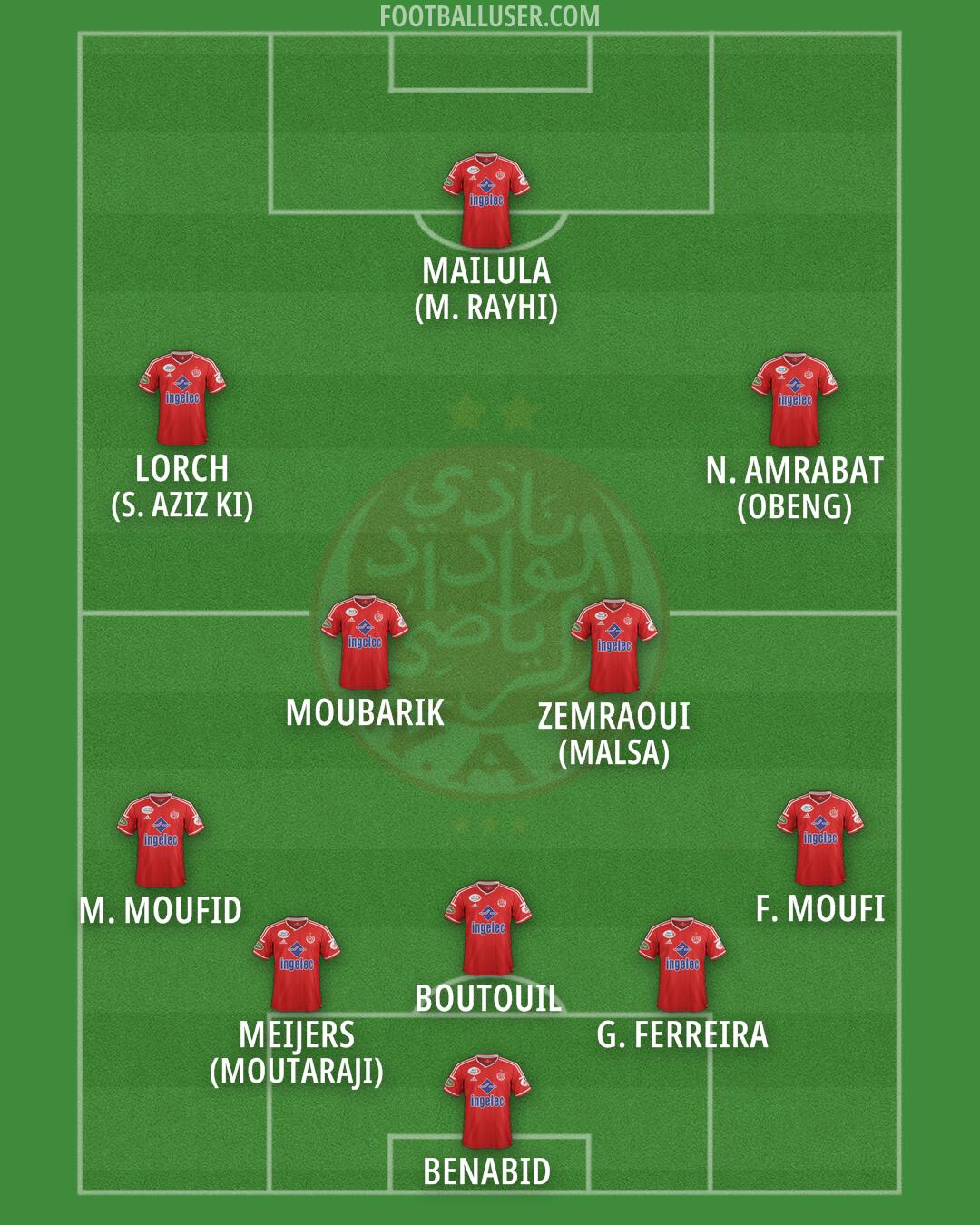
BENABID · F. MOUFI · G. FERREIRA · BOUTOUIL · MEIJERS (MOUTARAJI) · M. MOUFID · N. AMRABAT (OBENG) · ZEMRAOUI (MALSA) · MOUBARIK · LORCH (S. AZIZ KI) · MAILULA (M. RAYHI)Wydad Casablanca seeks to win the ball high up the pitch and strike quickly on the break using a 5-2-3. This formation relies on heavy vertical movement and wide presence to exploit gaps in the opposition. The team looks to sit in a mid-block when out of possession but can push up to squeeze the space when they feel they can trigger a press.
BENABID stays between the posts to organize the defensive unit. The back line functions as a back five where BOUTOUIL holds the center. G. FERREIRA and MEIJERS sit on either side of the central defender to cover the channels and win the second ball. M. MOUFID and F. MOUFI act as attacking wing backs, pushing high to provide width and support the attack. G. FERREIRA and MEIJERS work to protect the space behind the wing backs while BOUTOUIL remains dominant in the air.
The midfield consists of a two man unit focused on controlling the center and connecting the defense to the front three. MOUBARIK and ZEMRAOUI occupy the central spaces to shield the defense and recycle possession. ZEMRAOUI is tasked to carry the ball forward and bridge the gap between the defensive line and the attackers. MOUBARIK works to intercept passes and disrupt the rhythm of the opponent. This pair must remain compact to prevent the opposition from playing through the lines.
In the final third, Wydad Casablanca uses three attackers to stretch the defense. MAILULA acts as the lone striker, tasked to hold up the ball and find the feet of his teammates. LORCH and N. AMRABAT operate as wide wingers who want to cut inside to create goal scoring chances. These attackers press the opposition back line to force a long ball. The movements are designed to create runs in behind and allow the wing backs to overlap the winger for crosses.
The primary tactical advantages of this formation are the ability to create wide overloads when the wing backs join the attack and the compactness when defending in a low block. The team can also utilize the speed of transition to hit the opponent on the break. By having five defenders, the team can shift easily to defend wide areas or pack the middle to deny the turn.
This formation is built for a team that wants to defend deep and strike with pace. It is best suited for matches against sides that dominate possession but leave space behind their high defensive line.