
Atlético Football Formation
 July 3, 2025


Starting Lineup
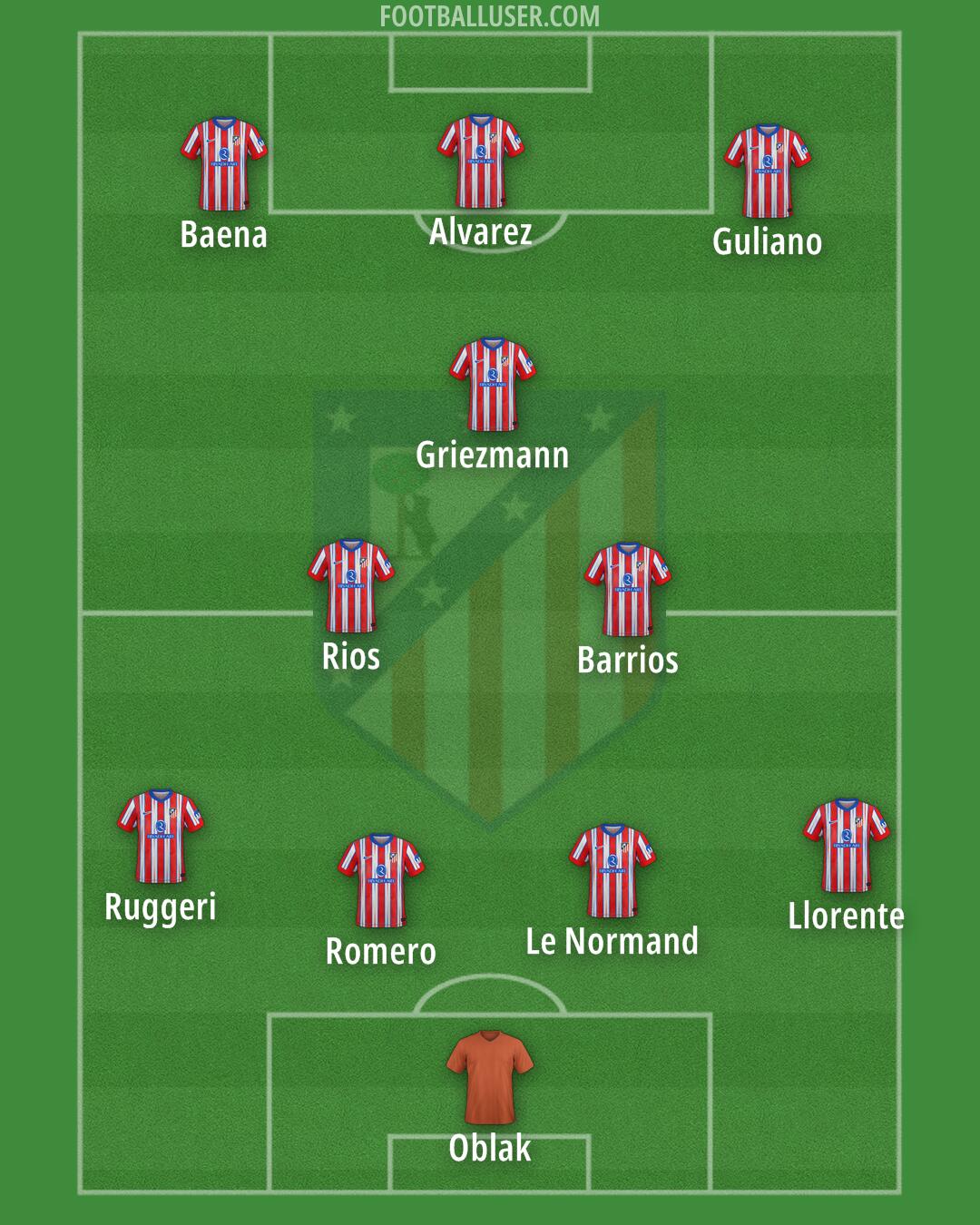
Oblak · Llorente · Romero · Le Normand · Ruggeri · Barrios · Rios · Baena · Guliano · Alvarez · GriezmannSeeking to dominate through a compact mid-block and rapid transitions, Atlético utilizes a 4-3-3 formation. This lineup is built to absorb pressure and strike with verticality when the opposition leaves space behind their defensive line. The team looks to control the game by controlling the space between the lines and using quick passing to move the ball from defense to attack.
Jan Oblak sits between the posts to anchor the defense. The back line functions as a flat back four where Llorente operates as a defensive wing back to help cover the flank. Romero and Le Normand form the central pairing, acting as ball playing defenders who can step up to intercept passes or win the header during aerial duels. Ruggeri occupies the left side to maintain a solid line, while the unit works together to hold the line and squeeze the space when the ball enters their half.
In the center of the pitch, the team employs a three-man midfield. Barrios acts as the single pivot to shield the defense and recycle possession, while Rios works as one of the inverted eights to connect the defensive and attacking lines. Griezmann plays as an attacking ten behind the striker, looking to create from deep and arrive late into the box. This trio works to press in a mid-block to win the ball back high up the pitch or force a long ball from the opponent.
The attacking unit relies on a pressing centre-forward in Alvarez to lead the front line. Baena and Guliano play as wide wingers who cut inside to create goalscoring chances, stretching the defence by pulling defenders out of position. This setup allows the team to attack in combinations, using link-up play between the lines to find the feet of the striker. The forwards work to press the opposition back line to trigger a press and win the ball back quickly.
Atlético provides significant tactical advantages through its compactness when defending and its ability to hit in behind on the transition. The midfield trio can quickly shift to provide numerical superiority in the center, while the speed of the wide players allows the team to break quickly once possession is regained. This ability to transition from a low block to an attacking wave makes the team very difficult to play against.
This 4-3-3 formation defines a team built for resilience and clinical counter attacking. It is best suited for matches against possession heavy opponents who leave gaps in the wide areas or behind their midfield.