Liverpool Football Formation
 July 5, 2025


Starting Lineup
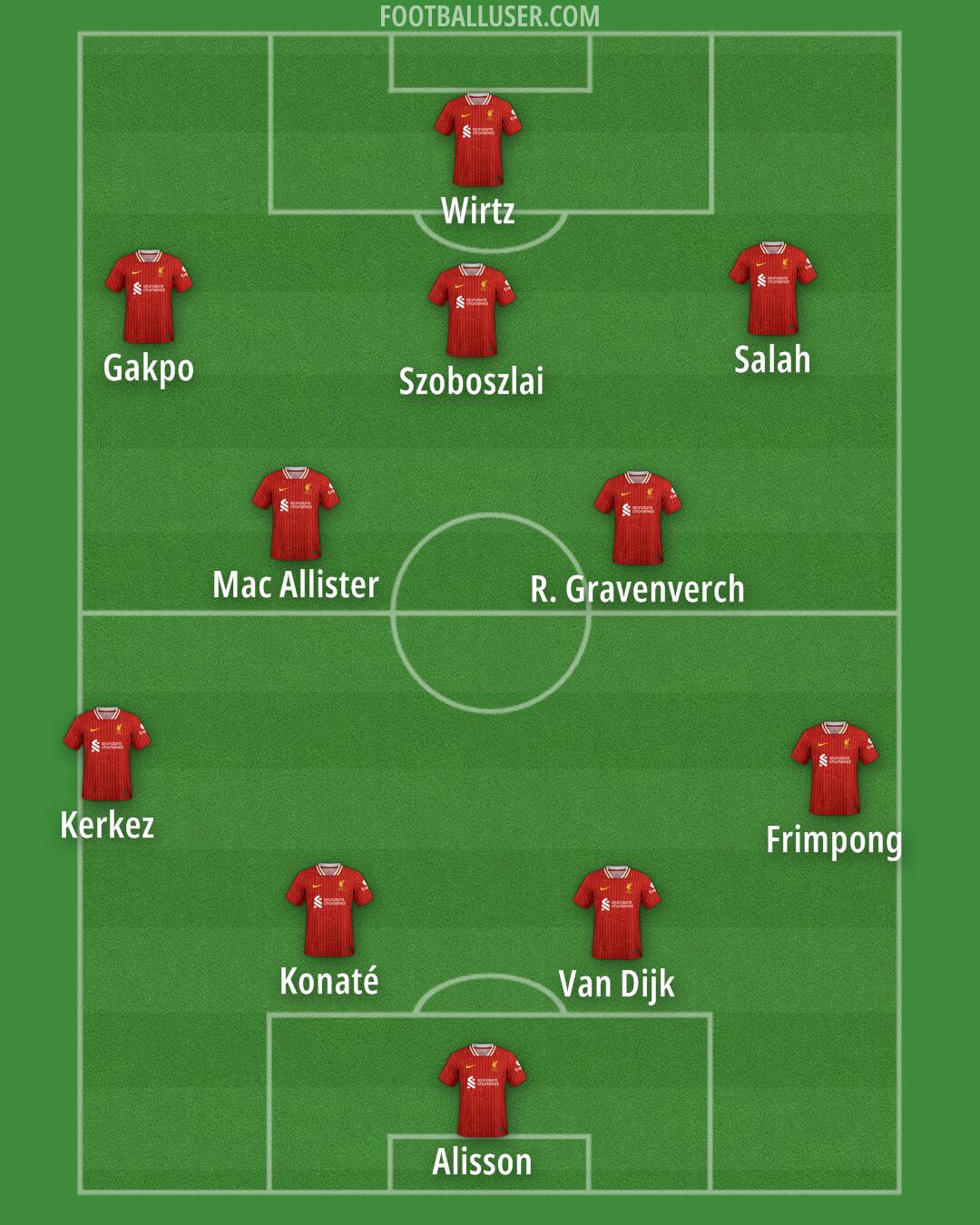
Wirtz · Gakpo · Szoboszlai · Salah · Mac Allister · R. Gravenverch · Kerkez · Frimpong · Konaté · Van Dijk · AlissonLiverpool focuses on heavy verticality and direct attacking play with a 4-2-4 formation. This lineup aims to catch the opposition out on the break and overwhelm them in the final third. The goal is to use the height and pace of the forward line to pin the defense back while using quick transitions to strike before the opponent can settle.
Alisson sits between the posts to act as a sweeper behind a high line. The back four relies on the aerial strength and leadership of Virgil van Dijk, who commands the defensive unit from the center. He partners with Konaté to defend zonally and manage runs in behind. On the flanks, Frimpong acts as an attacking wing back to provide width, while Kerkez supports the left side to help push the team up the pitch.
A double pivot provides the bridge between the defense and the attack. Mac Allister works to connect the lines and find the feet of the forwards, using his passing range to switch play. R. Gravenverch helps to shield the defense and win the second ball in the middle of the pitch. This pairing must remain disciplined to prevent being bypassed when the team loses possession.
The front line is built to create constant chaos through four dedicated attackers. Gakpo and Salah operate as wide players, with Salah often cutting inside from the right to find shooting lanes. Szoboszlai and Wirtz operate as two central forwards, with Szoboszlai using his pressing intensity to harass the opposition back line. This combination of players allows Liverpool to attack in combinations, utilizing runs in behind and quick passing to split the defense.
This 4-2-4 formation offers significant tactical advantages, particularly the ability to press high in coordinated waves. By committing four players to the front, the team can force a long ball and regain possession quickly. Furthermore, the overlapping runs from Frimpong and Kerkez create wide overloads that force the opposing wingers to track back, stretching the defense.
Liverpool uses this aggressive lineup to dominate teams that struggle with high intensity. It is a formation best suited for matches where the goal is to exploit space behind a high defensive line.