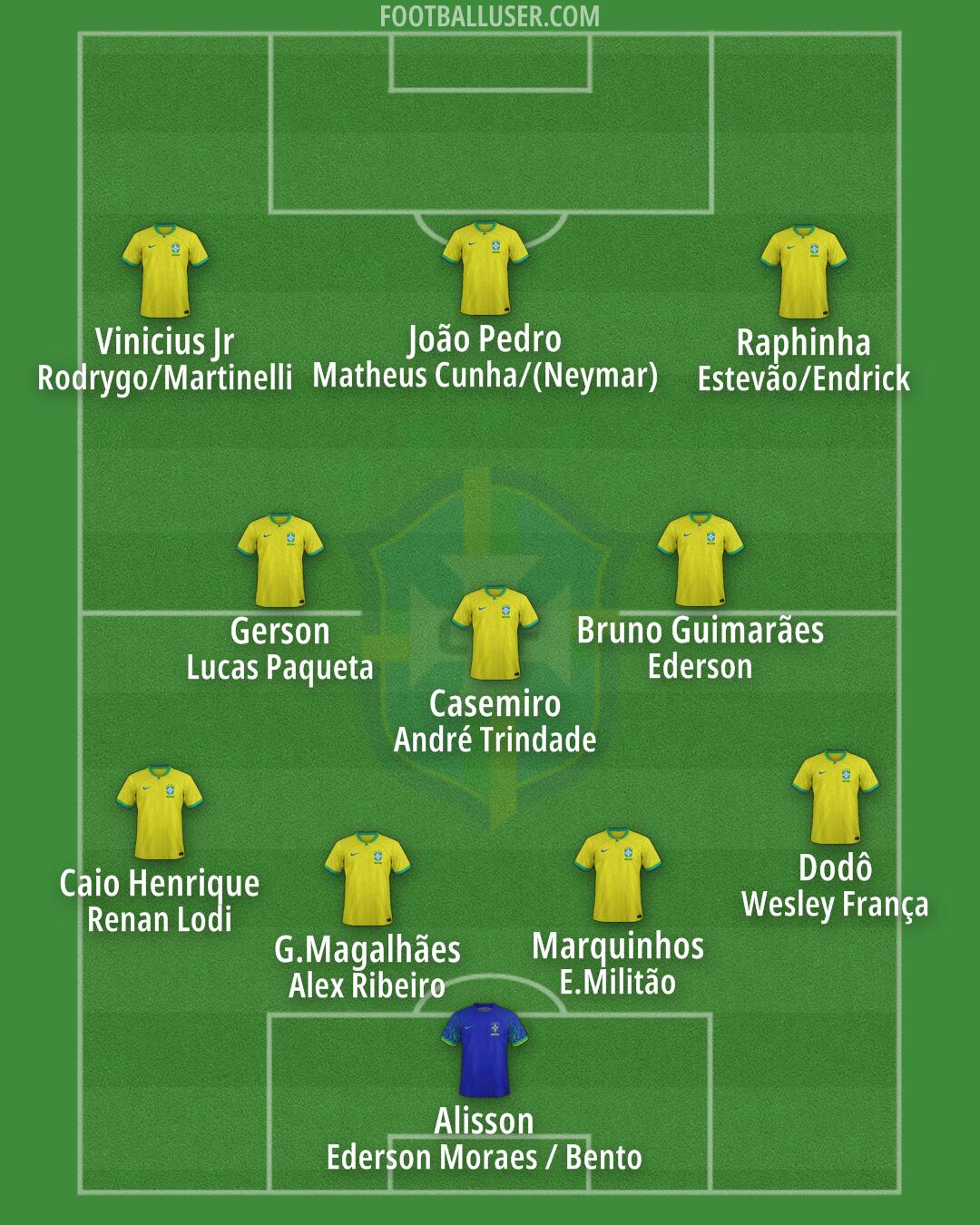

Brazil National Football Team Formation
 July 10, 2025


Starting Lineup
Alisson (Ederson Moraes / Bento) · Dodô (Wesley França) · Marquinhos (E.Militão) · G.Magalhães (Alex Ribeiro) · Caio Henrique (Renan Lodi) · Casemiro (André Trindade) · Gerson (Lucas Paqueta) · João Pedro (Matheus Cunha/(Neymar)) · Vinicius Jr (Rodrygo/Martinelli) · Bruno Guimarães (Ederson) · Raphinha (Estevão/Endrick)Brazil relies on high pressing and quick transitions when they play in a 4-3-3. This formation is built to hunt for the ball high up the pitch and strike quickly once they win possession. The Selecao aim to use their pace to stretch the opposition and create chances through rapid movement.
Alisson starts in goal to organize the defensive line. The back four works as a cohesive unit, with Dodô and Caio Henrique acting as full backs who can push forward to support the attack. Marquinhos and G.Magalhães form the central pair, where Marquinhos uses his reading of the game to cover space while G.Magalhães provides aerial strength. The defensive unit stays compact to deny space between the lines and prevents opponents from playing through the middle.
The midfield operates with a three-man midfield with a carrier to control the tempo. Casemiro acts as the single pivot to shield the defence and win second balls. Bruno Guimarães and Gerson provide the energy to connect the defensive and attacking lines. Bruno Guimarães is known for his passing range and ability to carry the ball forward, while Gerson helps to press aggressively to win the ball high. This group works to recycle possession and switch play to the flanks.
In the attacking phase, the team uses three attackers across the front. Vinicius Jr plays as an inverted winger on the left, frequently cutting inside to threaten the goal with his dribbling style. Raphinha operates on the right wing to provide width and deliver crosses. João Pedro leads the line as a pressing centre-forward, looking to find the feet of the striker and make runs in behind. The forwards work together to pin the last defender and create room for the midfielders to arrive late into the box.
One major advantage for Brazil is the ability to press high in coordinated waves, making it difficult for opponents to build from the back. The presence of technical players in the middle allows for numerical superiority in midfield during certain phases. They also excel at speed of transition, using the pace of Vinicius Jr to exploit gaps left by advancing opponents.
This 4-3-3 formation is a potent tool for teams looking to dominate through ball retention and aggressive ball recovery. It is best suited for matches against opponents who struggle to handle high pressure or lack pace in their defensive line.