
Japan National Football Team Formation
 July 14, 2025


Starting Lineup
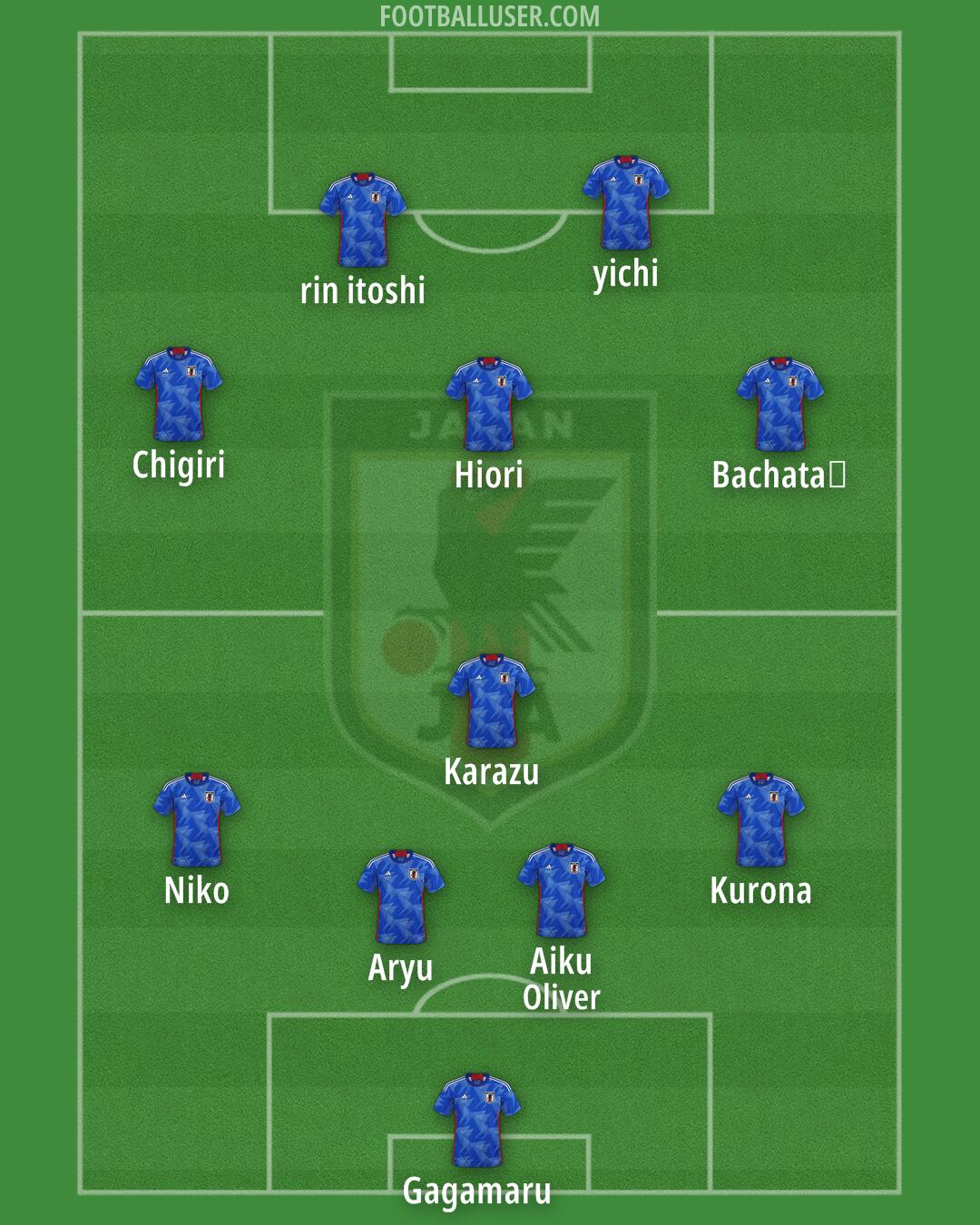
Gagamaru · Kurona · Aiku (Oliver) · Aryu · Niko · Karazu · Hiori · Bachata🦈 · Chigiri · rin itoshi · yichiJapan focuses on a strong defensive base and quick transitions using a 5-3-2. This formation is built to play a direct style of football where the team sits deep and looks to hit the opponent in behind. By keeping a compact block, Japan can absorb pressure before launching long passes or quick vertical movements toward the front line.
Gagamaru guards the goal while the defensive unit operates as a narrow defensive block. Karazu sits in the center of the back three to command the zone. Aryu and Aiku act as the wide centre-backs, with Aiku providing aerial strength to win the header during set pieces. Niko plays as a left wing back to provide width, while Kurona works as a right wing back to push up and support the midfield. The defenders work together to squeeze the space and protect the central area.
The midfield operates as a three-man midfield with a carrier. Hiori acts as the main connection between the back line and the attack, often looking to play through the lines with his passing range. Chigiri works in the left half-space to carry the ball forward, while Bachata🦈 provides energy in the right central role. This trio works to win the second ball and recycle possession to find the attackers quickly.
Japan utilizes two forwards in a partnership to stretch the defence. Rin Itoshi acts as a pressing centre-forward, using his movement to pin the last defender and create space. Yichi plays alongside him to provide a presence in the box. The wing backs, Niko and Kurona, provide width to allow the attackers to cut inside. When attacking, the team looks to exploit the channels and deliver early crosses to the two strikers.
One major advantage of this lineup is the ability to defend in a very compact shape, making it hard for opponents to find gaps. The team also gains numerical superiority in the defensive third to deal with crosses. The speed of transition allows Japan to move from a deep block to an attacking state in seconds, catching the opponent out of position.
This 5-3-2 formation relies on a solid defensive foundation and clinical finishing. It is best suited for games against dominant possession teams where Japan can exploit the space left behind a high defensive line.