
Japan National Football Team Formation
 July 16, 2025


Starting Lineup
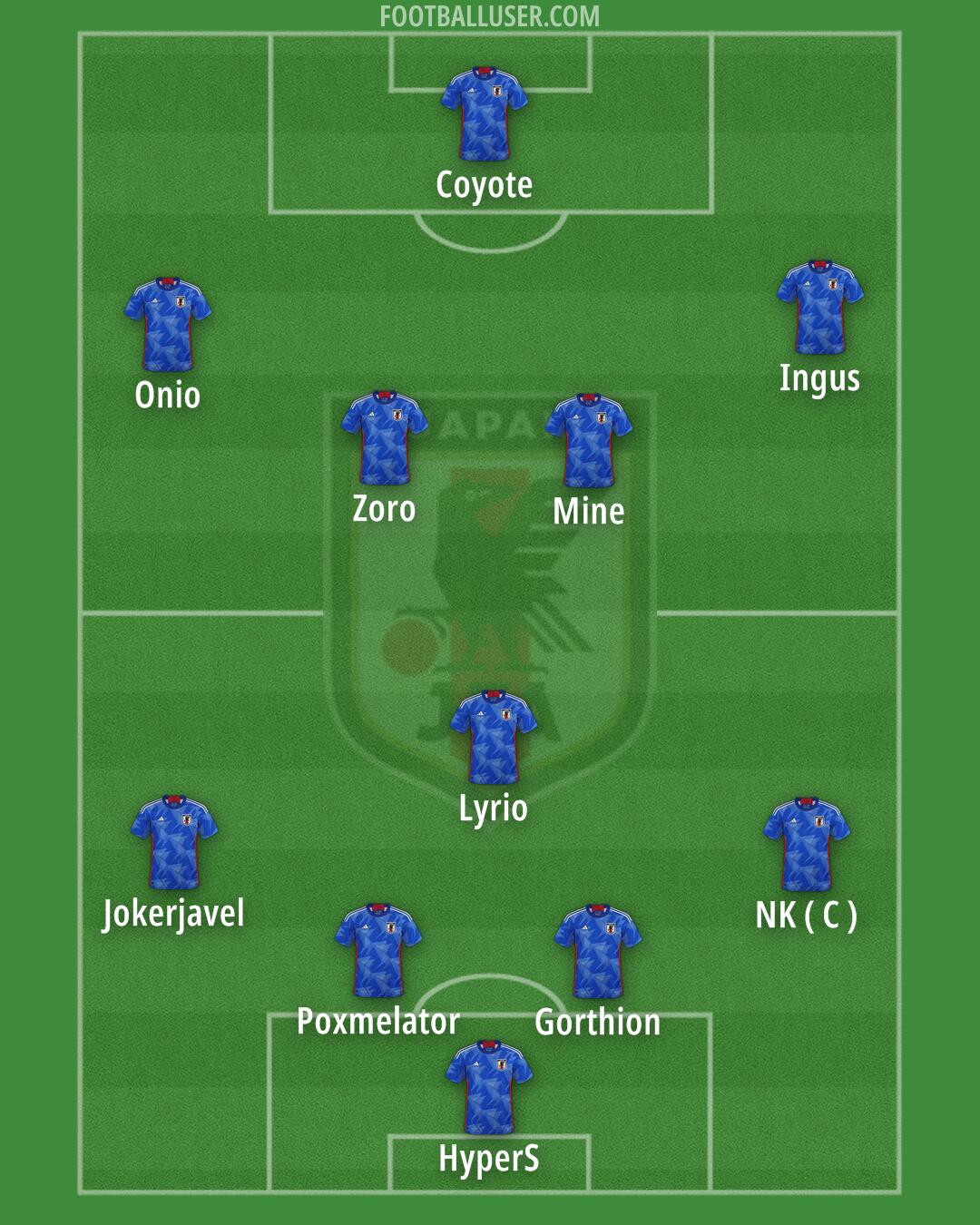
Coyote · Onio · Ingus · Zoro · Mine · Lyrio · NK ( C ) · Gorthion · Poxmelator · Jokerjavel · HyperSJapan focuses on a heavy press and quick transitions using a 4-5-1. This formation is built to sit in a compact block and wait for the opponent to lose possession before hitting them at pace. The goal is to win the ball in the middle third and move the play forward instantly to the lone forward.
Coyote starts in goal to oversee the defensive line. Japan uses a flat back four where Onio acts as a defensive wing back to hold the right side while Ingus provides cover on the left. In the center, Zoro and Mine form the defensive pairing, with Mine acting as a ball playing defender to start attacks. Zoro provides aerial strength and covers the space behind when the full backs push up. The unit aims to defend zonally and keep the lines tight to prevent through balls.
The midfield works as a five man unit to control the center of the pitch. Lyrio sits as a single pivot to shield the defense and intercept passes before they reach the back four. Next to him, captain NK acts as the main engine in the right central role, looking to carry the ball forward and connect the lines. Jokerjavel operates as the left central midfielder to win the second ball and press in a mid-block. Poxmelator and Gorthion occupy the half spaces as attacking midfielders, ready to support the striker or track back when needed.
In the attacking phase, HyperS acts as a lone striker to lead the press from the front. He works to pin the last defender and hold up the ball to allow the attacking midfielders to join the play. Poxmelator and Gorthion act as wide attacking midfielders who can cut inside or spread wide to stretch the defense. The team builds play through short passes from the back or by hitting the channels quickly. The movement is designed to create runs in behind and allow the midfielders to arrive late into the box.
A major advantage for this Japan lineup is the numerical superiority in the midfield area, which makes it difficult for opponents to play through the center. The coordination between the wide midfielders and the full backs allows for quick wide overloads in transition. This formation also provides great compactness when defending, forcing the opposition to play wide and cross the ball into a crowded box.
This 4-5-1 formation relies on high energy and quick movement to disrupt the opponent. It is best suited for matches against teams that dominate possession where Japan can sit deep and counter at pace.