Chelsea Football Formation
 July 20, 2025


Starting Lineup
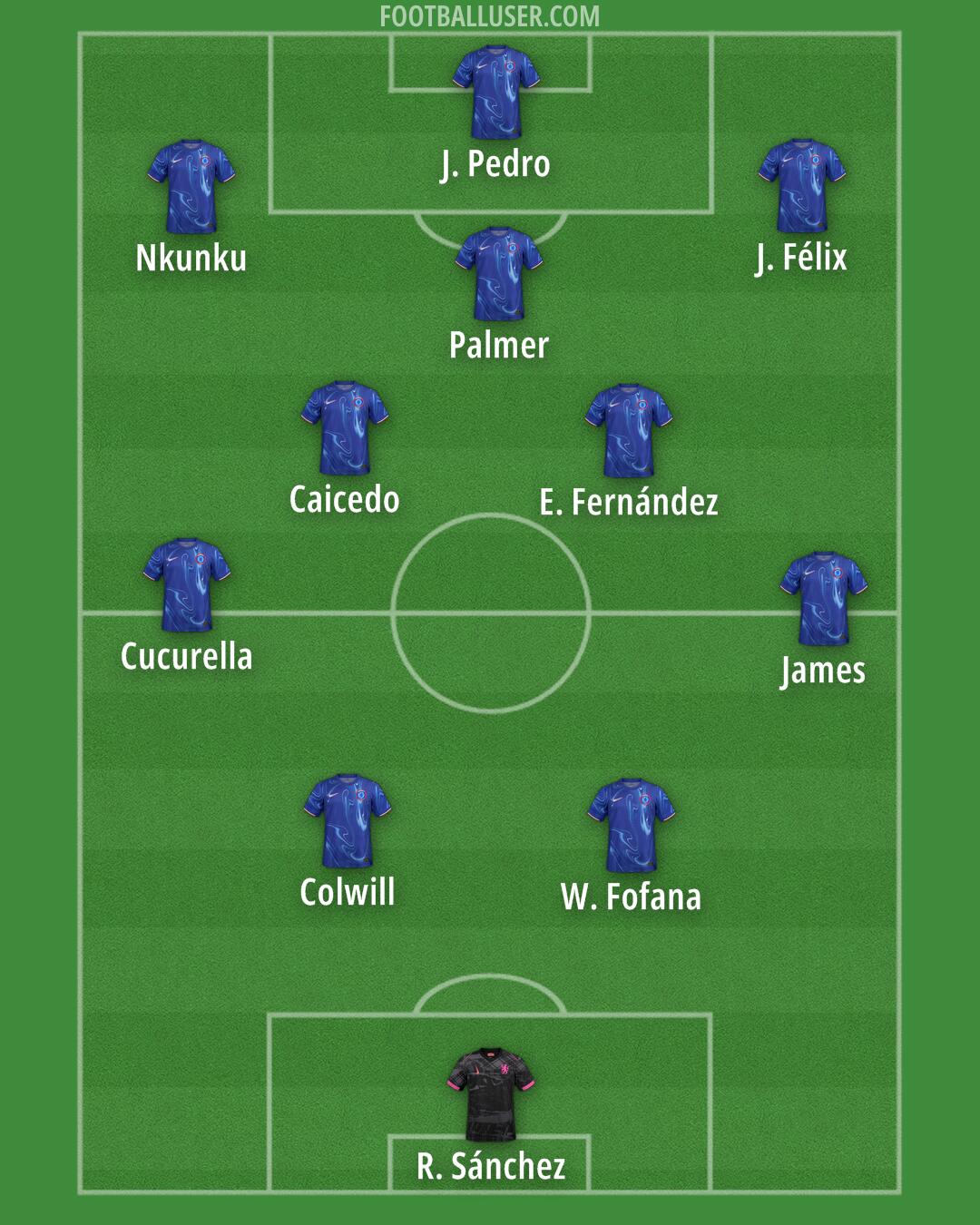
Cucurella · James · J. Pedro · Nkunku · Palmer · J. Félix · Caicedo · E. Fernández · Colwill · W. Fofana · R. SánchezChelsea aims to dominate the pitch through intense pressure and high ball recovery, utilizing a 2-5-3 formation. This lineup is built to control the middle of the pitch and pin the opposition back into their own half. By packing the central areas, Chelsea looks to win the ball back high up the pitch and launch immediate attacks.
R. Sánchez stays between the posts to guard the goal while the defense operates with a high line. Colwill and W. Fofana act as the two central defenders, tasked with playing out from the back and covering large amounts of space. They must stay alert to sweep behind the high line if the opposition attempts to hit in behind on the transition. The defensive unit relies on being able to intercept passes before the opposition can settle into their rhythm.
The midfield is a massive five man block that controls the center of the field. James and Cucurella act as a double pivot to shield the defense, while E. Fernández and Caicedo operate as the central engine. E. Fernández uses his passing range to progress through the thirds, and Caicedo brings high pressing intensity to win the ball back. Palmer operates as the attacking ten behind the striker, looking to find pockets of space and play through the lines. This midfield unit connects the defense to the front line by recycling possession and driving forward with the ball.
In the attacking third, the team employs three attackers to stretch the opposition. Nkunku and J. Félix act as inverted wingers who cut inside to create central overloads, while J. Pedro plays as the lone striker. J. Pedro works to hold up the ball and link up play between the lines, allowing Palmer to arrive late into the box. The forwards press from the front to force a long ball and prevent the opposition from building out from the back. This setup creates constant pressure through combinations in tight spaces.
This formation offers significant tactical advantages, primarily through numerical superiority in midfield. The density of players in the center makes it very difficult for opponents to play through the middle. Chelsea also benefits from the ability to press high in coordinated waves, using the five midfielders to squeeze the space. This creates many opportunities to win the second ball and transition quickly into attack.
Chelsea uses this aggressive lineup to dictate the tempo of the game through central dominance. This formation is best suited for matches where the team needs to overwhelm an opponent through high intensity and ball retention.