Liverpool Football Formation
 July 20, 2025


Starting Lineup
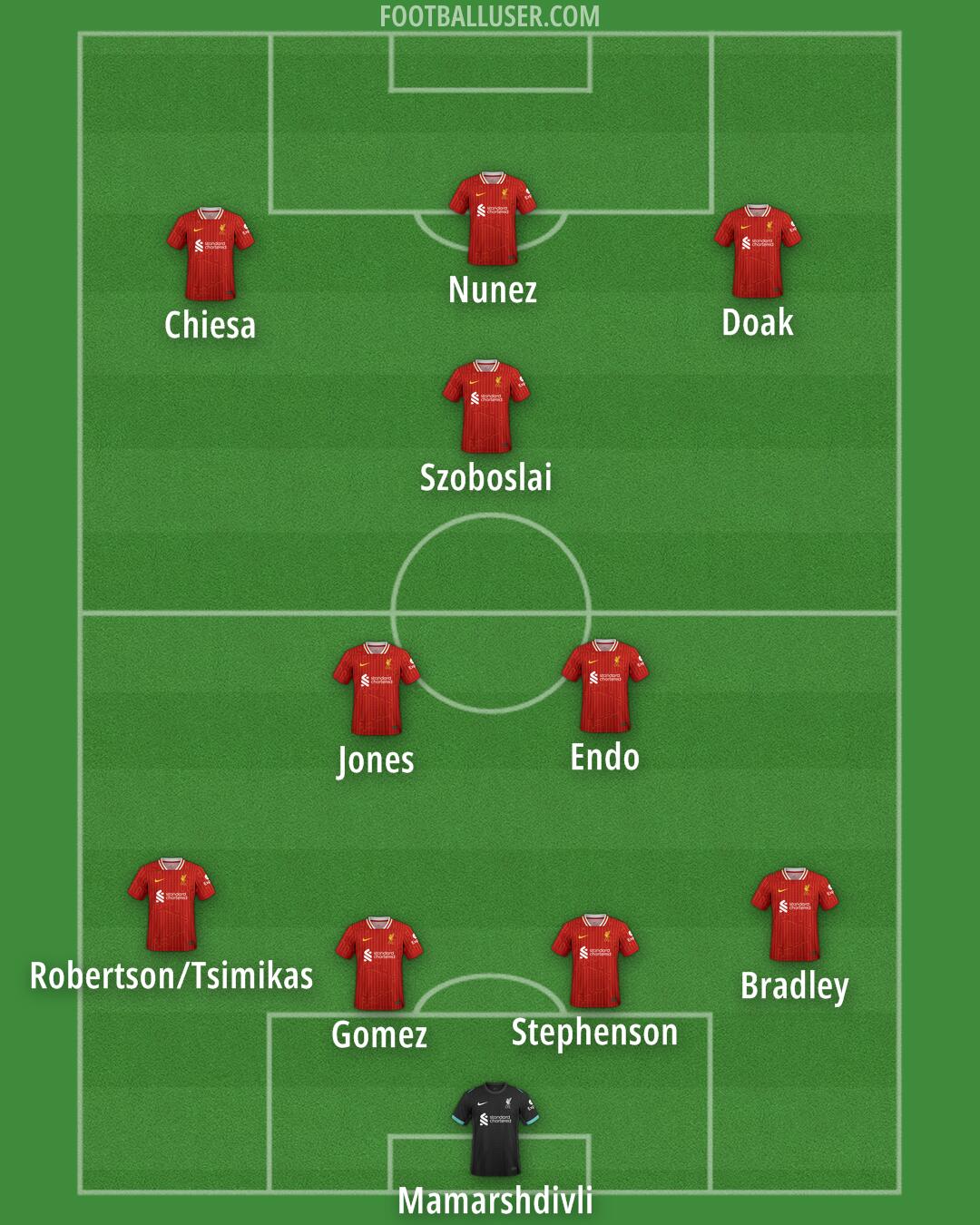
Nunez · Chiesa · Doak · Szoboslai · Jones · Endo · Gomez · Stephenson · Bradley · Robertson/Tsimikas · MamarshdivliLiverpool relies on a high press to win the ball back high up the pitch, utilizing a 4-3-3 formation. This lineup is built to play with verticality and intensity, forcing mistakes from the opposition in their own half. The goal is to play through the thirds quickly once the ball is recovered to catch the defense out of position.
Mamarshdivli stays behind the defensive line to manage any balls played over the top. The back four functions as a high line to squeeze the space in the middle of the pitch. Gomez acts as a ball playing defender alongside Stephenson, who provides aerial strength in the box. Bradley pushes up to provide width as an attacking full back, while Robertson or Tsimikas covers the left flank to support the attack or drop back to cover space.
The midfield works as a three-man unit designed to control the tempo and the pressing triggers. Endo operates as the single pivot to shield the defense and intercept passes. Jones works as an inverted eight to connect the defensive and attacking lines, often carrying the ball forward into space. Szoboslai plays as an attacking ten behind the striker, using his passing range to find runners and pressing aggressively to win the ball high.
Liverpool uses three attackers to stretch the defense across the pitch. Nunez acts as a pressing centre-forward who looks to run in behind the last defender. Doak plays as a wide winger on the right to create isolation in one on one situations, while Chiesa operates as an inverted winger on the left to cut inside and shoot. These forwards work to pin the last defender and create space for late runs from Jones or Szoboslai into the box.
One major advantage for Liverpool is the ability to press high in coordinated waves, which can force a long ball from the opposition. The team also benefits from wide overloads when Bradley and Doak push high, forcing the opponent to defend deep. This creates numerical superiority in wide areas and allows the players to switch play quickly to find open teammates.
This 4-3-3 formation is designed to dominate games through high intensity and rapid transitions. It is best suited for matches against teams that struggle to play out from the back under pressure.