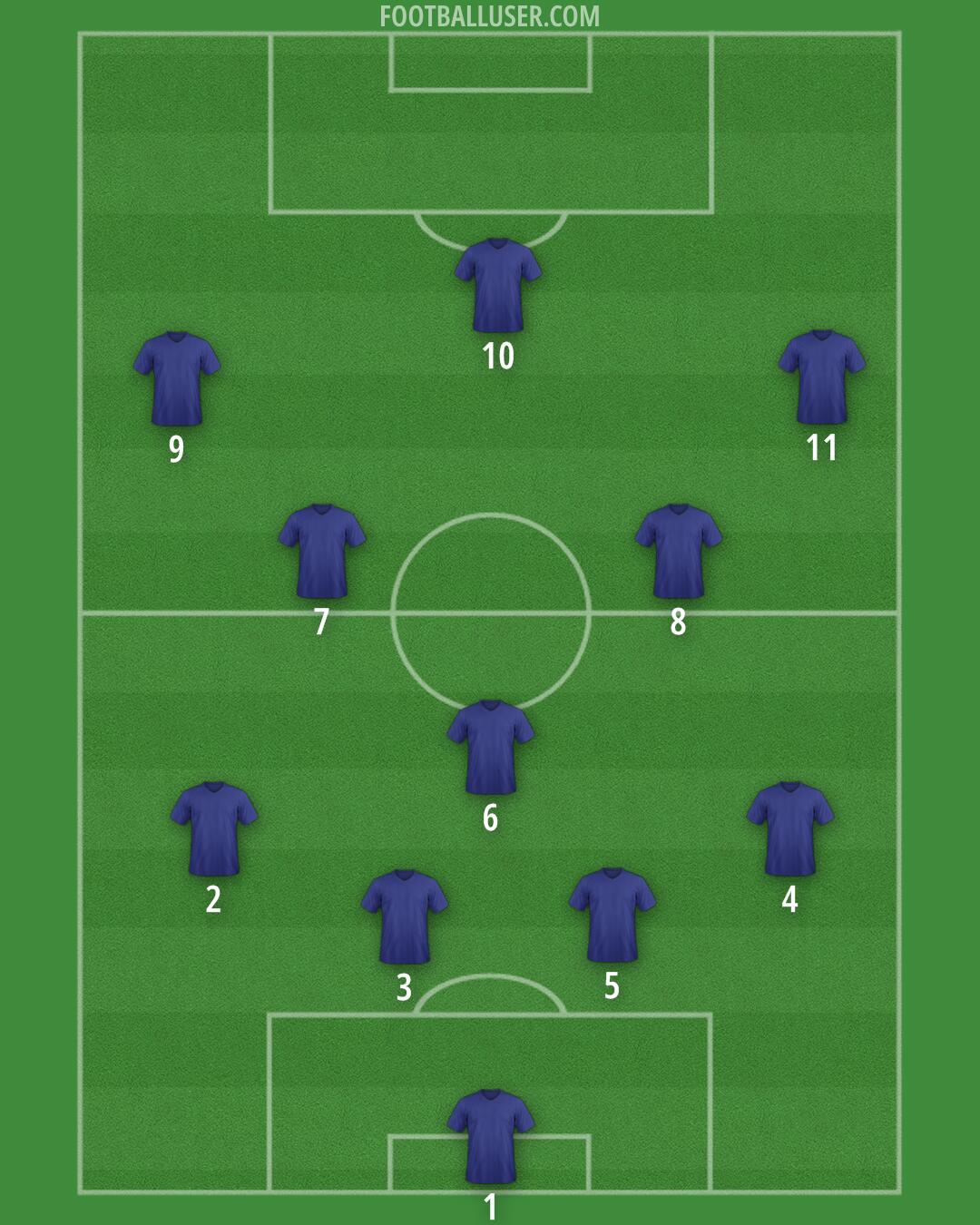

South Korea National Football Team Formation
 July 22, 2025


Starting Lineup
12
3
4
5
6
7
8
9
10
11
South Korea relies on a high press and quick transitions using a 5-2-3 formation. This lineup is built to win the ball back high up the pitch and exploit spaces in the opposition defense. By using a wide attacking front, the team looks to stretch the defense and create one on one situations for the wingers.
1 acts as the goalkeeper to command the area and organize the line. The defensive unit functions as a back five that can shift together to maintain a compact block. 6 sits in the center as a dominant presence to win the header and clear the lines. 3 and 5 play as wide center-backs who step up to intercept passes and cover the space behind the wing backs. 2 and 4 operate as attacking wing backs who push high to provide width and overlap the winger. They are responsible to track back and defend zonally when the team loses possession.
The midfield is a double pivot featuring 7 and 8. These two players are tasked to protect the center and win the second ball. 7 and 8 work to compress the midfield and press in a mid-block to force a long ball. They connect the defense to the attack by playing short from the back or carrying the ball forward. One player often drops between the centre-backs to receive and recycle possession while the other looks to arrive late into the box to support the attack.
In the final third, South Korea uses three attackers to pressure the opposition. 10 acts as a central striker to hold up the ball and lay it off to teammates. 9 and 11 operate as wide wingers who hug the touchline to stretch the defense. They aim to cut inside and play through the lines to create chances. The wing backs 2 and 4 provide width by overlapping the wingers to create wide overloads. This allows the team to deliver early crosses or cut it back from the byline to attack the near post.
This formation offers strong tactical advantages through its ability to press high in coordinated waves. The back five ensures the team can hold a compact block and deny the turn to opposition attackers. The wing backs 2 and 4 create constant pressure on the flanks through wide overloads. Additionally, the speed of transition with 9, 10, and 11 allows the team to hit in behind on the transition before the opposition can settle.
The 5-2-3 formation is a potent tool for teams that want to combine a strong defensive block with lethal counter attacks. It is best suited for facing opponents that dominate possession and leave space behind their defensive line.