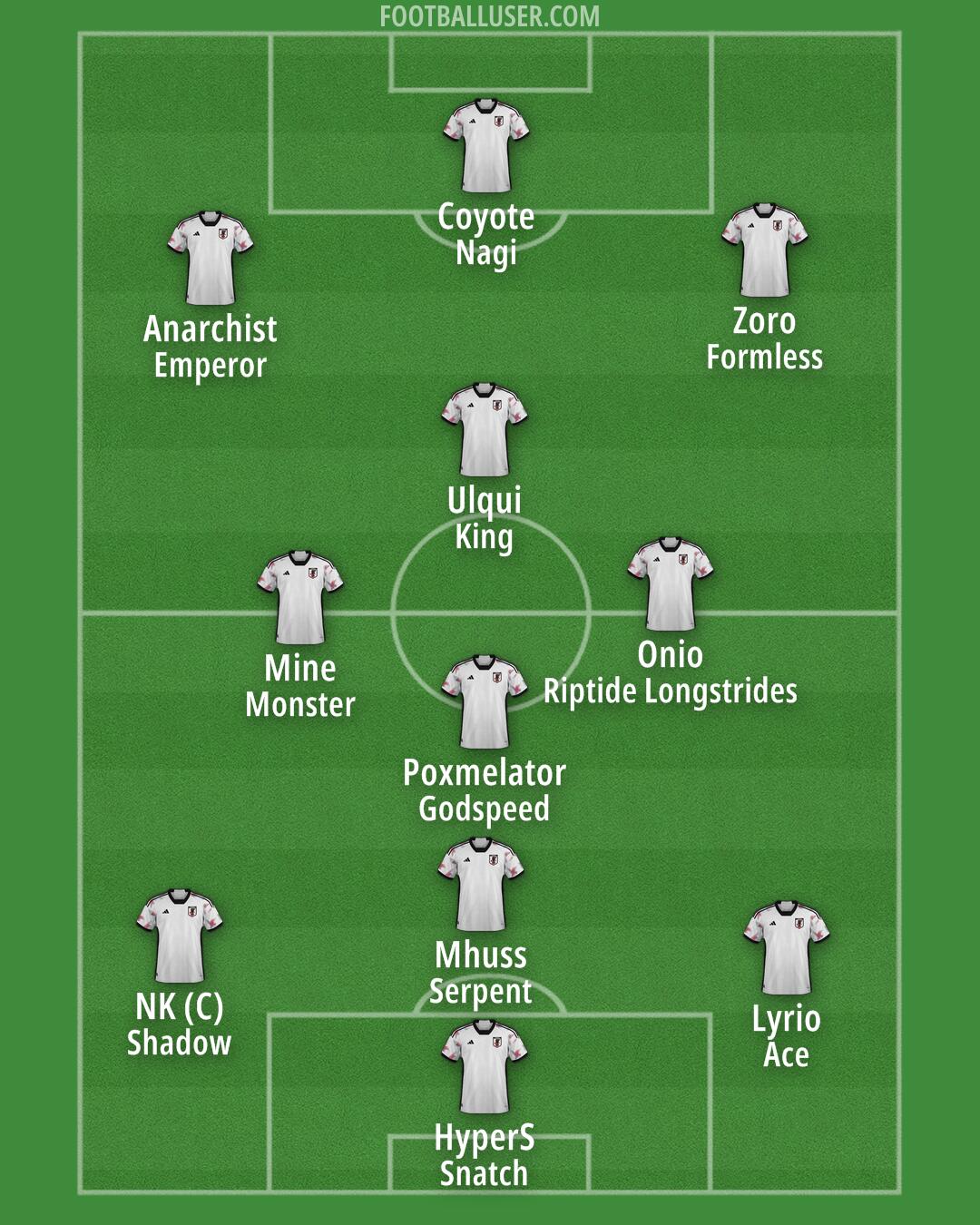

Japan National Football Team Formation
 July 24, 2025
 NK_Leonardoburst


Starting Lineup
NK (C) (Shadow) · Mhuss (Serpent) · HyperS (Snatch) · Lyrio (Ace) · Zoro (Formless) · Ulqui (King) · Anarchist (Emperor) · Coyote (Nagi) · Onio (Riptide Longstrides) · Poxmelator (Godspeed) · Mine (Monster)Japan plays a high risk game built around aggressive pressing and rapid attacks, utilizing a 2-4-4 formation. This lineup aims to overwhelm the opposition by flooding the attacking third and squeezing the space in the middle of the pitch. The goal is to win the ball high up the pitch and strike before the opponent can settle.
Coyote stays between the posts to act as a sweeper behind a very high line. The defensive unit consists of only two central defenders, Zoro and Anarchist, who must stay extremely alert to prevent long balls. Zoro and Anarchist operate as a tight pair, needing to intercept passes and cover wide areas when the midfield is bypassed. Because there are no full backs, these two must be ready to step up and engage attackers early to deny the turn.
In the middle of the park, Japan employs a four man unit to control the tempo and shield the back line. Ulqui sits as a single pivot to protect the two defenders and recycle possession. Onio and Mine act as the engines in the central midfield, with Onio driving forward with the ball while Mine focuses on winning the second ball. Poxmelator operates in the hole as an attacking ten, looking to find gaps between the lines and play through the lines to the forwards.
The attacking unit is extremely heavy, featuring four players positioned to stretch the defence. NK (C), serving as captain, plays on the right wing and looks to cut inside to create chances. Lyrio occupies the left flank to provide width and deliver crosses. In the center, Mhuss and HyperS work as a dual striker partnership, combining in tight spaces to turn defenders. This front four is designed to press from the front, forcing the opposition back into their own box.
This formation offers significant tactical advantages, particularly in creating numerical superiority in the attacking zones. By pushing the midfield and attack so high, Japan can create wide overloads and force the opponent into mistakes in their own half. The ability to press in waves makes it difficult for teams to play out from the back without losing possession.
Japan utilizes this lineup to suffocate teams that struggle with high intensity and quick transitions. It is a high reward strategy best suited for games where they need to dominate possession and hunt for goals through sheer volume of pressure.