Custom Team Football Formation
 July 26, 2025


Starting Lineup
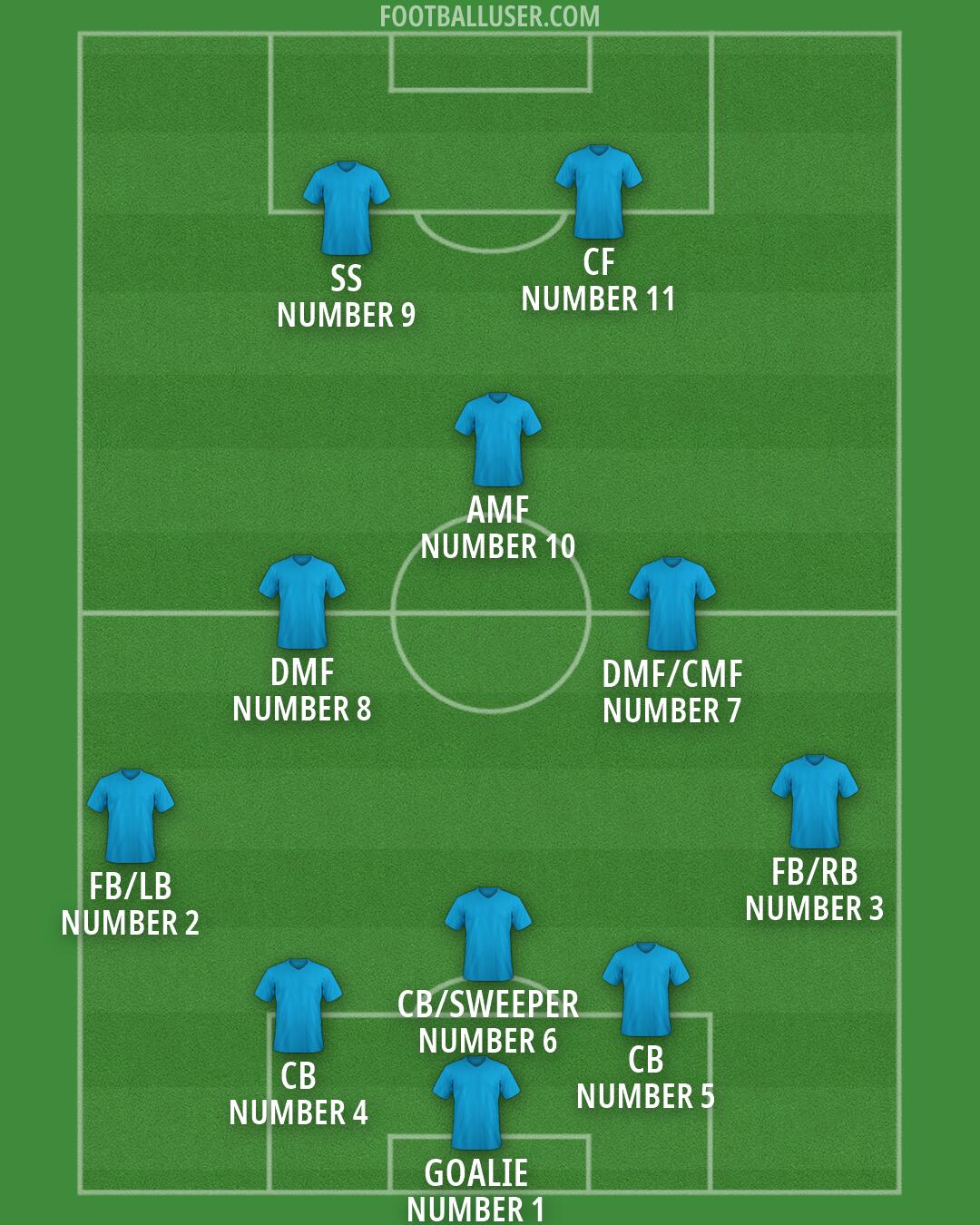
GOALIE (NUMBER 1) · CB (NUMBER 4) · CB/SWEEPER (NUMBER 6) · CB (NUMBER 5) · FB/RB (NUMBER 3) · FB/LB (NUMBER 2) · DMF (NUMBER 8) · DMF/CMF (NUMBER 7) · AMF (NUMBER 10) · SS (NUMBER 9) · CF (NUMBER 11)A heavy focus on defensive solidity and quick transitions defines this lineup, which operates in a 5-3-2 formation. The team aims to sit deep and absorb pressure before hitting the opposition on the break. By packing the central areas, the formation forces opponents to play wide, making it difficult to play through the middle.
GOALIE acts as the last line of defense, organizing the back five from deep. The defensive unit consists of a back three with CB acting as a sweeper to cover the space behind the others. CB and CB provide the central strength, with CB functioning as a ball playing defender to start moves. On the flanks, LWB and RWB act as attacking wing backs, tasked with providing width and tracking back to maintain a narrow defensive block when out of possession.
The midfield functions as a three-man midfield with a carrier and defensive cover. LCM sits as a single pivot to shield the defense and disrupt play, while RCM operates as a carrier to drive forward with the ball. AM stays more advanced to connect the defensive and attacking lines, often finding pockets of space between the lines. This trio works to win the second ball and quickly recycle possession once it is regained.
In the attacking phase, the team utilizes two forwards in a partnership. RS operates as a lone center forward to hold up the ball and pin the last defender, while LS plays as a second striker in the hole to support the attack. The wide players, LWB and RWB, push high to offer width, creating chances for cutbacks from the byline. This combination of a central presence and wide overlapping runs allows the team to attack in combinations during transitions.
The tactical advantages of this formation include great compactness when defending and the ability to create wide overloads from overlapping wing backs. By sitting in a mid-block, the team can also secure numerical superiority in the middle of the pitch once the ball is won. These strengths allow for rapid counter attacks where the forwards can hit in behind on the transition.
This 5-3-2 formation is built to absorb pressure and strike with pace. It is best suited for matches against teams that dominate possession, allowing the side to exploit gaps in the opposition defense.