
Real Madrid Football Formation
 July 28, 2025


Starting Lineup
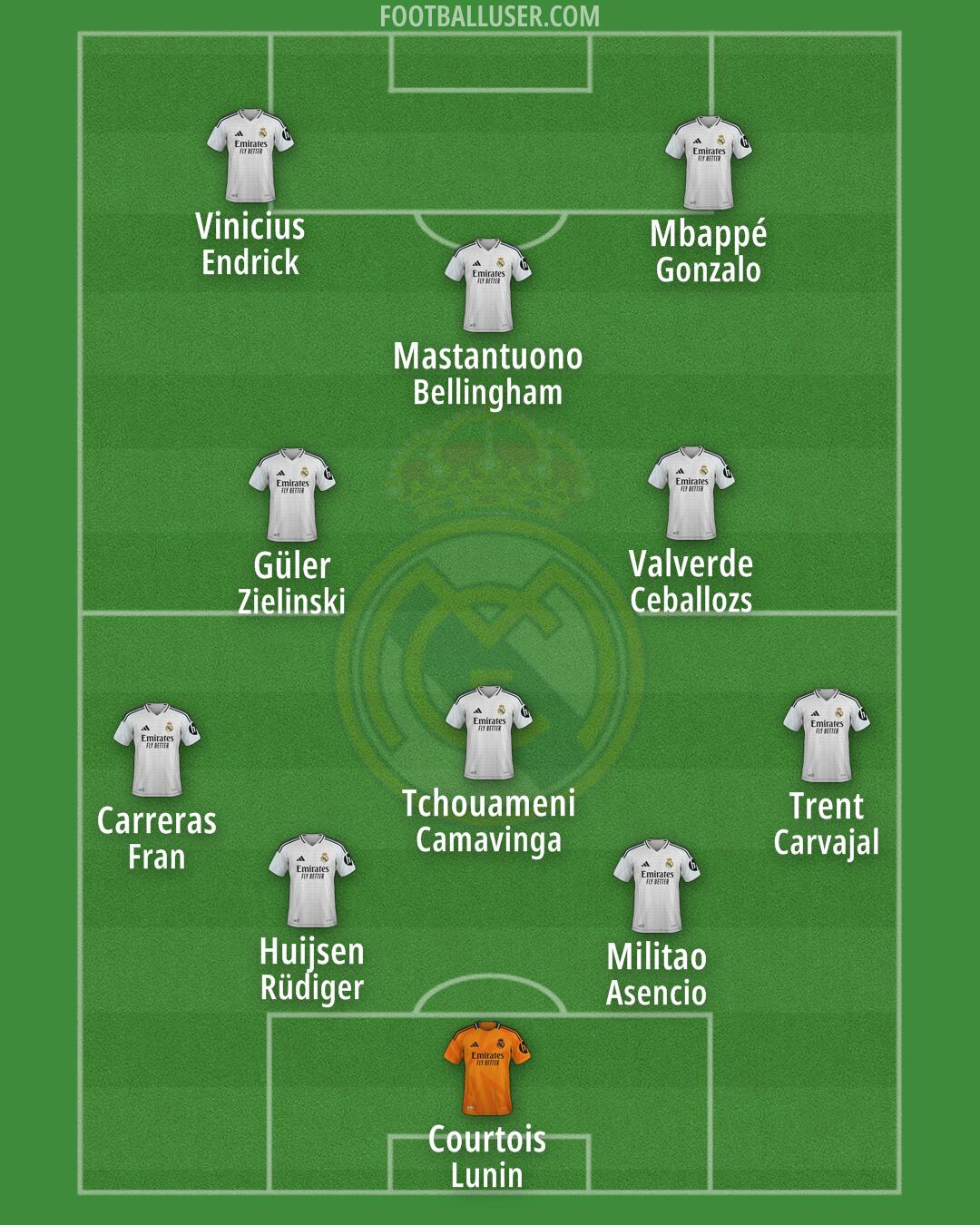
Courtois (Lunin) · Trent (Carvajal) · Militao (Asencio) · Tchouameni (Camavinga) · Huijsen (Rüdiger) · Carreras (Fran) · Güler (Zielinski) · Valverde (Ceballozs) · Vinicius (Endrick) · Mbappé (Gonzalo) · Mastantuono (Bellingham)Real Madrid operates with a 5-3-2 formation that focuses on a solid defensive foundation and rapid verticality. The team looks to sit deep and wait for the opposition to commit bodies forward before hitting them in transition. This lineup is built to absorb pressure and exploit the space left behind high defensive lines.
Courtois stays between the posts to command the area and secure long shots. The defensive unit utilizes a back five that stays compact when the ball is on the opposite side. Tchouameni holds the center of the line, acting as the primary anchor to stop runners. Militao and Huijsen provide cover on either side, with Militao using his aerial strength to win headers. Trent operates as the right wing back, providing width and using his long passing range to deliver early crosses from deep. Carreras works as the left wing back to provide balance on the flank.
The midfield features a three-man unit that connects the back five to the front two. Valverde acts as a carrier, using his immense engine to drive the ball forward and cover large areas of the pitch. Güler stays in the left half-space to create chances and recycle possession when the team builds from the back. Mastantuono operates in the hole as an attacking ten, looking to receive on the half-turn and find the feet of the strikers. This midfield group works to squeeze the space between the lines and win the second ball.
In the final third, Real Madrid uses a partnership of two forwards to stretch the defense. Vinicius plays as the left striker, using his dribbling and explosive pace to isolate defenders one on one. Mbappé plays as the right striker, looking to make runs in behind and finish quickly. The attack relies on the width from Trent and Carreras to provide service. When the team wins the ball high up the pitch, the forwards press the opposition back line to force a mistake. They look to combine in tight spaces or launch quick balls into the channels.
The formation offers several tactical advantages, including the ability to defend in a narrow block that is hard to penetrate centrally. By using three central defenders, the team maintains compactness and can easily double up on target men. The speed of transition is a massive strength, as the team can move from a defensive position to an attacking one in seconds. This allows the players to hit in behind on the transition before the opposition can recover.
This 5-3-2 formation prioritizes defensive stability and lethal counter attacks. It is best suited for games against ball dominant teams that leave significant space behind their defenders.